Rep. Maxwell Frost (D-Fla.) introduced the Protect Our Games Act, a federal bill requiring developers to maintain playable versions of purchased games even after server shutdowns. The proposal follows the digital-only launch of Grand Theft Auto VI and growing consumer backlash over the lack of tangible ownership in digital media.
Ken Kutaragi, the founder of PlayStation, has defended Sony’s decision to discontinue physical game discs, arguing that consumer resistance stems from a 'mentality issue' rather than economic necessity. Speaking at the Game Republic New Horizons event, Kutaragi acknowledged that discs have become a symbol of ownership but compared the situation to smartphones, where digital content is accepted without physical media. He noted that continuing to produce discs is not economically viable, especially given the rising cost of hardware components. While he understands the frustration, he suggested that the industry may eventually move toward fully cloud-based gaming, rendering consoles obsolete. This stance contrasts with strong consumer backlash and recent data showing robust physical sales for titles like Marvel’s Wolverine.
U.S. Representative Ritchie Torres (D-NY) announced the 'Power to the Players Act,' a proposed federal bill that would direct the Federal Trade Commission (FTC) to enforce regulations ensuring video game purchases constitute actual ownership rather than revocable licenses. The legislation aims to prevent games from becoming unplayable after server shutdowns by requiring developers to provide offline modes. Torres cited NBA 2K25, which is set to delist on October 30 and shut down servers by December 31, as a primary example of the issue. While the bill has not been formally introduced, it faces significant hurdles regarding technical feasibility and industry opposition.
A consumer rights group compiled over 30 examples of Sony using ownership language for digital games, contradicting the company's legal defense in a California class action lawsuit that claims consumers understand they only buy licenses.
Sony’s legal team argued in a California class-action lawsuit that consumers do not own digital games, only licenses. In response, the Consumer Rights Wiki compiled over 30 examples of Sony’s own platforms using the word 'own' to describe digital purchases, creating a contradiction in Sony’s defense.
Sony filed a court response arguing that digital game purchases are licenses, not ownership, claiming reasonable consumers understand this. The filing cites a case where two plaintiffs bought the same game days apart to prove ownership is impossible. Critics and outlets call the argument absurd, noting that the real concern is the risk of losing access to purchased games.
Sony has filed a legal response in a California class-action lawsuit, arguing that 'reasonable consumers' do not believe they own digital games. The company contends that because multiple users can purchase the same digital title, ownership is impossible. This defense comes as Sony prepares to end physical disc production in 2028, leaving digital licenses as the sole option for future PlayStation titles.
Sony Interactive Entertainment is facing two distinct legal challenges regarding its digital storefront. In a California class-action lawsuit, Sony argues that 'reasonable consumers' understand digital games are licenses, not owned property, citing the ability of multiple users to purchase the same title simultaneously. Concurrently, a federal court has preliminarily approved a $7.85 million settlement for a separate antitrust case, where Sony is accused of monopolizing the market by eliminating third-party voucher sales, forcing consumers to buy directly from the PlayStation Store at higher prices.
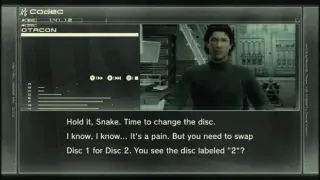
Konami has updated the iconic disc-swap joke in Metal Gear Solid 4 for its upcoming remaster, featuring new voice lines by Christopher Randolph. While console versions acknowledge high-capacity physical media, the PC version delivers a lengthy monologue criticizing digital-only access, DRM, and the loss of physical ownership. This update coincides with Sony’s announcement to end physical disc production by 2028, highlighting growing industry tensions over digital rights and preservation.
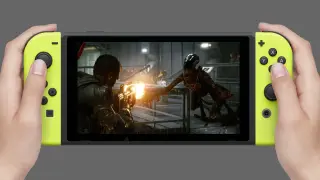
The cloud-streamed version of Aliens: Fireteam Elite on the Nintendo Switch has been permanently shut down, rendering the game unplayable for users who purchased it. Cold Iron Studios offered no refunds, though a discount for the upcoming sequel is now being discussed. This incident highlights the risks of cloud-only digital purchases.
Cold Iron Studios has permanently shut down the cloud servers for Aliens: Fireteam Elite on the Nintendo Switch, rendering the game unplayable for users who paid up to $60. No refunds were issued, though a discount was offered for the upcoming sequel. The move highlights the risks of cloud-based digital ownership, as the game is now inaccessible even in single-player mode.
Techdirt reports that Sony’s PlayStation Store is removing hundreds of movies and TV titles from user libraries due to a licensing deal with StudioCanal, with about 551 titles affected and a removal date of September 1; customers are left without refunds and must accept that, despite thinking they bought a permanent copy, access can be revoked because what’s purchased is a license tied to back-end distribution agreements; this echoes prior licensing fallout with Discovery/Warner Bros. and underscores a broader issue about the public’s understanding of digital ownership and the need for clearer disclosures and consumer protections.
A compromised Microsoft account was permanently suspended and the user’s OneDrive data wiped, forcing the owner to reopen a new account and repurchase all games tied to the old account. Microsoft says the data can’t be recovered due to encryption and notes the user hadn’t enabled two-factor authentication, while recommending passkeys. The episode underscores the risks of digital ownership and cloud dependencies as tech giants move away from physical media and toward digital storefronts.
A Brazilian Xbox gamer, Ordo_Liberal, won a court case against Microsoft after his account and Xbox library were blocked, with the court ordering Microsoft to fully restore his account and restore his entire digital games library and pay damages, highlighting a potential win for consumer rights and digital ownership protections.
Hideo Kojima, speaking at Rome’s Il Cinema in Piazza festival, laments Sony’s plan to end PlayStation discs in 2028 and argues that cloud streaming could be an even bigger threat to game ownership because data would reside on remote servers rather than the user’s hardware. He contrasts physical media with streaming, noting that access could be cut off if licensing or political factors change, a concern he sees as part of a broader digital shift already affecting movies. Despite his Sony connections, Kojima remains independent and is involved with projects like OD and a PlayStation-exclusive titled Physint.