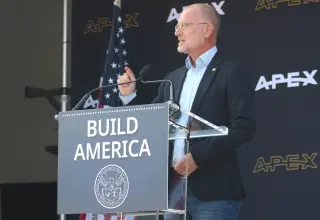
The FCC plans to vote on auctioning 25 MHz of spectrum for direct-to-device services and opening 800 MHz bands for drones, moves that could benefit SpaceX and Amazon's satellite networks.
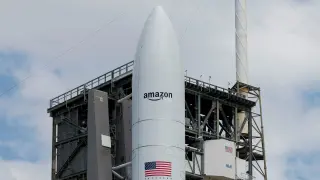
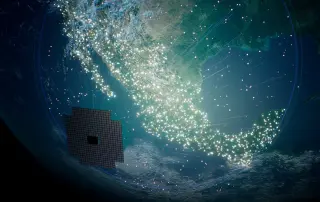
Amazon has asked the FCC to approve a plan to launch up to 5,105 satellites to provide direct-to-device internet by combining its own assets with Globalstar’s spectrum, aiming to serve unserved/underserved users and support emergency response and remote operations; deployment is expected to begin in 2028 after the roughly $11.6 billion Globalstar acquisition closes, positioning Amazon to compete with SpaceX's Starlink.
AST SpaceMobile says Blue Origin’s launchpad explosion will delay its direct-to-smartphone satellite constellation by 3–6 months, pushing initial commercial services into the first half of 2027; the company plans to rely on multiple launch providers, including SpaceX and ULA’s Vulcan.
The FCC dismissed SpaceX, Iridium, Kepler, Sateliot, and AST SpaceMobile bids to access or expand use of Mobile Satellite Service bands in the Big LEO and 2 GHz spectrum, citing harmful interference risks and the need to protect current MSS licensees. The decision preserves incumbent rights for MSS users (including EchoStar and Globalstar) and aims to provide market certainty, even as Amazon moves to acquire Globalstar to enter the D2D market and AST SpaceMobile advances its US D2D plans with partner cellular frequencies.
Amazon will acquire Globalstar to fuse its Leo satellite network with Globalstar’s spectrum and MSS capabilities, enabling next‑gen Direct‑to‑Device satellite services; separately, Amazon and Apple will extend satellite connectivity to iPhone and Apple Watch, including Emergency SOS via satellite. The move aims to deliver broader, more resilient global coverage, with D2D rollout starting in 2028 and the merger closing anticipated in 2027 pending regulatory approvals.
Amazon will acquire Globalstar to expand its Amazon Leo low Earth orbit satellite network with direct-to-device (D2D) capabilities starting in 2028, enabling faster, more reliable voice, text, and data services beyond terrestrial networks. Separately, Amazon and Apple will power satellite features for iPhone and Apple Watch, including Emergency SOS via satellite, using Globalstar’s spectrum and future Leo assets. The deal, with a planned 2027 closing subject to regulatory approvals and milestones, aims to close coverage gaps, boost resilience during disasters, and drive economic growth by extending connectivity to consumers, businesses, and governments.