Tag

Endosymbiosis

All articles tagged with #endosymbiosis

Secreted SyeA protein enables Buchnera colonization of aphid embryos
science13 days ago

Secreted SyeA protein enables Buchnera colonization of aphid embryos

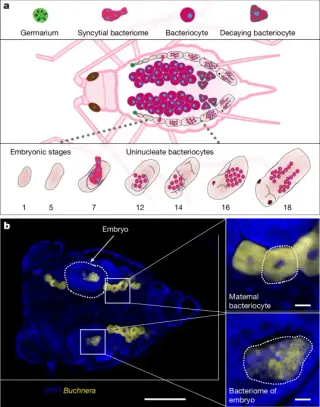
Researchers identify SyeA, a secreted Buchnera protein that is dispatched into the aphid embryonic cytoplasm and is essential for Buchnera transmission to developing embryos. Structural analyses link SyeA to pathogen effectors (EspG/VirA) and suggest it may interact with host actin regulators (Rho1), coordinating cytoskeletal changes and lysosome trafficking to enable intracellular colonization. Antisense PNA knockdown reduces syeA expression, disrupts embryo colonization, leads to malformed embryos, and increases lysosomal degradation of Buchnera, highlighting SyeA as a vestige of bacterial invasion that evolved into a critical mutualist function.

"Discovery of Nitrogen-Fixing Organelles in Algae Shows Evolution in Action"
science2 years ago

"Discovery of Nitrogen-Fixing Organelles in Algae Shows Evolution in Action"

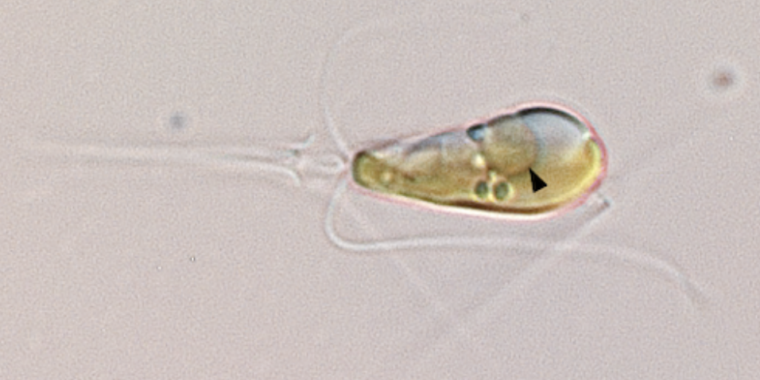
Researchers have discovered a potential new organelle, termed a nitroplast, which is evolving to fix nitrogen from the atmosphere. This process, known as endosymbiosis, is rare and has only been observed in a few cases, such as with mitochondria and chloroplasts. Nitrogen is essential for life, and the difficulty in obtaining it makes this discovery significant in understanding the evolution of complex cells and their specialized functions.

The Origins of Intricate Structures within Complex Cells
science2 years ago

The Origins of Intricate Structures within Complex Cells

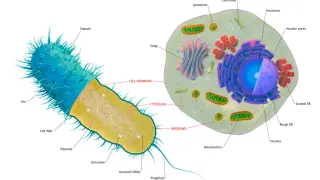
The origin of complex structures within eukaryotic cells, such as the nucleus and endoplasmic reticulum, has long been a mystery. Recent research suggests that these structures may have evolved soon after the mitochondrion, a primitive cell that merged with another cell over 1.5 billion years ago. The "mitochondria early" hypothesis proposes that the endomembrane system, which includes various membrane structures, could have arisen from vesicles released by the mitochondrial ancestor. These vesicles would have helped sequester harmful chemicals and protect the cell. Additionally, the membrane surrounding the nucleus may have evolved to keep mRNA away from ribosomes until it was properly processed, allowing for the production of functional proteins.