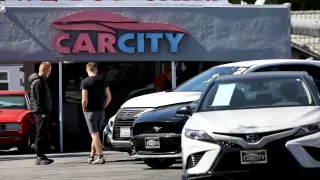
Cox Automotive lowered its forecast for used vehicle price increases to 0.2% for 2026, citing high fuel costs and rising interest rates. While wholesale prices fell 0.6% in September, electric and compact cars gained value, offsetting declines in larger SUVs and trucks.
GM is removing Apple CarPlay (and Android Auto) from its latest EVs and plans to drop CarPlay from gas models around 2028 when it rolls out its own centralized Android Automotive-based system, aiming for deeper in-car integration and data control—including EV charging-aware navigation—without relying on a smartphone. CarPlay Ultra remains a broader cockpit solution but is slow to spread and currently requires an iPhone, with Aston Martin offering it so far and other brands showing interest. Despite CarPlay’s broad availability today, GM’s move signals a shift toward native software ecosystems and ongoing data-privacy considerations.
Elon Musk said Tesla’s Cybercab motor can achieve the same range without rare-earth magnets, signaling a push toward domestic rare-earth production and less reliance on China. The remark ties to a 2025 U.S. deal with MP Materials to bolster domestic supply, and investors pushed MP Materials stock higher as markets weigh potential shifts in blade manufacturing and broader manufacturing supply chains.
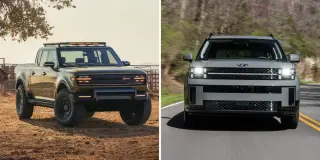
Automakers including Hyundai, Genesis, Ram, Jeep, Ford, and Scout Motors are betting on extended-range electric vehicles (EREVs) that pair a sizable battery with a gas generator to create electricity—and power wheels with electric motors—giving about 120–150 miles of electric driving plus hundreds more with a full tank. Proponents argue EREVs combine EV benefits with fewer charging constraints, especially for trucks and SUVs, but cost and consumer education remain risks as several models prepare for 2027–2028 launches (Ram 1500 REV, Jeep Grand Wagoneer REEV, Hyundai Santa Fe EREV, Scout Terra/Traveler, Ford F-150 Lightning updates, Genesis EREV). PHEVs have struggled to gain scale, underscoring the potential but challenging path for EREVs.
Honda plans to trim about 1.5 trillion yen ($9.4B) in costs by 2030, instructing suppliers to slash prices, standardize parts, and source more Chinese-made components to better compete with BYD and other Chinese EV makers, as EV-related losses exceed $12B; the company is also partnering with Nissan to develop standardized ECUs for software-defined vehicles by 2029 amid tariff and R&D cost pressures.
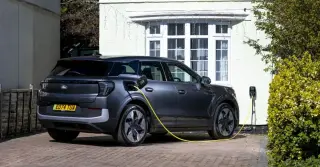
Britain is weighing a relaxation of its EV rules even as oil prices surge from geopolitical tensions, heatwaves rage, and EV sales accelerate toward targets. An August 14 consultation signals a potential watering down of the 2030 goal (to around 50–70%) and even talks of more North Sea drilling, despite BEV sales rising (July up ~44% YoY) and plug-ins nearing 40% of new car sales. Critics warn that weakening targets would hurt climate and energy security, while supporters argue rules should adapt to current conditions.
Tesla exhausted California’s five-day MyFirstEV rebate pool after the program launched, with $3,500 rebates for new EVs and $1,750 for used ones, leaving Tesla at a disadvantage due to price caps that exempt California‑based rivals Rivian and Lucid. InsideEVs estimates about $18 million in combined state and Tesla-funded rebates went to California buyers in those five days, part of roughly $271 million in total incentives (California contributing $135.5 million, matched by automakers) designed to offset the federal subsidy removal. Despite a national downturn in EV sales, California remains a strong market for Tesla, accounting for a large share of zero-emission vehicle registrations through June (about 57%), with roughly 500 Teslas registered daily in Q2.
GM beat Q2 expectations with revenue of about $48.0 billion and adjusted EPS of $3.57, prompting an upgrade to full-year guidance: adjusted EBIT of $14.0–$16.0 billion, adjusted EPS of $12.00–$14.00, and adjusted automotive free cash flow of $9.5–$11.5 billion. Tariff costs in Q2 were roughly $0.9 billion with similar exposure anticipated, while GM benefited from strong North American demand for pickups/SUVs and improved EV economics as it works through losses and supply-chain shifts. U.S. vehicle sales slipped about 4.2% year over year to roughly 715,000 in Q2, but GM maintained leadership in the US market and still sees an EV rebound on the horizon. The stock rose around 5% in midday trading.
Global demand for batteries is surging due to EVs and renewable storage, but lithium-ion remains dominant while two near-term paths emerge: affordable sodium-ion batteries for budget EVs and grid storage, and high-end solid-state cells for longer-range luxury EVs; researchers are exploring many chemistries and architectures to speed charging and improve safety, with commercialization of solid-state anticipated by the late 2020s to 2030s and lithium-ion likely to stay the majority through 2035.
Toyota is on pace to outsell GM in the first half of the year in the U.S., up about 1% to 1.25 million vehicles while GM falls roughly 7.2% to 1.33 million, as hybrids gain popularity and all-electric vehicles lag in adoption, per Cox Automotive forecasts.
EPA documents confirm Tesla’s Cybercab weighs 3,113 lb curb, uses a 163 kW (219 HP) front-wheel-drive motor with a 47.6 kWh lithium-ion pack (146 Ah) and ~53.4 kWh charging energy, delivering an unadjusted 418.2-mile combined EPA range (375.4 miles highway). The vehicle has a GVWR of 3,730 lb and about 617 lb payload; charging is primarily wireless. It entered commerce on May 29, 2026, but unsupervised autonomy has not been approved.
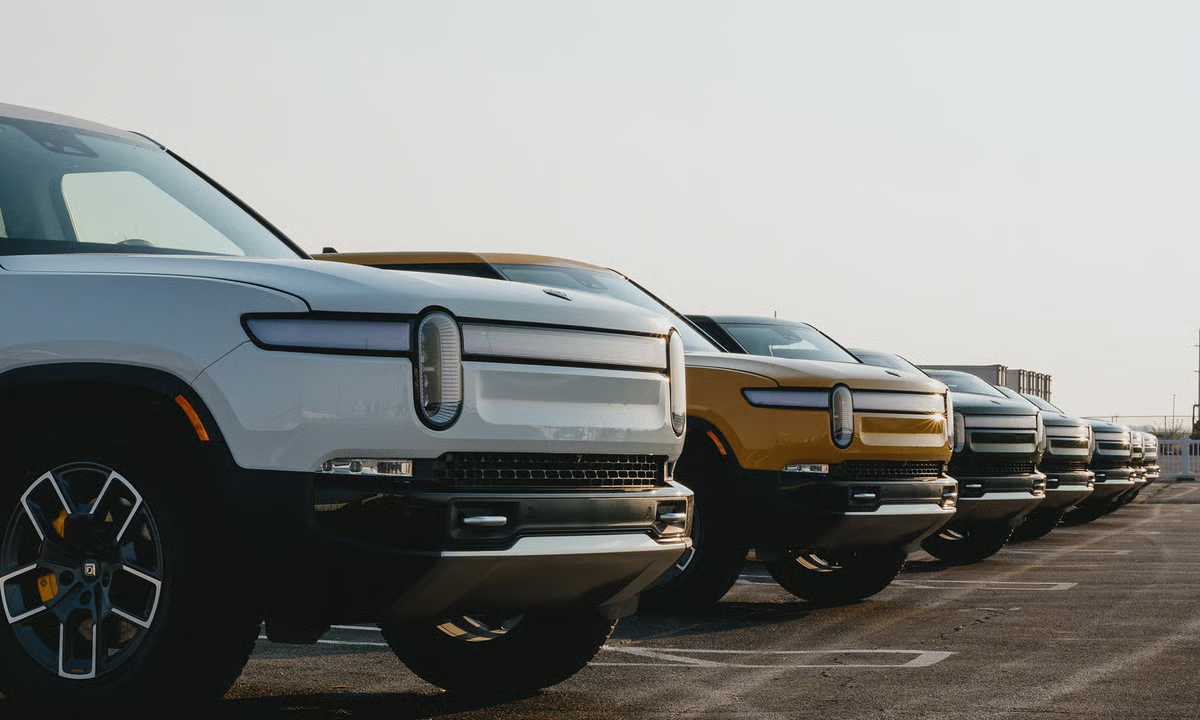
Rivian is ramping up for a mass-market R2, expanding capacity and backed by VW cash as it seeks profitability through scale. The R2’s reception will largely determine the stock’s fate; with shares down roughly 90% from highs and EV competition intensifying, risk is high. Investors should wait for early R2 sales data unless they’re willing to bet that the new model unlocks strong demand and lowers per-vehicle costs.
Mercedes-Benz unveils the AMG GT 4‑Door EV, a high‑performance sedan built on an 800‑volt platform with three axial‑flux motors delivering up to 1,153 hp and 1,475 lb‑ft, a Formula 1–inspired cooling system, and 600 kW ultra‑fast charging (10–80% in 11 minutes); it features MB.OS with the AMG Race Engineer Core, over 1,600 engine‑like sounds for the silent motor, and a claimed 0–60 time of about 2 seconds, with GT 55 arriving late 2026 and GT 63 in 2027.
The Detroit Three (Ford, GM, Stellantis) have cut more than 20,000 salaried positions—about 19% of their combined white-collar workforce—as AI, software-defined vehicles and EVs reshape the industry; GM accounts for the largest portion of cuts since 2022 (roughly 11,000), with Ford and Stellantis also reducing white-collar roles in ongoing restructuring.
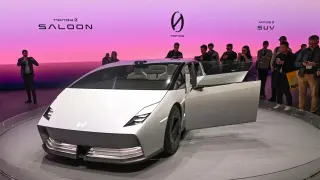
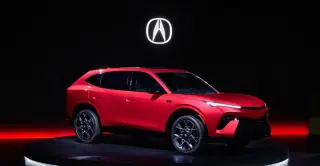
Honda unveiled hybrid Accord and Acura RDX prototypes, launching 15 next-gen hybrids by 2030 and shifting resources away from EV goals, with cost reductions, upgraded ADAS, and production reallocations to boost hybrids—while expanding kei-car EVs in Japan and reevaluating its EV strategy by 2030.