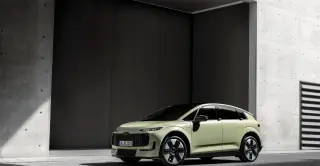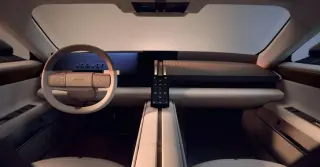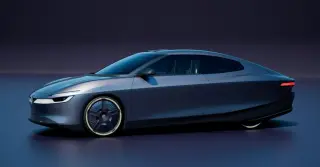
Jaguar shares a first look at the Type 01’s minimalist interior—a beige, spine-divided cabin with a slim center display and a ClearSight rear-view display—as the all-electric model moves toward its October reveal.
Ford has unveiled Fathom, a midsize electric pickup starting at $28,350 that pairs a full feature set—Apple Maps on a large touchscreen, Android Auto and Apple CarPlay support, open bed, frunk, and Blue Cruise sensors—with Ford’s new Universal Electric Vehicle platform and high-volume, parallel assembly to hit a low price. Production is planned at Louisville Assembly Plant with deliveries by end of 2027 and pre-orders opening early next year. Ford is positioning Fathom against the cheaper Slate Truck, which starts at $24,950 but omits many luxuries.
US EV sales rose about 14.7% in Q2 2026 to around 247,000 vehicles, signaling a slow rebound but still a roughly 20% year-over-year drop and a mixed overall picture after the end of the federal EV tax credit. Tesla led the charge, accounting for about one-third of Q2 EVs and roughly half of US sales, while Toyota and Subaru posted notable gains; other automakers pulled back after cutting EVs. High gas prices aren’t ideal, but they’ve nudged some buyers toward EVs, and forthcoming affordable models like Rivian’s R2, Slate Truck, and Ford’s $30k EV could help sustain momentum.
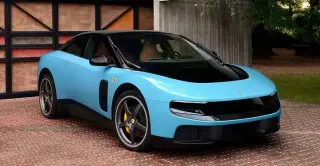
Ferrari has unveiled its first electric vehicle, the Luce, designed in collaboration with Jony Ive and Mark Newson’s LoveFrom. LoveFrom was allowed to define the design direction from the outset, inside and out, with a minimalist exterior and a highly buttoned interior. The four-motor, 1,035-horsepower EV is Ferrari’s second four-door model and five-seat car; pricing starts at €550,000 in Italy, with no US price announced yet.
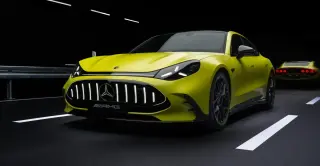
Mercedes-Benz unveils the AMG GT 4‑Door EV, a high‑performance sedan built on an 800‑volt platform with three axial‑flux motors delivering up to 1,153 hp and 1,475 lb‑ft, a Formula 1–inspired cooling system, and 600 kW ultra‑fast charging (10–80% in 11 minutes); it features MB.OS with the AMG Race Engineer Core, over 1,600 engine‑like sounds for the silent motor, and a claimed 0–60 time of about 2 seconds, with GT 55 arriving late 2026 and GT 63 in 2027.
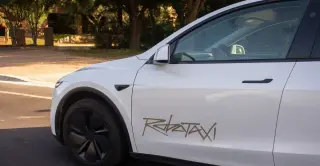
Tesla says its Full Self-Driving (Supervised) fleet has surpassed 10 billion miles, crossing the threshold Elon Musk set for “safe unsupervised” driving, but the system remains a Level 2 feature that requires a human driver to supervise. Musk had suggested roughly 10 billion miles of training data would be needed before unsupervised access, and liability questions—given Tesla’s owner-liability stance—remain unresolved. The company notes past crashes and legal cases, while gradually expanding unsupervised robotaxi use in Dallas and Houston (with Austin showing a mix of supervised and unsupervised vehicles). Tesla has signaled unsupervised access could come only when legally permissible, leaving customers waiting as thresholds continue to move.
An anticipated flood of over a million used electric vehicles in the next three years—driven by surging lease expirations (from about 123k in 2025 to 660k in 2028, per Cox Automotive)—could depress prices as most leases enter the used market. Used EVs are already priced similarly to gas cars, with notable depreciation like AutoNation’s 2023 Hyundai Ioniq 5 dropping from $58k new to about $28k used. Still, the glut may not last, as new EV sales and leases fell about 36% year over year from late 2024 into 2025 and continued to decline in early 2026.
Tesla reported Q1 2026 revenue of $22.4 billion and net income of $477 million (up 16% and 17% year-over-year) but missed Wall Street revenue expectations. The company also outlined plans for a first ‘large-scale’ Optimus robot factory ( Fremont line designed for 1 million robots per year, with Gigafactory Texas ready for a 10 million‑robot output) and continued work on the Dojo 3 AI computer, underscoring a shift toward AI and robotics alongside ongoing robotaxi efforts and traditional car sales.
Mercedes-Benz reintroduces the EQS in the US for 2027 with a 122 kWh silicon-oxide/graphite battery delivering about 575 miles WLTP, 800V architecture supporting up to 350 kW fast charging (roughly 320 km in 10 minutes), steer-by-wire with a new steering yoke, and MB.OS AI features, offered in multiple trims and with extensive customization via Manufaktur Made to Measure; price hasn’t been disclosed yet and the car is slated to reach US dealers in the second half of 2026.
Reuters reports Tesla is calling suppliers to build a new, standalone affordable electric SUV not based on the Model 3 or Model Y, with production slated first in China and then in the US and Europe, a major reversal for Elon Musk who once said cheaper EVs were pointless. The move follows the 2024 cancellation of a $25,000 “Model 2” and the release of stripped‑down Model 3/Y variants, and it raises questions about whether the new vehicle will be driverless or human‑driven as Tesla’s FSD progress continues to face hurdles.
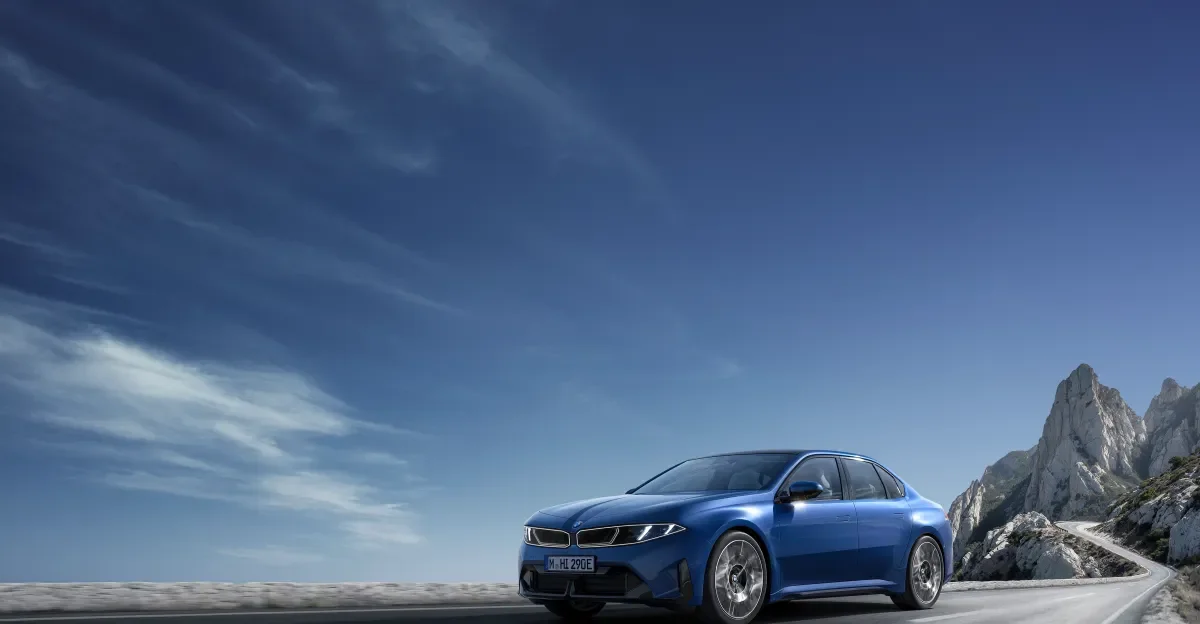
BMW is reviving the i3 name on a Neue Klasse-based four-door electric sedan that uses the iX3 powertrain and a new cylindrical-cell battery, targeting about 440 miles of range with 400 kW charging. The first model, i3 50 xDrive, pairs dual motors (all-wheel drive) with teased single-motor and quad-motor variants for the future. Not a reboot, but a retcon, the car promises a roomier interior, the Panoramic Vision system, a 17.9-inch touchscreen, OTA updates, and Alexa integration. Expect around $60k in the US and manufacturing starting in August 2026.
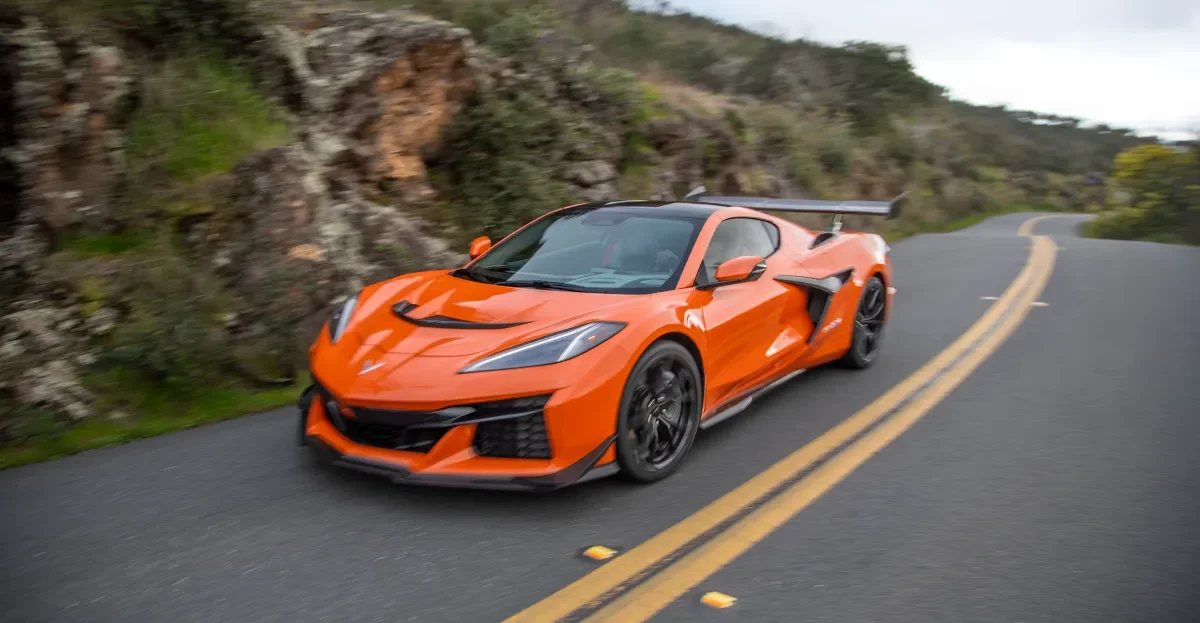
Chevrolet’s Corvette ZR1X pairs a 5.5-liter V8 with a front-electric motor to deliver 1,250 hybrid horsepower, a 0–60 mph time of 1.67 seconds, and a Nürburgring lap under seven minutes, all for about $207,395—outpacing several hypercars and illustrating that electrified performance is reshaping the top tier of sports cars.
Tesla trims the Cybertruck price to $59,990 for an AWD model with a 325‑mile range and new features like a powered tonneau cover, bed outlets, and adaptive damping; Musk says the low price is temporary, while the Cyberbeast remains at $99,990 amid multiple price swings, and 2025 sales have slumped, underscoring that the stigma around the truck persists.
US EV registrations fell in 2025 for the first time in ten years, according to S&P Global. The decline followed the end of federal EV incentives (including the $7,500 tax credit), with a sharp 48% drop in December after a Q3 rush. Beyond incentives, higher EV prices, range anxiety, and faster depreciation—especially in high-end models like the Porsche Taycan—weighed on demand.
Volkswagen's new ID. Polo electric car reintroduces physical buttons for controls, contrasting with previous models, and features a modern interior with recycled materials, aiming to offer an affordable, spacious, and sustainable urban EV starting at less than $30,000, with sales beginning in April 2026.