President Trump says raising interest rates would be wrong and calls for a rate cut, signaling deference to Fed nominee Kevin Warsh even as a strong May jobs report and market expectations keep the Fed path uncertain.
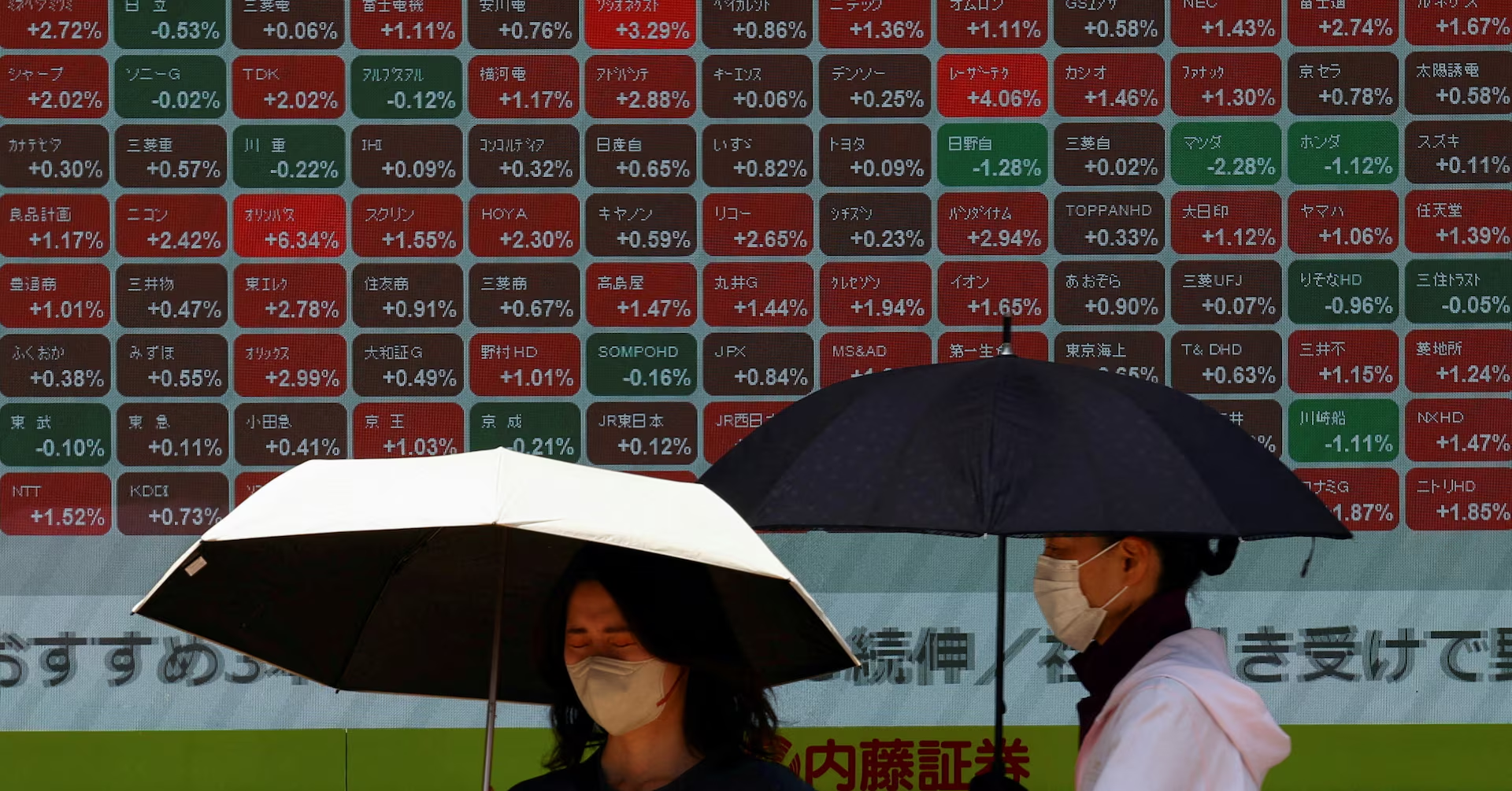
Asian stocks rose on Thursday as technology shares drove gains, offsetting rate-uncertainty, with South Korea’s KOSPI hitting a record near 5,673 as Samsung Electronics led memory-chip gains on AI demand and chip-price optimism; Samsung’s HBM4 mass production news and a chip-shortage backdrop supported pricing. Australia’s ASX 200 also reached a record around 9,118 on strength in mining and banks, while Japan’s Nikkei rose on a weaker yen boosting exporters. January exports in Korea surged about 34%, and softer domestic jobs data kept rate-hike bets in check, even as Fed signals remained hawkish. Mainland China and Hong Kong markets were closed for the Lunar New Year.
Most forecasts for 2026 suggest mortgage rates will stay in the low 6% range with only modest declines, and they are influenced by various factors beyond the Federal Reserve's rate. Buyers should focus on purchasing when financially ready rather than trying to time the market perfectly, as mortgage rates can move independently of Fed policy.
Wholesale prices unexpectedly declined by 0.1% in August, providing the Federal Reserve with potential room to cut interest rates at its upcoming meeting, amid signs of easing inflation and a cautious economic outlook.
Asian shares declined following the US's announcement of new tariffs on multiple countries, while investors await US jobs data that could influence the Federal Reserve's interest rate decision. The US imposed tariffs ranging from 10% to 41% on imports from various nations, causing market fluctuations and affecting currencies and commodities. Strong corporate earnings and inflation data further complicated the market outlook, with the US dollar strengthening and bond yields remaining steady.
Questions about the accuracy and reliability of U.S. economic data, including labor and inflation reports, have raised concerns among investors and policymakers, potentially complicating Federal Reserve decision-making and impacting financial markets.
Asian stocks rose as President Joe Biden expressed optimism for improved US-China relations, with Hong Kong's Hang Seng Index leading gains. Meanwhile, US and European equity futures were steady as investors awaited progress on debt-limit talks. Traders are also focused on the path for the Fed's benchmark rate, with bets for a hike in June trimmed to 25% as Jerome Powell signaled a pause. Cryptocurrencies saw mixed movement, with Bitcoin falling slightly while Ether remained stable.
Oil prices surged after OPEC+ announced a surprise cut in their output target, causing a ripple effect in stock markets and boosting the dollar due to fears about global inflation. Central banks have raised interest rates rapidly in the past year to control inflation. The move by OPEC+ spread through stock markets, with energy-sensitive and tech stocks dropping. The surge in energy costs overshadowed Friday's slower reading for core U.S. inflation. The outlook for U.S. rates could be impacted by data on ISM manufacturing and several pieces of employment data out this week.