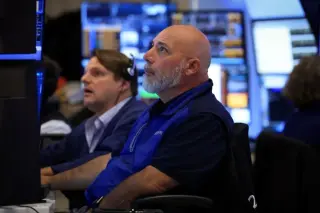
Payrolls data, Broadcom results put stock rally on edge
A fresh look at August employment data and Broadcom earnings will test the stock-market rally near record highs as traders weigh the Fed's rate trajectory after Nvidia's upbeat guidance.

All articles tagged with #jobs data
A fresh look at August employment data and Broadcom earnings will test the stock-market rally near record highs as traders weigh the Fed's rate trajectory after Nvidia's upbeat guidance.
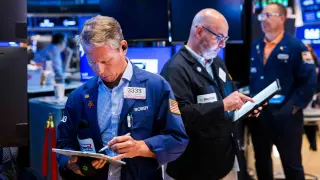
U.S. stocks rose as cooler inflation (soft PPI) and strong earnings supported sentiment that the Fed will hold rates; the Dow added about 150 points to 52,659.18, the S&P 500 rose to 7,572.43, and the Nasdaq 26,269.23 as futures were mixed but broadly higher. Lower Treasury yields aided demand for growth names, especially mega-cap tech, with investors awaiting Thursday’s retail sales and jobless claims data. UnitedHealth and Netflix were eyed for earnings; after-hours moves included United Airlines slipping on softer quarterly guidance and higher fuel costs, while J.B. Hunt jumped on an earnings beat.

US stock futures are mixed ahead of the June jobs report: Nasdaq futures slide about 0.3%, Dow futures edge up around 0.2%, and S&P 500 futures are broadly flat, as a tech-led decline in Asia and a quiet oil backdrop weigh on sentiment. Investors are parsing inflation signals from Federal Reserve officials while awaiting Friday’s nonfarm payrolls release, expected to show about 115,000 jobs added in June with the unemployment rate at 4.3%. A stronger jobs reading could lift rate-hike expectations for the year, adding to a cautious market mood amid mixed data and geopolitical headlines.
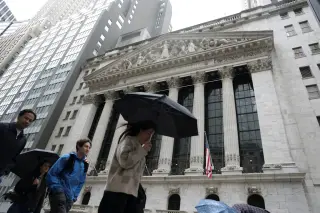
U.S. stock futures pulled back on Wednesday after an AI-led rally, with Dow and S&P 500 futures down about 0.4% and Nasdaq-100 futures about 0.6%, following a session that saw the Dow hit a record and tech stocks rally on the back of AI. Investors are weighing easing headwinds like oil prices and ongoing U.S.–Iran talks while awaiting the June jobs report due Thursday to gauge the Fed’s likely path for rate hikes later this year.

May payrolls rose 172,000—well above expectations—while unemployment held at 4.3% and inflation hovered near 3.8%, spurring a shift from expectations of rate cuts to bets on higher-for-longer rates. That outlook sent Treasury yields higher and erased about $1.4 trillion of S&P 500 market value in a single session, marking a dramatic re-pricing of rates despite a resilient economy. Investors also weighed big equity raises and AI-related IPOs (Meta, SpaceX, Anthropic, Alphabet) that could widen supply, reinforcing concerns that higher rates could persist into 2027 while earnings and valuations navigate the new regime.

May payrolls rose 172,000 vs expectations, wiping about $1.4 trillion from the S&P 500 as rate-cut bets collapsed; a resilient labor market and inflation near 3.8% pushed traders to price in higher-for-longer rates into 2027. AI-focused stocks faced additional pressure from looming stock offerings and IPOs, while investors weigh whether valuations can stay elevated if borrowing costs remain higher.

President Trump says raising interest rates would be wrong and calls for a rate cut, signaling deference to Fed nominee Kevin Warsh even as a strong May jobs report and market expectations keep the Fed path uncertain.

After a broad market selloff dragged the S&P and Nasdaq lower, Trump attempted to soothe investors with posts about a strong May jobs report (172,000 jobs; unemployment 4.3%) and claimed growth doesn’t spur inflation, but stocks kept falling. The downturn was led by semiconductor and AI names, and while the May payrolls beat expectations, Trump’s remarks on Truth Social did little to reverse the slide.

Tech stocks pulled back as momentum leaders reversed recent gains after a strong May jobs report, with Broadcom’s results failing to justify further AI-driven bets and several AI-linked names sliding. Higher yields and altered rate-cut expectations pressured risk assets, sending the S&P 500 down about 1% and the Nasdaq over 2%. The broad rally paused as investors reassessed valuations, while Lululemon fell after cutting its full-year outlook, signaling continued mixed signals for sector-specific names amid the macro backdrop.
Micron Technology's stock fell about 5% as May payrolls data exceeded expectations, raising the odds of Federal Reserve rate hikes and pressuring tech stocks, even though Nvidia certified Micron's high-bandwidth-memory chips for its AI accelerators; investors remain focused on macro risks in a broad market sell-off.

A strong May payrolls report (172,000 with revisions) muddles the case for near‑term rate cuts and tests new Fed Chair Kevin Warsh as peers publicly scrutinize his inflation framework and policy stance; markets push out easing expectations for June and price a higher likelihood of later-year moves amid persistent inflation and energy-price uncertainties.
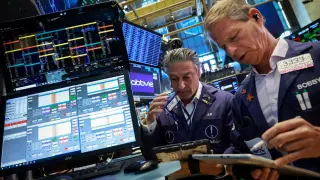
A stronger-than-expected May payrolls report kept the labor market resilient, sending U.S. Treasury yields higher: the 10-year rose to about 4.538%, the 2-year to 4.153% and the 30-year to 5.005%, with unemployment at 4.3% and leisure/hospitality leading gains, reinforcing bets that the Fed will delay rate cuts.
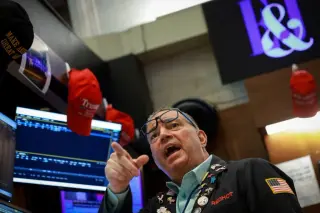
April payrolls rose 115,000 with unemployment at 4.3% and wages up 3.6%, even as labor-force participation falls and the labor share of income hits a record low; markets hit new highs on earnings and tech leadership, but El-Erian warns a geoeconomic ceiling could emerge if energy tensions persist and inequality worsens. Consumer confidence is at a record low despite spending, and the Fed is expected to hold rates for now with Warsh taking the helm while Powell stays on the board.

The US added 115,000 jobs in April, beating economists’ expectations for the second straight month, while the unemployment rate stayed at 4.3%. Revisions show three-month average gains of about 48,000, hinting the labor market remains sturdy. Strong hiring in retail and transportation/warehousing helped lift stocks, even as wage growth was modest and energy prices rose on a Middle East tensions-driven spillover. The report supports the view that the Fed may hold rates steady for now, with some economists anticipating slower hiring later in the year.

U.S. payrolls rose 115,000 in April and the unemployment rate held at 4.3%, signaling a resilient labor market even as energy prices stay elevated amid the U.S.–Iran conflict. Healthcare led gains, with transportation/warehousing and retail adding jobs, IT fell, and 4.9 million workers were employed part-time for economic reasons; wages rose 3.6% year over year.