
New study links X-linked gene ZFX to autism’s female protective effect
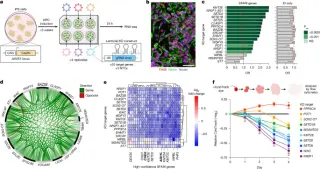
Researchers at Nature have identified a molecular mechanism for the 'female protective effect' in autism spectrum disorder (ASD). By analyzing human neural progenitor cells, the study found that disrupting 18 distinct ASD genes causes similar changes in gene expression, a phenomenon known as transcriptomic convergence. The team reconstructed a gene regulatory network to identify central drivers of this convergence, including CHD8 and REST. Crucially, they found that the X-linked transcription factor ZFX, which is expressed from both X chromosomes in females, acts as a key activator of many ASD genes. The higher expression of ZFX in female brains may buffer against damaging mutations, explaining why females require more genetic risk to manifest ASD than males.