
New study links X-linked gene ZFX to autism’s female protective effect
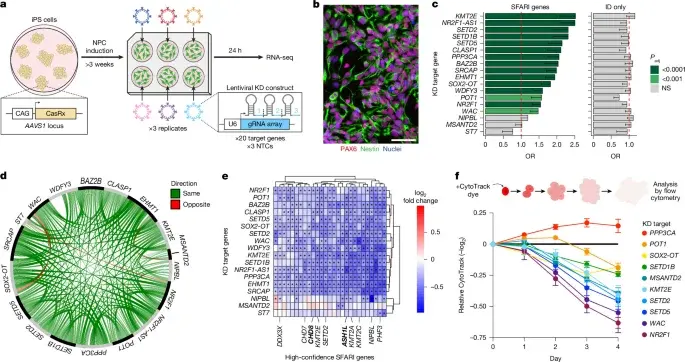
Researchers at Nature have identified a molecular mechanism for the 'female protective effect' in autism spectrum disorder (ASD). By analyzing human neural progenitor cells, the study found that disrupting 18 distinct ASD genes causes similar changes in gene expression, a phenomenon known as transcriptomic convergence. The team reconstructed a gene regulatory network to identify central drivers of this convergence, including CHD8 and REST. Crucially, they found that the X-linked transcription factor ZFX, which is expressed from both X chromosomes in females, acts as a key activator of many ASD genes. The higher expression of ZFX in female brains may buffer against damaging mutations, explaining why females require more genetic risk to manifest ASD than males.
Key points
- Knockdown of 18 ASD genes in human neural progenitor cells resulted in widespread downregulation of other ASD genes, demonstrating transcriptomic convergence.
- Gene regulatory network reconstruction identified CHD8 and REST as central transcriptional regulators driving this convergence.
- ZFX, an X-linked transcription factor, was identified as a key activator of ASD genes.
- ZFX is expressed from both the active and inactive X chromosomes in females, leading to higher expression levels in female brains compared to males.
- This higher ZFX expression is proposed to buffer damaging mutations in diverse ASD genes, contributing to the female protective effect.
- The study provides a framework for understanding how variants in diverse genes cause convergent molecular effects leading to ASD.
Background
Autism spectrum disorder is highly heritable, with hundreds of genes implicated as rare causes. ASD is three to four times more common in males than females, and females tend to carry more autosomal risk alleles than males before manifesting the condition. The biological basis of this 'female protective effect' had remained unknown until this study.
Why it matters
This research provides a molecular explanation for the sex bias in autism prevalence, suggesting that females have a natural genetic buffer against ASD-causing mutations. Understanding this mechanism could improve diagnostic criteria and therapeutic strategies for both males and females with ASD.
What to watch
Future research may focus on validating the role of ZFX in other neurodevelopmental disorders and exploring how gene regulatory networks can be targeted for therapeutic intervention.
- Transcriptomic convergence and the female protective effect in autism Nature
- Researchers identify genetic 'convergence' in autism and a possible explanation for the female protective effect Medical Xpress
- Scientists discover hidden genetic clues that may help explain autism Earth.com
- Microexons May Help Explain the 85% of Autism Cases Without a Clear Genetic Cause Technology Networks
Want the full story? Read the original reporting
Read on Nature