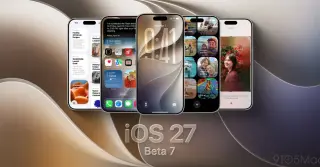
Apple released iOS 27 beta 7, highlighting a major Siri AI upgrade and broader Apple Intelligence rollout across apps, with on‑device and Private Cloud Compute, a Dynamic Island–integrated Siri UI and a new Siri app, plus assorted UI and performance tweaks; beta users should anticipate bugs and compatibility quirks.
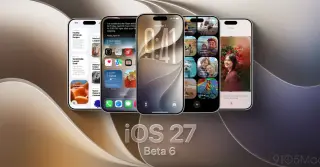
Apple releases iOS 27 beta 6 signaling a major Siri AI overhaul powered by Apple Intelligence and its Foundation Models, bringing richer conversations, on-device and Private Cloud Compute, a new Dynamic Island–driven Siri UI, and a dedicated Siri app across devices, plus broad AI enhancements across Photos, Safari, Passwords, Mail, Messages, and more along with assorted performance and UI refinements.
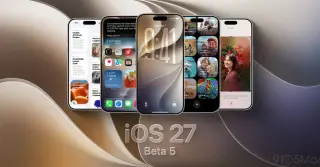
Apple's iOS 27 beta 5 introduces a major Siri AI overhaul under the Apple Intelligence umbrella, powered by the next-gen Apple Foundation Models with on-device and Private Cloud Compute. The update brings richer, context-aware conversations, a Dynamic Island-tied visual Siri experience, and a dedicated Siri app across devices, plus Visual Intelligence and a new Siri mode in the Camera app. Apple Intelligence expands across Photos, Safari, Passwords, Mail, Messages, Phone, Shortcuts, Home, and more. Other iPhone changes include the Liquid Glass redesign with a transparency slider, faster app launches, improved camera and AirDrop performance, keyword and star-rating features in Photos, Dual Capture in FaceTime, customizable AirPods EQ, new recovery options, easier Apple Pay card switching, and AI-generated wallpaper creation. Beta notes warn of bugs and rough edges as Apple tests the release.
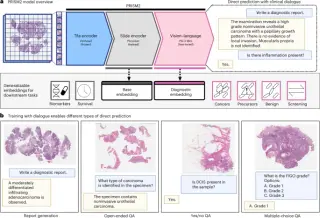
A new end-to-end multimodal pathology foundation model, PRISM2, is trained on millions of whole-slide images and pathology reports with clinical-dialogue supervision to align histomorphology with diagnostic reasoning. It uses contrastive and autoregressive objectives to generate diagnostic embeddings that support prompt-based inference and transfer to downstream tasks, achieving clinical-grade performance on cancer detection benchmarks and enabling tasks such as cancer grading, survival and biomarker prediction with minimal additional training.
Apple released iOS 27 beta 4 headlined by a major Siri AI upgrade powered by Apple Intelligence and Foundation Models, delivering richer on‑device conversations, broader AI features across Photos, Safari, Mail and more, plus a Dynamic Island Siri UI. Some features require newer iPhone hardware and on‑device AI capabilities, with on‑device processing limited by devicegen/eligibility; the public release is expected this fall and beta 2 is anticipated soon.
Apple’s iOS 27 beta 3 introduces a major Siri AI upgrade powered by Apple Intelligence and Foundation Models, delivering richer conversations, some on-device AI, a Dynamic Island–integrated Siri interface, and broader app integration across the system; however, many features require newer hardware. The release also brings UI refinements (Liquid Glass), performance improvements, and tweaks to Photos, Camera, Messages, and AirPods.
Apple’s iOS 27 beta 2 centers on a major Siri AI upgrade powered by Apple Intelligence and Foundation Models, enabling richer conversations, on-device and Private Cloud Compute, and broader AI features across Photos, Safari, Passwords, Mail, Messages, and more, with a redesigned Siri experience tied to Dynamic Island and a dedicated Siri app. Device compatibility varies (iPhone 11+ and iPhone SE 2+ supported; strongest on-device AI on newer hardware like iPhone 17 Pro and iPhone Air). Beta 2 typically focuses on bug fixes and refinements, with a public beta expected in July and a full release this fall.
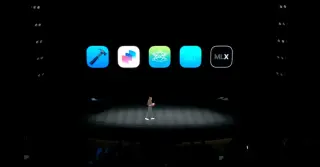
Apple kicked off WWDC26 with a 90-minute session showing off new developer AI tools, including a demo where an entire app is built from a single prompt and refined with follow-ups, new Xcode 27 features for upfront project planning, and deeper integration of Siri AI with the Apple Foundation Models, Core AI, and MLX frameworks, plus a locally run 1-trillion-parameter Kimi 2.6 model in LM Studio across Mac Studios.
Apple unveils AFM 3, its third generation of Foundation Models, a five-model lineup spanning on-device options (AFM 3 Core and AFM 3 Core Advanced) and cloud-based ones (AFM 3 Cloud, ADM 3 Cloud (Image), AFM 3 Cloud Pro), with AFM 3 Cloud Pro hosted on NVIDIA GPUs in Google Cloud. The rollout extends Private Cloud Compute to third-party infrastructure while preserving Apple’s privacy protections, highlights a sparse 20‑billion-parameter AFM 3 Core Advanced architecture, and reports extensive human evaluations showing improvements over prior generations; training used a mix of public, licensed, open-source, synthetic data and did not include user data, with publishers able to opt out of training.
Researchers are building ‘virtual cells’—AI- and mechanistic-models trained on large transcriptomic and other omics datasets—to simulate cellular states and predict how cells respond to different perturbations, with the goal of speeding hypothesis generation and identifying therapeutic avenues. While foundations models and data platforms (like scBaseCount, Pisces, X-Atlas, and State) show promise for predicting perturbation effects and immune-cell behavior, experts caution that current models mainly capture static states, struggle with dynamic evolution and tissue-scale mapping, and remain limited by noisy data and a need for causal, diverse training data to achieve robust, translatable predictions.
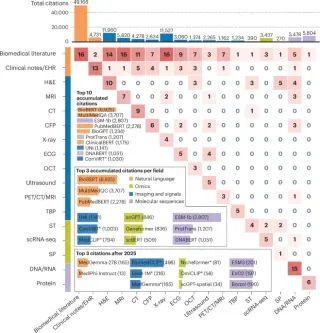
A Nature Biotechnology survey analyzes the current landscape of biomedical foundation models, highlighting trends across modalities, networks of modality integration, and rising citation activity, and offering outlooks on future developments and challenges in applying AI foundations to biomedicine.
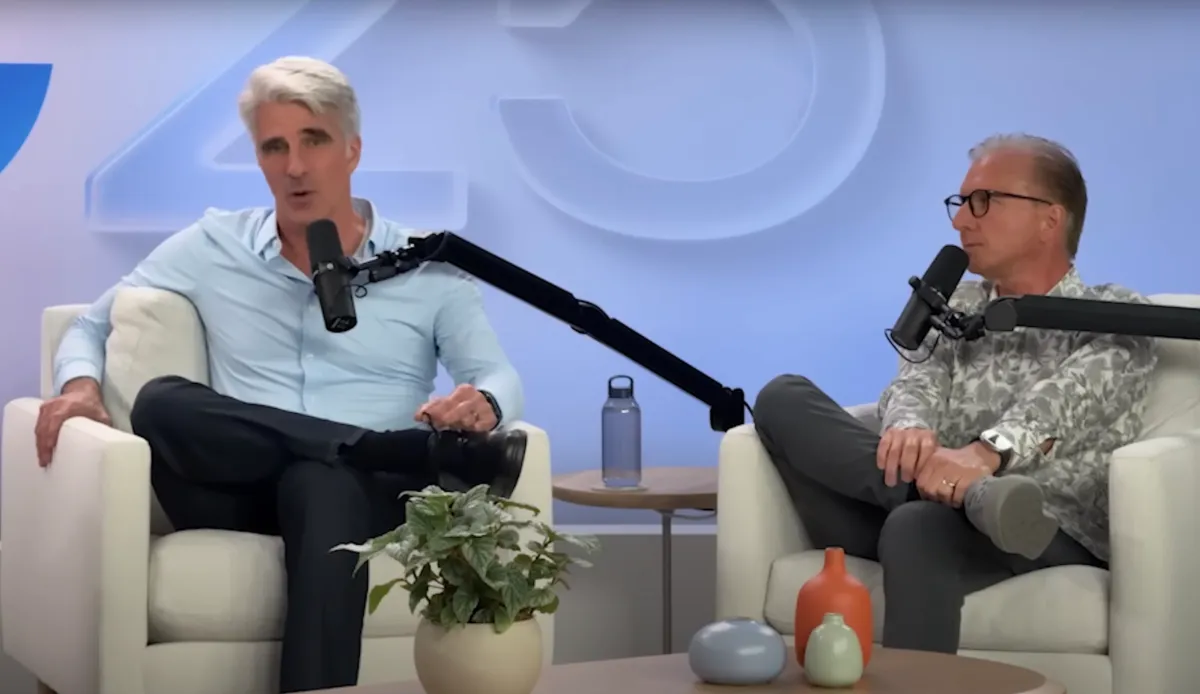
Apple executives clarified that the AI-powered Siri demoed at WWDC 25 was not vaporware, but a work-in-progress technology that will be shipped in a more advanced form in 2026. They emphasized that Apple's AI strategy focuses on integrating intelligence across its platforms rather than creating a chatbot to compete with ChatGPT, and that the current demonstrations involved real software with a large language model, though still not ready for release due to error rates.
At WWDC 2025, Apple announced a new version of Xcode that integrates OpenAI's ChatGPT for coding and documentation, allowing developers to connect AI models from other providers via API keys. Additionally, Apple launched the Foundation Models framework for on-device AI, enabling developers to access AI models with minimal code, and demonstrated Swift Assist, a coding assistant for Xcode.
Apple announced new enhancements to its developer tools, including a redesigned software interface, the Foundation Models framework for on-device AI, and Xcode 26 with large language model integration, aimed at fostering creativity and innovation across its platforms.
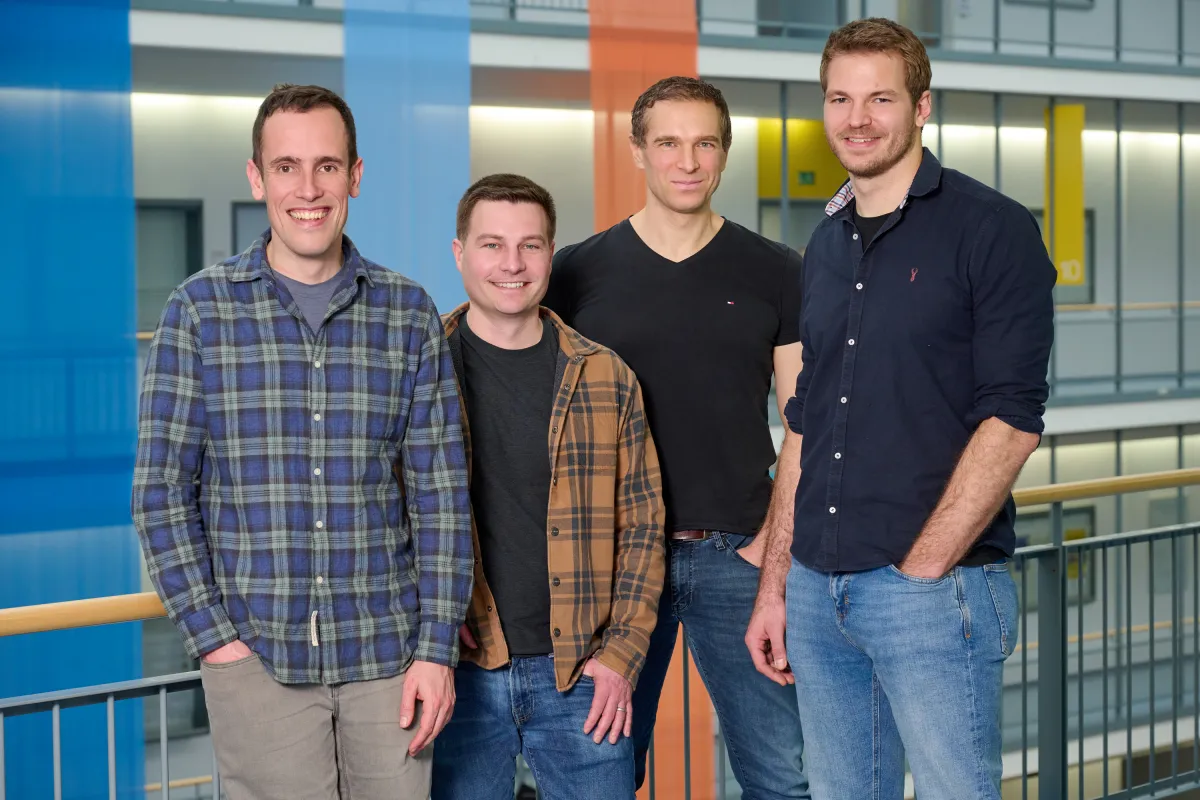
European AI researcher Matthias Niessner has raised $13 million to develop advanced 3D environment generation models from text prompts, aiming to create interactive, photorealistic 3D worlds with potential applications in gaming, entertainment, and real-world simulations. The startup SpAItial, founded by Niessner and a team of experts, seeks to license its technology for various downstream uses, focusing on quality and interactive 3D spaces, with the ambitious goal of enabling anyone to create their own video game in minutes.