
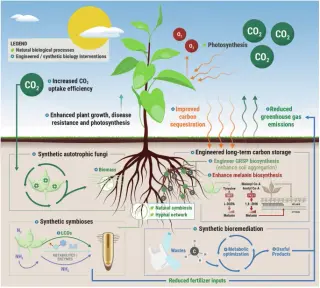
Synthetic biology targets soil fungi to boost carbon sinks and ecosystem resilience
A new review in Nature highlights the potential of engineering soil-borne fungi to enhance carbon storage and environmental resilience. While plants and bacteria are well-studied, fungi contribute significantly to soil carbon retention, with mycorrhizal networks handling roughly 3.58 Gt C per year. The article argues that synthetic biology tools, such as CRISPR-Cas9, can be adapted for understudied fungal guilds to improve nutrient exchange, degrade pollutants, and stabilize soil carbon. This approach could complement existing carbon removal strategies, which currently face limitations in long-term stability and scalability.