
Synthetic biology targets soil fungi to boost carbon sinks and ecosystem resilience
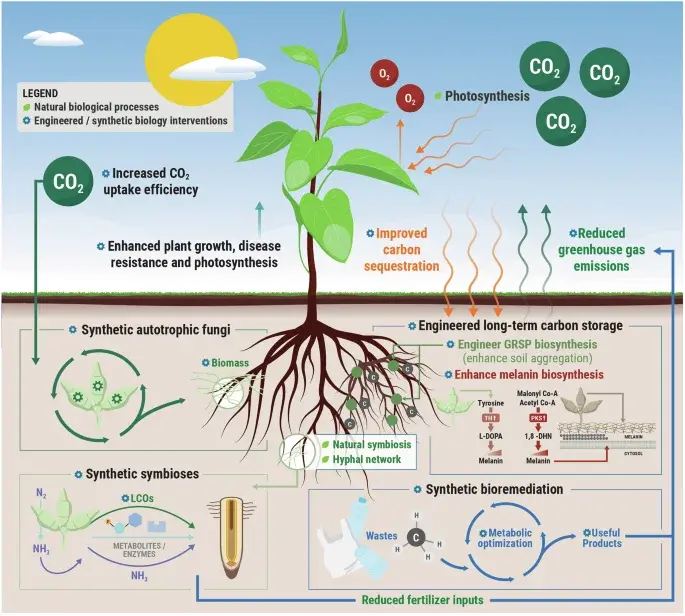
A new review in Nature highlights the potential of engineering soil-borne fungi to enhance carbon storage and environmental resilience. While plants and bacteria are well-studied, fungi contribute significantly to soil carbon retention, with mycorrhizal networks handling roughly 3.58 Gt C per year. The article argues that synthetic biology tools, such as CRISPR-Cas9, can be adapted for understudied fungal guilds to improve nutrient exchange, degrade pollutants, and stabilize soil carbon. This approach could complement existing carbon removal strategies, which currently face limitations in long-term stability and scalability.
Key points
- Soil fungi, particularly mycorrhizal types, store approximately 20% more carbon in agricultural soils than bacteria due to slower turnover and higher carbon use efficiency.
- Mycorrhizal fungi receive about 3.58 Gt C annually from plants, a scale comparable to the 1.9–2.4 Gt C per year needed for mid-century climate targets.
- Ectomycorrhizal fungi can reduce soil organic carbon respiration by up to 67%, while arbuscular mycorrhizal fungi typically increase soil organic carbon by about 21.5% in controlled studies.
- Current genetic tools for soil fungi, including Agrobacterium-mediated transformation and CRISPR-Cas9, are advancing but remain limited for many species due to complex genomes and lack of standardized protocols.
- Climate change is altering fungal physiology, shifting fruiting times, and promoting the spread of thermotolerant pathogens, which threatens both ecosystem stability and food security.
Background
This review builds on earlier discussions of biological carbon capture, such as the 2026 report on natural carbon feedback loops that could add 0.4C to global warming by 2100. It also aligns with recent innovations in electrochemical CO2 conversion and engineered bacteria for disease prevention, reflecting a broader trend toward using biological systems to address environmental and health challenges. The focus on fungal synthetic biology represents a shift from plant-centric engineering to leveraging underground microbial networks for climate mitigation.
Why it matters
As traditional carbon removal methods face saturation and scalability issues, engineering fungi offers a promising alternative to enhance natural carbon sinks. By improving soil health and nutrient cycling, these interventions could support long-term climate resilience while addressing agricultural productivity and environmental pollution. However, the success of this approach depends on overcoming technical barriers in genetic manipulation and understanding the complex interactions between fungi, plants, and soil ecosystems.
What to watch
Researchers will likely focus on developing more efficient genetic tools for understudied fungal species, particularly those with complex genomes. Future studies may explore the integration of synthetic biology with existing carbon removal strategies, such as biochar and enhanced rock weathering, to maximize carbon sequestration. Additionally, monitoring the impacts of climate change on fungal communities will be crucial for predicting ecosystem responses and ensuring the sustainability of these interventions.
Want the full story? Read the original reporting
Read on Nature