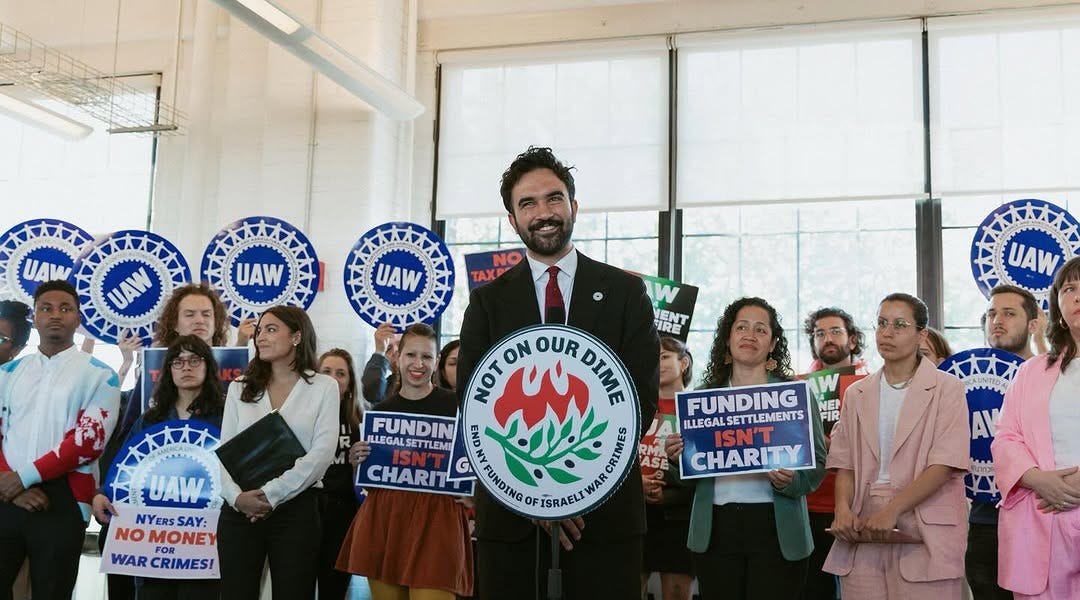
DSA chapters report a surge in energy and membership after primary victories in New York City and Colorado, with NYC adding about 500 members and Colorado-backed campaigns mobilizing around 6,500 volunteers who knocked on 100,000 doors and made 500,000 calls, underscoring support for DSA-backed policies like Medicare for All and universal child care as broadly popular and expanding organizing capacity ahead of the midterms.
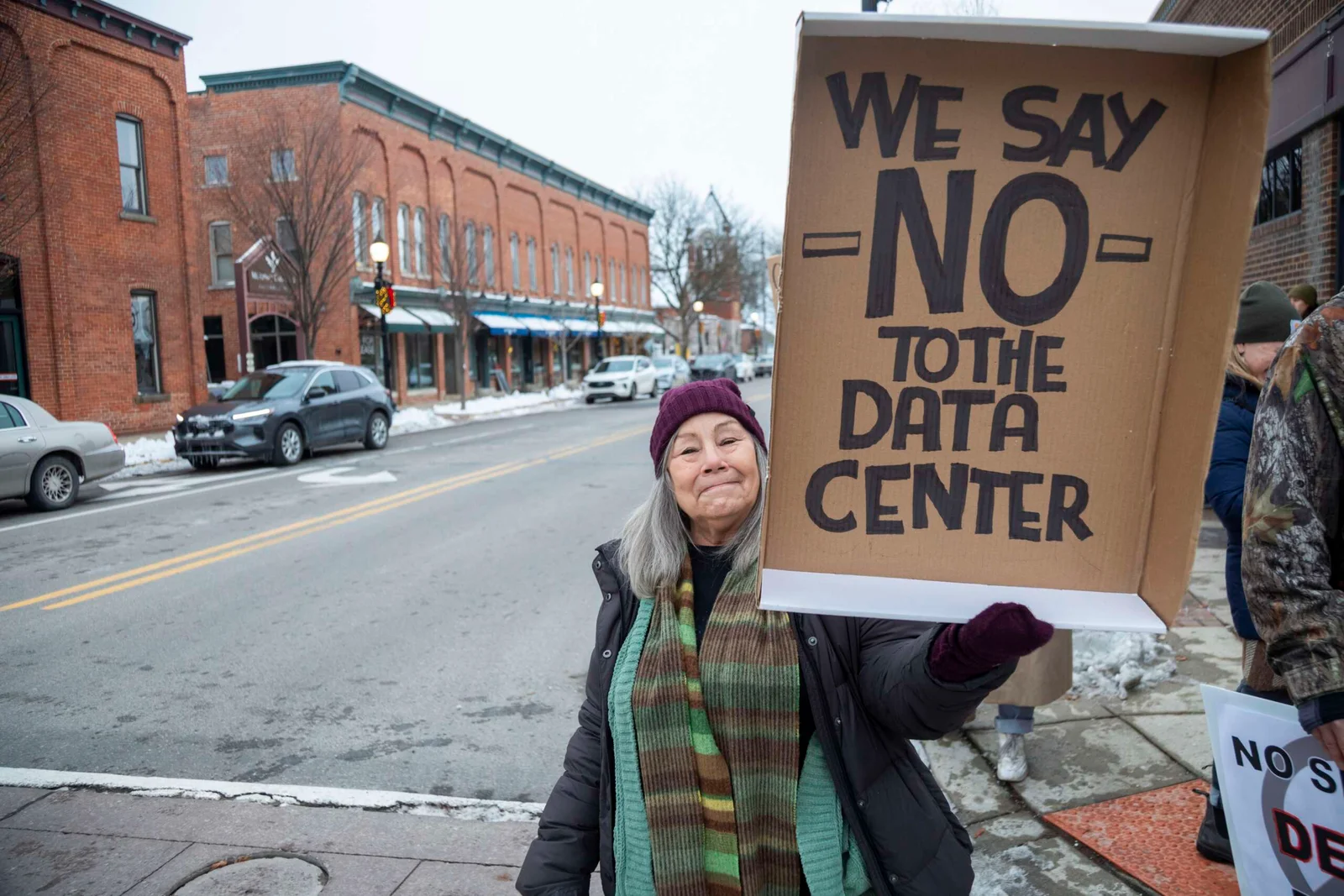
This op-ed argues that the anti-datacenter movement is a crucial, cross-partisan fight to curb AI infrastructure's power and defend democracy, not mere “nimby” activism. Local moratoriums and community organizing from North Carolina to New Jersey show how residents can push for safety, energy and water safeguards, jobs, and transparency, challenging backroom deals by big tech and investors. Proposals from Bernie Sanders and Alexandria Ocasio-Cortez, including state moratoriums and potential federal regulation, are highlighted as ways to leverage public pressure for meaningful AI governance. The authors counter liberal critiques that frame the movement as elitist, insisting that blocking datacenters creates political leverage to rein in tech giants and spur accountable, democratic control of AI. They warn that tech PR, dark money, and aggressive tactics will intensify, but view this resistance as an opportunity to build a broad, populist coalition that can shape a safer, more democratic AI future.
Organizers from Memphis (TN), DeForest (WI), and Tucson (AZ) share tactics to resist AI data centers: rapidly mobilize the community, attend public meetings, file open-records requests, and build coalitions; leverage social media, door‑to‑door outreach, and local experts to counter misinformation; focus messaging on water and electricity impacts and affordability to win broad support; maintain volunteer networks and power-map to target decision-makers. Their efforts have halted or slowed projects (e.g., Wisconsin’s DeForest case, Tucson’s Project Blue) and underscore how local organizing can push back against the AI data-center boom.
Wisconsin residents, led by DeForest organizers, blocked a Blackstone-backed QTS data center annexation, illustrating a growing nationwide grassroots playbook against private-equity–backed data-center expansion and its potential to raise energy costs and strain water resources, while urging stronger regulations on data centers and privatized utilities.
Zohran Mamdani's successful NYC mayoral campaign was the result of a decade of grassroots organizing by NYC-DSA, emphasizing collective effort, strategic campaigning in Democratic primaries, and a strong organizational culture rooted in democratic socialism, demonstrating that sustained, community-based work can lead to significant political breakthroughs.
The New York Working Families Party has appointed Ana María Archila and Jasmine Gripper as its first-ever co-directors. The progressive state party aims to strengthen its identity as a left-wing mobilization force and plans to support New York Democrats in reclaiming congressional swing seats. The party's values include combating climate change, expanding affordable housing and childcare, and supporting newly arrived migrants. Archila and Gripper emphasize the importance of community organizing, grassroots leadership development, and political strategy in achieving their goals.