Tag

Great White Shark

All articles tagged with #great white shark

Nature's Deadliest Arsenal: Lightning Punches, Lethal Venoms, and Harpoon-kissed Predators
science11 days ago

Nature's Deadliest Arsenal: Lightning Punches, Lethal Venoms, and Harpoon-kissed Predators

A science feature surveys nature’s deadliest weapons—from the mantis shrimp’s 31 m/s punch that cavitates water and can crack shells, to the Dracula ant’s ultra-fast mandibles, the great white shark’s fearsome bite, and cone snail venoms—explaining how different delivery systems work, how venom potency is assessed by LD50, and how evolution shapes these weapons across animals and even plants and human culture.

Peru Uncovers Near-Complete 7-Meter Shark Ancestor Pointing to Great White Origins
science23 days ago

Peru Uncovers Near-Complete 7-Meter Shark Ancestor Pointing to Great White Origins

Peru’s Pisco Basin has yielded a nearly complete 9-million-year-old fossil of Cosmopolitodus hastalis, a seven-meter-long relative of the modern great white, with 9-centimeter blade-like teeth and sardine remains in its stomach. The well-preserved specimen offers rare insight into jaw arrangement and tooth evolution, supporting a transitional path from mako-like sharks to modern great whites.

Gretel the Great White’s Pond Predicament and a Dramatic Ocean Rescue
science1 month ago

Gretel the Great White’s Pond Predicament and a Dramatic Ocean Rescue

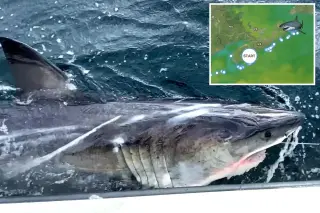
In 2004, a four-meter female great white named Gretel wandered into a small saltwater pond off Naushon Island, Massachusetts. After two weeks of failed lures, scientists and local fishers used nets and high-powered water pumps to herd her from the pond, through the bay’s sandbars and boulder fields, into the deep water of Vineyard Sound; the satellite tag later malfunctioned, but the episode helped dispel myths about sharks and underscored their fascination rather than fear.

Great White Sharks Reveal a Lifetime of Teeth Transformation
science2 months ago

Great White Sharks Reveal a Lifetime of Teeth Transformation

Researchers examined nearly 100 great white sharks and found that tooth shape changes dramatically along the jaw and as sharks grow. Juvenile teeth are slim with cusplets for gripping small prey; around 3 meters in length they become broader, thicker, and serrated, while cusplets disappear. Lower teeth grab and hold prey, upper teeth slice and dismember, forming a coordinated feeding system. Teeth are constantly replaced, letting the bite reflect a shark’s dietary shift from fish and squid to marine mammals as it matures; the study provides a jaw-wide view of dental evolution across development.

Record-Breaking Largest Great White Shark Sighted Near Florida Tourist Spot
science6 months ago

Record-Breaking Largest Great White Shark Sighted Near Florida Tourist Spot

A massive great white shark named Contender, over 14 feet long and weighing 1,650 pounds, has been tracked near North Carolina's coast, highlighting the importance of understanding shark migration for conservation and safety. The shark's journey underscores the need for respect and awareness of marine ecosystems, especially during peak migration seasons, as scientists gather data to protect these vital predators and their habitats.

Massive Great White Shark Spotted Near Nantucket Coast
world8 months ago

Massive Great White Shark Spotted Near Nantucket Coast

Researchers have spotted their largest recorded Great White Shark, nicknamed 'Contender,' off the coast of Nantucket, measuring over 13.5 feet and weighing more than 16,000 pounds. The shark, tagged earlier in Florida, has migrated northward along the Atlantic coast, and scientists plan to track it for five more years to study shark migration patterns amid increasing white shark populations due to climate change. Despite the presence of large sharks, Massachusetts has had only one fatal attack this century.

Great White Shark's Death May Unlock Predator Secrets
science1 year ago

Great White Shark's Death May Unlock Predator Secrets

A massive 18.4-foot-long pregnant great white shark was caught and killed on a drumline in Queensland, Australia, marking the largest white shark caught in the region since 1962. The shark's death is a significant loss for the local population's genetic diversity and recovery, as great whites are vulnerable and slow to reproduce. However, researchers will use the shark's body to gain insights into the species' biology and genetics, potentially filling critical gaps in knowledge about their reproduction and life cycle.