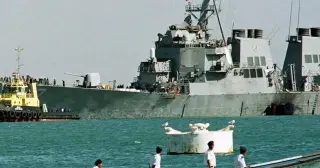
Jury selection commenced for the first capital trial by a U.S. military commission, involving Abd al-Rahim al-Nashiri, who is accused of orchestrating the 2000 USS Cole bombing. The process involves vetting active-duty military officers, with proceedings delayed by legal disputes over evidence and the defendant's competency.
The U.S. Supreme Court declined to review appeals from Khalid Sheikh Mohammed and two other alleged 9/11 plotters, upholding the government’s decision to cancel plea deals that would have spared them the death penalty. This ruling removes a major legal barrier, allowing military commissions to proceed toward a scheduled 2028 trial for the defendants held at Guantanamo Bay.
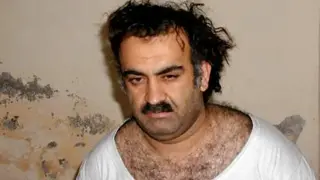
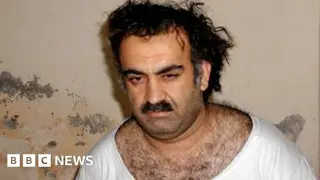
Twenty-five years after the September 11 attacks, the trial of Khalid Sheikh Mohammed and three co-defendants remains unresolved. A military judge at Guantánamo Bay has set jury selection for June 5, 2028, after rejecting a January 2027 start date. The delay stems from a ruling that excluded Mohammed's 2007 FBI confession as involuntary, forcing prosecutors to rely on other evidence. Critics argue the military commission system is inefficient, while some families of victims doubt the 2028 date will hold.
Air Force Lt. Col. Michael Schrama, the judge presiding over the 9/11 case, recently ruled that Khalid Sheikh Mohammed’s 2007 confession was involuntary and excluded it from evidence. This decision, which delayed the trial to June 2028, has prompted scrutiny of Schrama’s 2023 essay arguing that conservative military culture fosters right-wing extremism.
A U.S. military judge has invalidated Khalid Sheikh Mohammed’s 2007 confession to FBI agents, ruling it was not voluntary. This decision removes the prosecution's centerpiece evidence in the 9/11 case just as a trial date was set for June 2028. The ruling follows a failed plea deal and may further delay proceedings for Mohammed and three co-defendants.
A military judge has ruled that statements made by Khalid Sheikh Mohammed in 2007 were involuntary, effectively removing his confession from the evidence in his upcoming trial. This decision, announced by Lt. Col. Michael Schrama, adds to the legal complexities of a case that has been stalled for over two decades. While a trial date was set for June 2028, the exclusion of key admissions may further complicate the prosecution's strategy and potentially delay proceedings, as the case remains mired in disputes over past interrogation methods and evidentiary admissibility.
A U.S. military judge has scheduled the long-delayed trial of Khalid Sheikh Mohammed and three co-defendants for June 5, 2028. The ruling rejects prosecutors' request for a 2027 start, citing the need for more time to resolve pretrial evidentiary disputes. This decision follows a federal appeals court's invalidation of a plea deal that would have spared the defendants the death penalty.
A US military judge has scheduled the trial of Khalid Sheikh Mohammed and three co-defendants for June 5, 2028, rejecting prosecutors' request for an earlier start. The decision follows the collapse of a plea deal that would have spared Mohammed the death penalty. The case, which has been stalled for over two decades, faces ongoing disputes over evidence obtained through CIA interrogation methods.
A US military judge has scheduled the trial for four men accused of involvement in the 9/11 attacks to begin on June 5, 2028. The decision, issued by Judge Michael Schrama, rejects an earlier start date proposed by prosecutors and follows years of legal disputes over evidence obtained through torture. The case involves Khalid Sheikh Mohammed and three others held at Guantánamo Bay, with the trial date set just weeks before the 25th anniversary of the attacks.
A military judge has scheduled the long-delayed trial of Khalid Sheikh Mohammed, the alleged mastermind of the September 11 attacks, to begin on June 5, 2028. Mohammed will stand trial alongside three other co-defendants at the U.S. naval base in Guantanamo Bay. The judge rejected prosecutors' request for an earlier 2027 start, citing the need for adequate preparation time. This decision follows a 2024 federal appeals court ruling that upheld the revocation of a plea deal, which had previously offered Mohammed a life sentence in exchange for a guilty plea and the removal of the death penalty. The case has been stalled for over two decades due to legal challenges regarding the admissibility of evidence obtained through CIA 'enhanced interrogation techniques,' including waterboarding, used against Mohammed prior to his transfer to Guantanamo in 2006.
Defense Secretary Pete Hegseth, visiting Guantánamo Bay, said Gitmo detainees “should have been executed” and reaffirmed support for the death penalty, remarks prompted by a question from Laura Loomer and set against broader talk of the Iran conflict and U.S. strikes; the piece notes Gitmo’s detainee context and that The Daily Beast sought comment from the Pentagon.
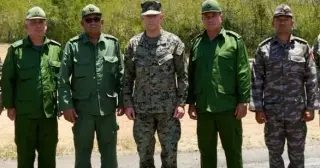
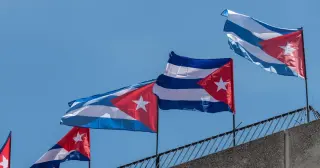
The commander of U.S. Southern Command, Gen. Francis Donovan, met with Cuban military leaders at the perimeter of Guantánamo Bay for a brief exchange on operational security—one of the rare high-level contacts between Washington and Havana amid rising U.S. pressure on Cuba and ongoing security concerns tied to the Guantánamo base.
U.S. intelligence is evaluating how Cuba might respond to a potential American military action, with Pentagon and DIA analysts developing options for President Trump as tensions rise, Cuba’s reported drone capabilities draw scrutiny, and sanctions and diplomacy continue, including meetings involving CIA Director Ratcliffe and offers of humanitarian aid if Havana shifts its ties away from Russia, China and Iran.
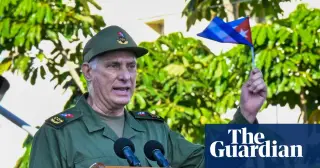
Cuba's president Miguel Díaz-Canel warned that any US military action would lead to a bloodbath and destabilize the region, following Axios reporting that Cuba owns more than 300 drones and discussed plans to strike targets including Guantánamo Bay. The foreign minister stressed Cuba's right to self-defense under international law, as tensions rise amid ongoing energy shortages and reports that US prosecutors planned to indict former leader Raúl Castro over the 1996 downing of Brothers to the Rescue planes.
U.S. intelligence says Cuba has amassed hundreds of military drones and discussed using them to attack Guantánamo Bay, U.S. ships, and possibly Florida, signaling a heightened near-shore threat tied to Russian and Iranian involvement; officials say the threat is not imminent but could influence sanctions and policy responses.