international-justice4 min read
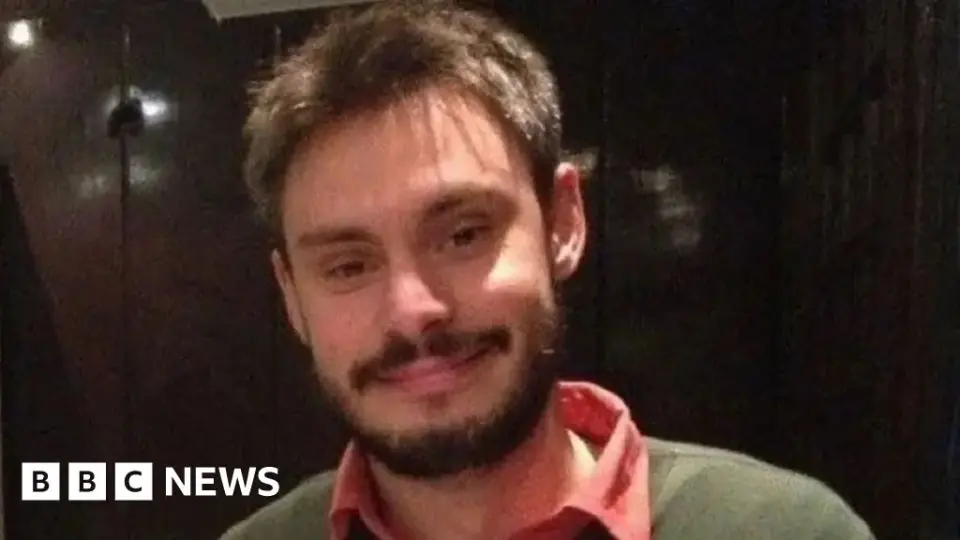
Rome Court Convicts Three Egyptian Officials in 2016 Death of Researcher Giulio Regeni
19 days ago•Source: BBC
View original source
The latest international justice stories, each synthesized from multiple sources with added background and context.
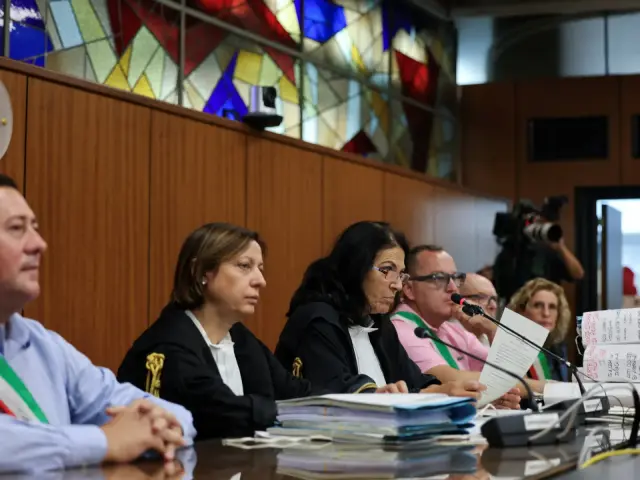
An Italian court convicted three Egyptian security officials on September 28, 2026, for the kidnapping of Italian-Cambridge postgraduate student Giulio Regeni, who was found dead in Cairo in January 2016. The defendants, tried in absentia, received 10-year prison sentences for aggravated kidnapping, while a fourth defendant was acquitted. Rome prosecutors noted that Egyptian authorities provided limited cooperation, and extradition is unlikely due to strained diplomatic relations. The case stems from Regeni’s research on trade unions in Egypt, which Italian investigators claim provoked his abduction and torture by state agents. Although Egypt has consistently denied involvement, claiming a criminal gang was responsible, Italian courts rejected earlier attempts to suspend the trial over jurisdictional concerns, asserting that Egyptian non-cooperation does not impede justice for crimes against Italian citizens abroad.
Miami Herald•28 days ago

Families of British rugby players killed in the 2002 Bali bombings have traveled to Guantanamo Bay to witness the sentencing of two men involved in the attack. The accused will serve six years as part of a plea deal. The families have endured a long struggle for justice and delivered victim impact statements at the special military courtroom. Despite the grueling legal process, they hope the hearings will expose the role of al-Qaeda in the attack and bring closure.

Ousman Sonko, former Gambian interior minister, is on trial in Switzerland for alleged complicity in torture, murder, and rape during the regime of former dictator Yahya Jammeh. If convicted, he could face life imprisonment, marking a pivotal case for Switzerland's universal jurisdiction principle. Sonko's trial represents a significant step towards justice for victims of Jammeh's regime, with the Gambian Truth, Reconciliation and Reparations Commission recommending prosecution of Jammeh and his accomplices.

Former international war crimes prosecutors emphasize the importance of international criminal law in providing accountability for victims of atrocities in the Israel-Hamas conflict. The International Criminal Court (ICC) has jurisdiction over the situation in Gaza and the West Bank, as well as potential international crimes committed by Hamas on Israeli territory. The current ICC prosecutor, Karim Khan, has the opportunity to take bold action and offer justice for victims, free from political influence. Despite challenges, the ICC's global reach and jurisdiction can contribute to combating impunity and deterring further crimes. The ICC should seek arrest warrants for political and military leaders from both Hamas and Israel, ensuring that accountability prevails over realpolitik and that victims receive substantive justice.

A former member of Belarus President Aleksander Lukashenko's special security forces, Yuri Harauski, is set to face trial in Switzerland next month for the enforced disappearances of political opponents in the late 1990s. This landmark case could potentially lead to prosecutions of other Belarus officials, including Lukashenko himself. Harauski, who currently resides in Switzerland, has confessed to his involvement in the kidnapping and murder of Lukashenko's political opponents. The trial, scheduled for September 19-20, could establish facts that may be used to hold those who ordered the crimes accountable. This marks the first time an official during Lukashenko's rule could be convicted of crimes against regime opponents.

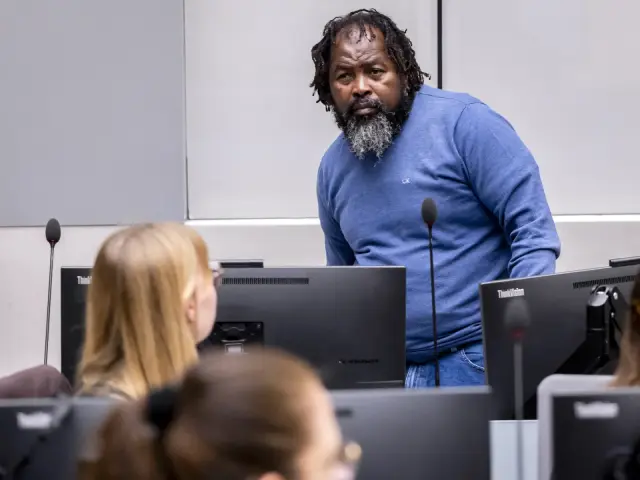
UN appeals judges have indefinitely suspended the war crimes trial of 90-year-old Rwandan genocide suspect Felicien Kabuga, citing his dementia and rejecting plans for an alternative procedure. The decision likely means that Kabuga's trial, which started last year, will not be completed. The judges ruled that there was no legal basis for an alternative finding procedure and instructed the trial chamber to impose an indefinite stay of proceedings due to Kabuga's lack of fitness to stand trial. The judges also ordered a lower trial chamber to evaluate under what circumstances Kabuga could be released. Kabuga is accused of financing Hutu militias and broadcasting hate speech during the 1994 genocide in Rwanda.

The International Residual Mechanism for Criminal Tribunals (IRMCT) has ruled that Félicien Kabuga, an 88-year-old Rwandan genocide suspect, is no longer capable of "meaningful participation" in his trial due to a significant decline in his ability to care for himself. Kabuga is accused of broadcasting hateful propaganda and arming militias in the 1994 genocide in Rwanda. The court suggested an alternative procedure that resembles a trial as closely as possible, but without the possibility of a conviction.

The UN court has declared that Rwandan genocide suspect Felicien Kabuga is unfit for trial due to health concerns and has called for an "alternative" legal procedure. Kabuga is accused of promoting hate speech through his broadcaster, Radio Television Libre des Milles Collines (RTLM), and arming ethnic Hutu militias. He was arrested in Paris in 2020 and sent to The Hague for trial. Kabuga did not attend court in person and followed the trial remotely via video-link from a wheelchair at the court's detention center.

The International Criminal Court issued an arrest warrant for Russian President Vladimir Putin and his commissioner for children's rights, Maria Lvova-Belova, for allegedly directing the abduction of Ukrainian children, which amounts to war crimes. While Putin may be safe from arrest as long as he does not set foot in a country that is a member of the court, history shows that several leaders on the run eventually face charges in court. The ICC has issued 38 arrest warrants, arrested 21 people, convicted 10, and acquitted four. Even without prosecution, Putin's life will probably get much more difficult as a result of the arrest warrant.

Gyunduz Mamedov, a former Ukrainian prosecutor, oversaw investigations into Russia's atrocities from 2016 to 2021, including the downing of flight MH17. He advocates for a legal mechanism, most likely a hybrid international court that also involves Ukrainian courts, to punish Russia's top leadership for the crime of aggression, among other things. Mamedov warns against regional solutions and advocates for a court created by the U.N. General Assembly. He also cautions against the lack of coordination between interested parties investigating war crimes in Ukraine.

The ICC's arrest warrants for Putin and his commissioner for children's rights only expose the irrelevance, compromise, and cowardice of the court. The ICC seems to curry favor with its western sponsors instead of casting the light of justice over the war crimes and crimes against humanity committed by the US-led west. The UK welcomes the decision on Putin, but it is unrealistic to think that there will be an arrest anytime soon. No such warrant has ever been issued for Tony Blair.