Tag

Hexagonal Diamond

All articles tagged with #hexagonal diamond

Lab-Forged Pure Hexagonal Diamond Outclasses Natural Diamond
science25 days ago

Lab-Forged Pure Hexagonal Diamond Outclasses Natural Diamond

Chinese researchers at Zhengzhou University report the first laboratory-made pure hexagonal diamond (lonsdaleite), a carbon form that is harder and more oxidation-resistant than cubic natural diamond; produced by compressing graphite under extreme pressure and heat and confirmed by spectroscopy and simulations, with potential applications in cutting tools, abrasives, heat management and quantum sensing, and published in Nature in March 2026.
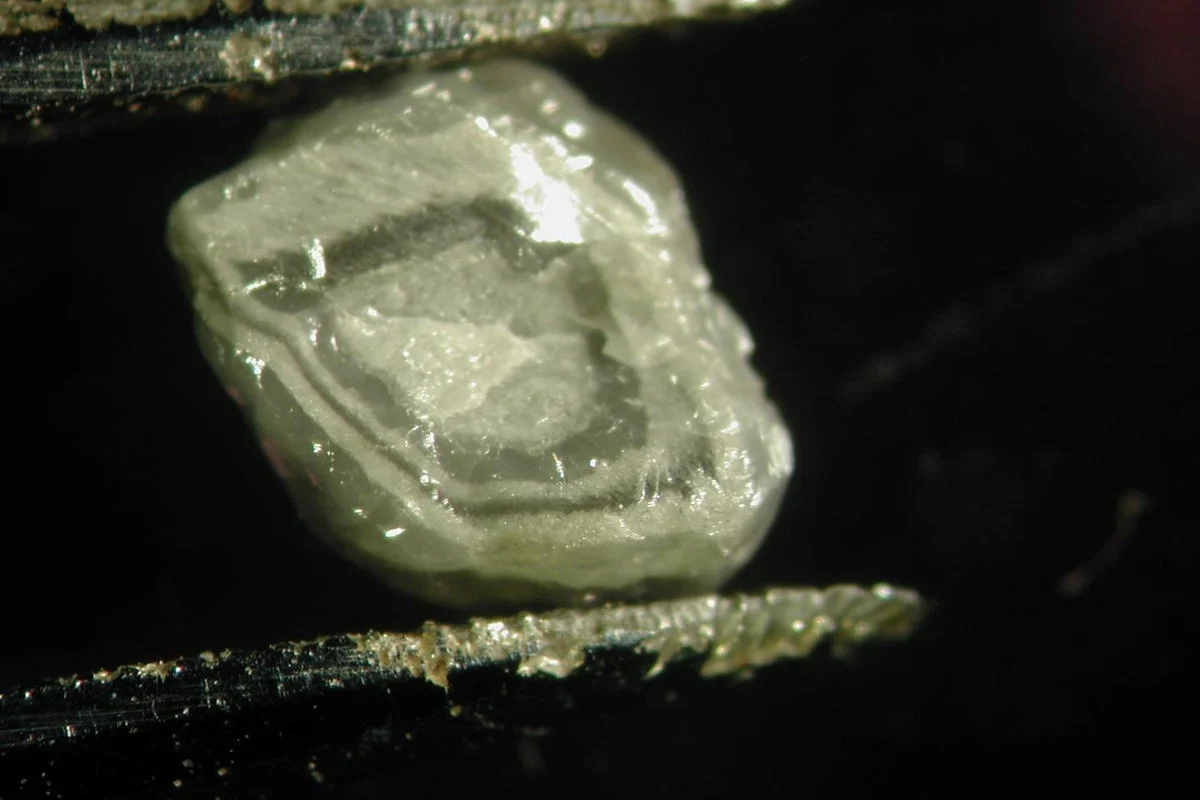
Lab-made hexagonal diamond edges past regular diamond in hardness
science25 days ago

Lab-made hexagonal diamond edges past regular diamond in hardness

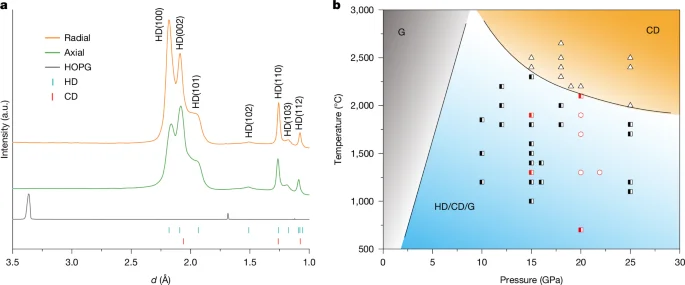
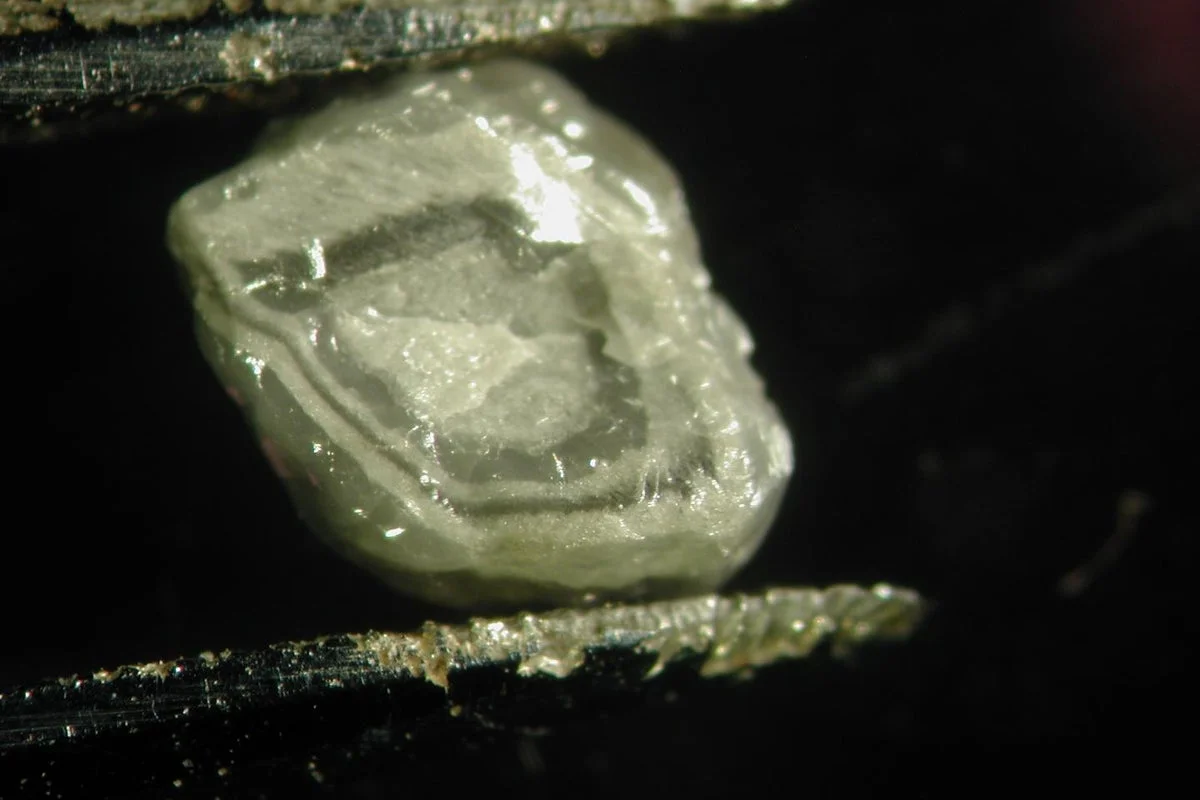
Chinese researchers report synthesizing millimetre-sized bulk hexagonal diamond from oriented graphite under about 20 GPa and 1,300–1,900°C, with diffraction confirming a pure hexagonal carbon phase. They measured a hardness around 114 GPa, slightly higher than typical natural cubic diamond (~110 GPa), and highlight high thermal stability, addressing long-standing debate over hexagonal diamond and suggesting potential for advanced technological uses.

Lab-forged hexagonal diamond edges out natural diamond in hardness
science26 days ago

Lab-forged hexagonal diamond edges out natural diamond in hardness

Chinese researchers synthesized millimetre-sized, phase-pure hexagonal diamond in the lab by compressing highly ordered graphite between tungsten-carbide anvils at 20 gigapascals and heating to 1,300–1,900°C, yielding a material with about 114 gigapascals hardness—slightly tougher than natural cubic diamond—which could enable new technologies and settles long‑standing debates about the phase’s existence.

China produces pure hexagonal diamond and claims superior hardness over regular diamond
physics-and-mathematics27 days ago

China produces pure hexagonal diamond and claims superior hardness over regular diamond

Chinese researchers created small, pure hexagonal diamond (lonsdaleite) samples and demonstrated that it is stiffer and harder than cubic diamond and more oxidation-resistant; the 1.5 mm samples were formed by compressing organized graphite at about 20 GPa for 10 hours and heating to roughly 1,300–1,900°C, with the work published in Nature, indicating a feasible bulk production method and potential industrial applications in drilling, cutting, and thermal management.

Lab-Forge Confirms Hexagonal Diamond, Ending a Half-Century Controversy
physics-and-chemistry1 month ago

Lab-Forge Confirms Hexagonal Diamond, Ending a Half-Century Controversy

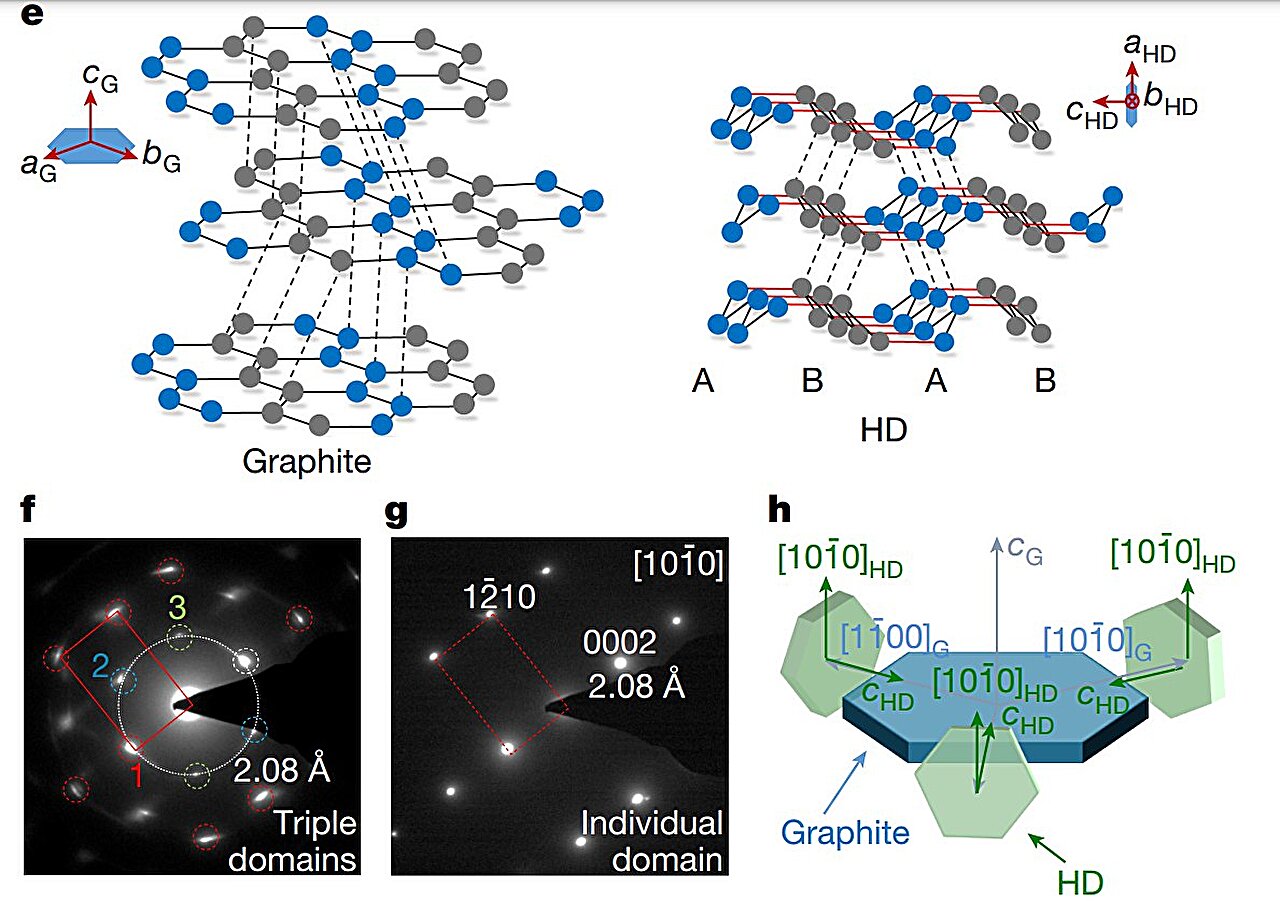
Chinese researchers report the synthesis of a millimeter-sized, phase-pure hexagonal diamond by compressing graphite at 20 GPa and temperatures up to 1,900°C, with X-ray and atomic-scale imaging confirming a hexagonal crystal structure; the diamond is slightly harder and more oxidation-resistant than cubic diamonds, suggesting the long-sought material exists and could have practical uses, though the hardness gain is not the often-cited 50%.

Bulk hexagonal diamond emerges from graphite under high pressure, resolving a long-standing debate
science1 month ago

Bulk hexagonal diamond emerges from graphite under high pressure, resolving a long-standing debate

A Nature study reports the synthesis of millimeter-sized, phase-pure bulk hexagonal diamond (HD) from highly oriented pyrolytic graphite under high-temperature, high-pressure conditions, with structural and computational confirmation. HD shows slightly higher hardness than cubic diamond and strong thermal stability, resolving the long-standing question of HD’s existence and offering new insight into graphite-to-diamond transformation and potential applications in advanced technologies.

Strongest evidence yet that hexagonal diamond is real and potentially harder than cubic diamond
science1 month ago

Strongest evidence yet that hexagonal diamond is real and potentially harder than cubic diamond

Chinese researchers report millimeter-sized samples of hexagonal diamond (lonsdaleite) produced by compressing graphite at ~20 GPa and 1300–1900 °C, with X-ray diffraction peaks that conclusively confirm the hexagonal structure; tests show the material is stiffer, more oxidation resistant, and slightly harder than conventional cubic diamond, marking the strongest evidence to date in decades-long debates and offering potential uses in tools, thermal management, and quantum sensing.