Tag

Diamond

All articles tagged with #diamond

LLNL Laser Experiments Correct Diamond Melting Curves for Fusion and Planetary Science
science1 month ago

LLNL Laser Experiments Correct Diamond Melting Curves for Fusion and Planetary Science

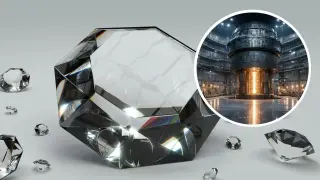
Researchers at Lawrence Livermore National Laboratory (LLNL) have corrected long-standing errors in diamond melting temperature estimates by using laser-driven shock experiments. By blasting diamond samples and tracking the process with X-ray diffraction, they found previous theoretical and experimental data were off by hundreds of degrees. This updated data is critical for improving inertial confinement fusion (ICF) efficiency at the National Ignition Facility (NIF) and for modeling carbon behavior in ice giants like Neptune. While the findings do not impact magnetic confinement fusion for power generation, they significantly enhance our understanding of diamond under extreme planetary pressures.

HKU Researchers Reveal Ultrathin Diamond Membranes Can Generate Electricity
science-and-technology2 months ago

HKU Researchers Reveal Ultrathin Diamond Membranes Can Generate Electricity

A team at the University of Hong Kong has demonstrated that ultrathin, flexible diamond membranes can produce a measurable electrical voltage when bent, overturning a century-old scientific consensus that diamond is non-piezoelectric. By using edge exfoliation to create flexible polycrystalline diamond sheets, researchers observed stable voltage signals during mechanical deformation. The study, published in Science Advances, attributes this effect to charge polarization at grain boundaries within the material. This discovery suggests new applications for self-powered medical implants and micro energy systems, as diamond is biocompatible and chemically stable.

LLNL Laser Experiments Resolve 20-Year Diamond Melting Discrepancy, Hinting at Tripled Fusion Energy
science3 months ago

LLNL Laser Experiments Resolve 20-Year Diamond Melting Discrepancy, Hinting at Tripled Fusion Energy

Researchers at Lawrence Livermore National Laboratory (LLNL) have resolved a two-decade discrepancy in diamond melting data by using laser-driven shock waves to compress synthetic diamond to pressures exceeding those at the centers of Neptune and Uranus. The experiments, published in Nature Physics, confirm that diamond retains its crystal structure until it melts into a dense, metallic liquid carbon at approximately 7,300 kelvin, without forming an intermediate phase. These findings align experimental results with quantum simulations and suggest that slower initial shocks in inertial confinement fusion could improve fuel compressibility, potentially tripling energy gain.

LLNL Resolves Diamond Melting Discrepancy, Potentially Tripling Fusion Energy Gain
energy3 months ago

LLNL Resolves Diamond Melting Discrepancy, Potentially Tripling Fusion Energy Gain

Lawrence Livermore National Laboratory (LLNL) researchers have resolved a 20-year discrepancy between experimental and theoretical data on diamond melting under extreme pressure. By using the OMEGA laser to shock-compress diamond samples to pressures exceeding 1 terapascal, the team confirmed that diamond retains its cubic crystal structure until melting, bypassing the predicted BC8 phase. This finding aligns with quantum simulations and suggests that slower initial shock waves in inertial confinement fusion (ICF) could improve fuel compressibility, potentially tripling energy gain.

New Laser Experiments Reveal Diamond Melts Directly to Liquid, Skipping Predicted Phase
science3 months ago

New Laser Experiments Reveal Diamond Melts Directly to Liquid, Skipping Predicted Phase

A team led by Marius Millot at Lawrence Livermore National Laboratory has resolved a long-standing discrepancy in diamond melting physics. Using the OMEGA Laser Facility, they shocked diamond samples to pressures between 600 gigapascals and 1.8 terapascals. The experiments confirmed a melting temperature of approximately 7,300 Kelvin at 1 terapascal, aligning with theoretical predictions and correcting previous experimental errors by over 1,000 degrees. Crucially, X-ray diffraction showed that diamond retains its cubic crystal structure until it fully melts, skipping the predicted BC8 intermediate phase. This finding implies that solid diamond is less dense than the resulting liquid carbon, a property similar to ice, which has significant implications for modeling inertial confinement fusion targets and planetary interiors.

How a Late-Night Tagline Turned Diamonds Into Forever
business5 months ago

How a Late-Night Tagline Turned Diamonds Into Forever

Frances Gerety, a 31-year-old copywriter at N.W. Ayer, reportedly penned De Beers’ tagline 'A Diamond Is Forever' in 1947, a four-word line that helped normalize diamonds as the symbol of eternal love and reshaped engagement norms across roughly 40 countries. The slogan ran from 1948 onward, reinforcing a marketing-driven idea of value (including the famous two-month-salary rule) and turning the diamond market into a multibillion-dollar industry, even as Gerety herself never married. The piece explores cognitive dissonance between the private life of a creator and the public impact of her work, and notes the line’s enduring presence in De Beers campaigns today.

Andy Garcia’s Diamond Shines at Cannes With 7-Minute Ovation
entertainment6 months ago

Andy Garcia’s Diamond Shines at Cannes With 7-Minute Ovation

Andy Garcia’s neo-noir Diamond premiered out of competition at Cannes to a seven-minute standing ovation. Garcia directed, co-scored, and assembled a starry LA-set noir led by Vicky Krieps and Rosemarie DeWitt, with familiar names like Bill Murray, Dustin Hoffman, Brendan Fraser and Demián Bichir among the cast. Described as a love letter to Los Angeles and classic noir, the nearly 15-year-in-the-making project marks Garcia’s return behind the camera and a personal, emotional journey he shared on stage.

Acoustic Purcell boost pairs a diamond color center with a nanomechanical cavity
science6 months ago

Acoustic Purcell boost pairs a diamond color center with a nanomechanical cavity

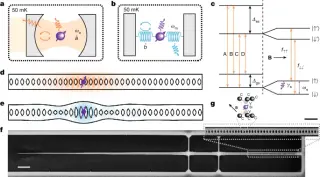
Researchers build a microwave‑frequency nanomechanical resonator around a single silicon‑vacancy center in diamond and use a co‑localized optical mode to access the excited state, observing an acoustic Purcell effect that speeds spin relaxation by ~10× when the qubit is in resonance with a 12 GHz mode, while also using the color center as a probe to map the device’s phonon spectrum up to 28 GHz, establishing a new control regime for quantum defects and paving the way for phonon‑based interconnects between memories and qubits.

Lab-made hexagonal diamond edges past regular diamond in hardness
science8 months ago

Lab-made hexagonal diamond edges past regular diamond in hardness

Chinese researchers report synthesizing millimetre-sized bulk hexagonal diamond from oriented graphite under about 20 GPa and 1,300–1,900°C, with diffraction confirming a pure hexagonal carbon phase. They measured a hardness around 114 GPa, slightly higher than typical natural cubic diamond (~110 GPa), and highlight high thermal stability, addressing long-standing debate over hexagonal diamond and suggesting potential for advanced technological uses.

Lab-forged hexagonal diamond edges out natural diamond in hardness
science8 months ago

Lab-forged hexagonal diamond edges out natural diamond in hardness

Chinese researchers synthesized millimetre-sized, phase-pure hexagonal diamond in the lab by compressing highly ordered graphite between tungsten-carbide anvils at 20 gigapascals and heating to 1,300–1,900°C, yielding a material with about 114 gigapascals hardness—slightly tougher than natural cubic diamond—which could enable new technologies and settles long‑standing debates about the phase’s existence.

China produces pure hexagonal diamond and claims superior hardness over regular diamond
physics-and-mathematics8 months ago

China produces pure hexagonal diamond and claims superior hardness over regular diamond

Chinese researchers created small, pure hexagonal diamond (lonsdaleite) samples and demonstrated that it is stiffer and harder than cubic diamond and more oxidation-resistant; the 1.5 mm samples were formed by compressing organized graphite at about 20 GPa for 10 hours and heating to roughly 1,300–1,900°C, with the work published in Nature, indicating a feasible bulk production method and potential industrial applications in drilling, cutting, and thermal management.

Miners Uncover 37.4 Carat Pink-Colorless Diamond
science11 months ago

Miners Uncover 37.4 Carat Pink-Colorless Diamond

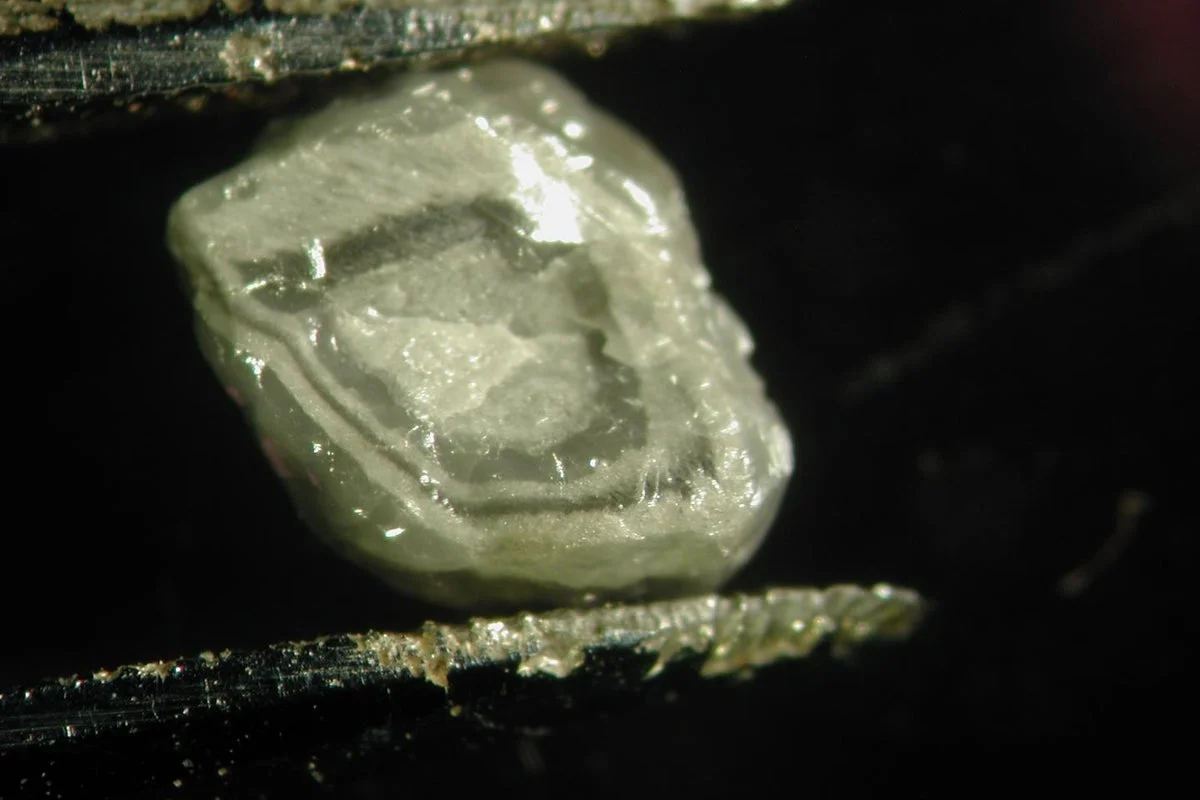
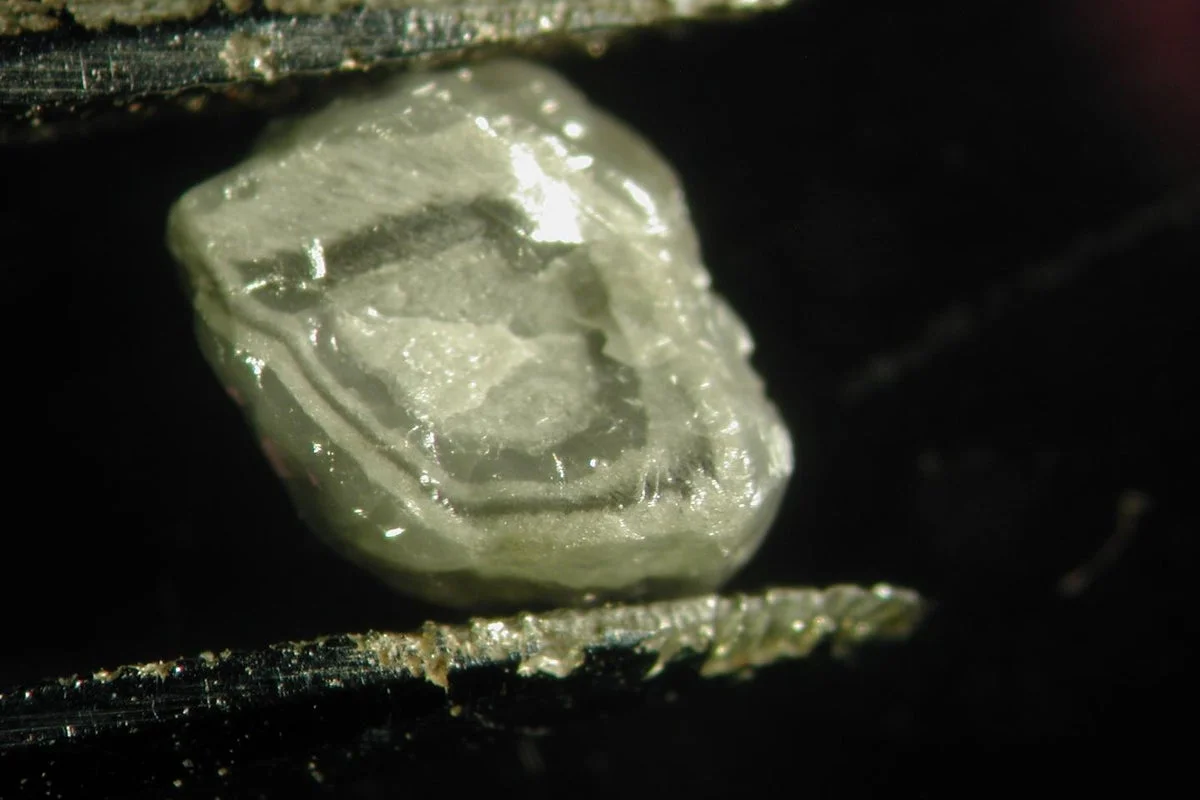
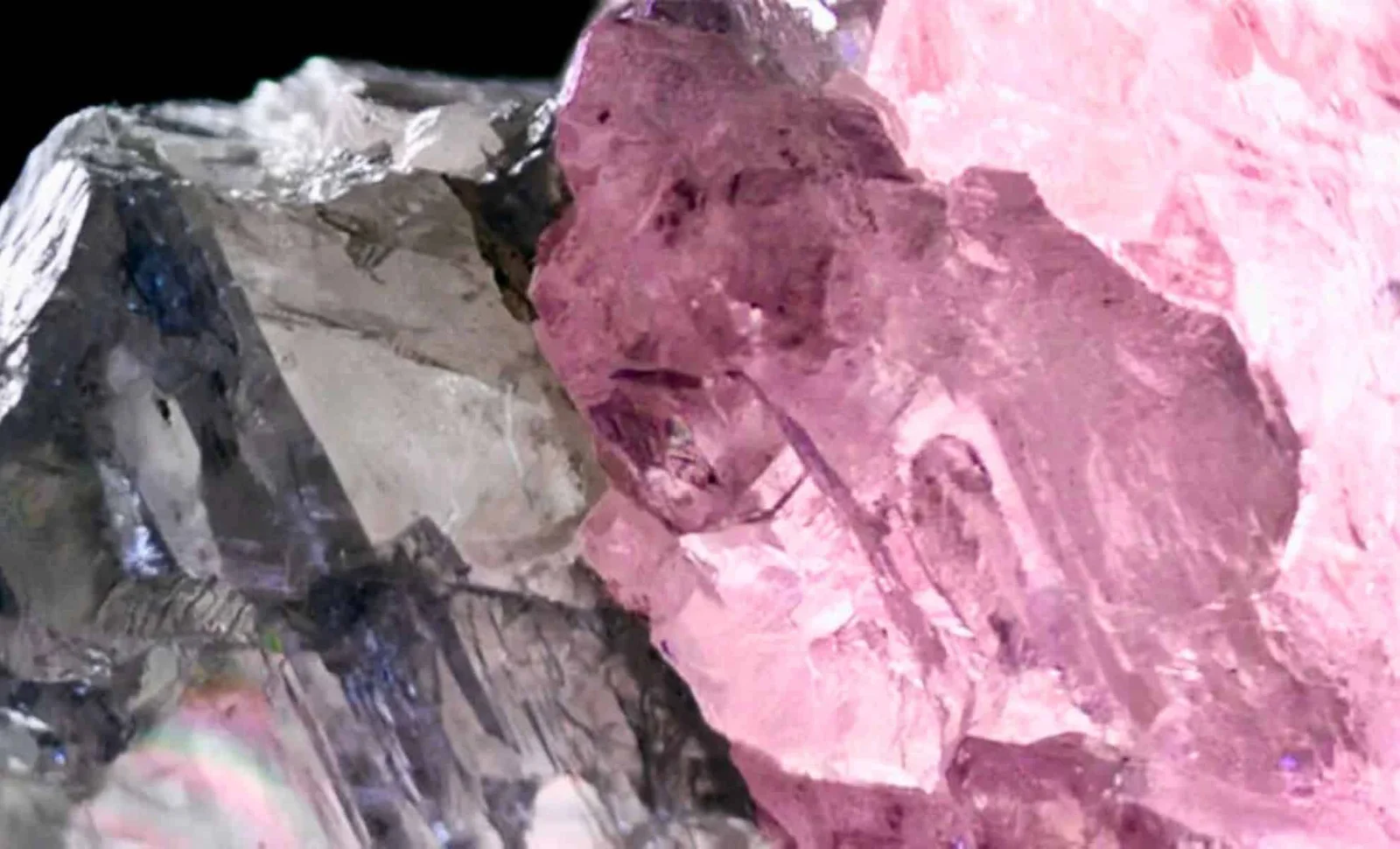
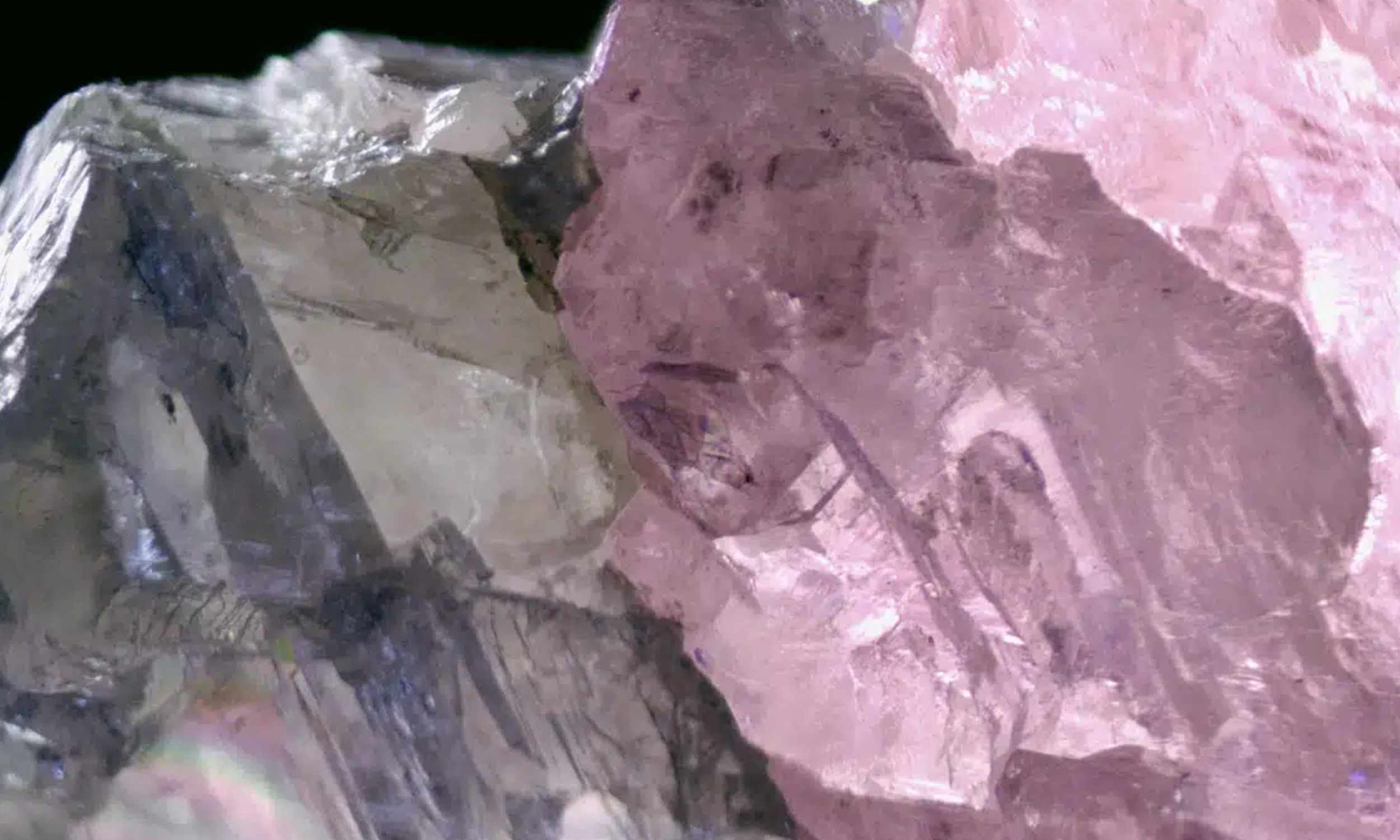
A rare 37.4-carat rough diamond split evenly between pink and colorless was discovered in Botswana's Karowe mine, providing valuable insights into diamond formation and the geological processes that create unique colors, especially pink, due to structural deformation. The find offers a natural record of Earth's ancient crustal movements and deformation history, aiding scientific understanding of diamond color origins and geological history.