Mitochondrial citrate metabolism governs aging-related inflammation via epigenetic SASP control
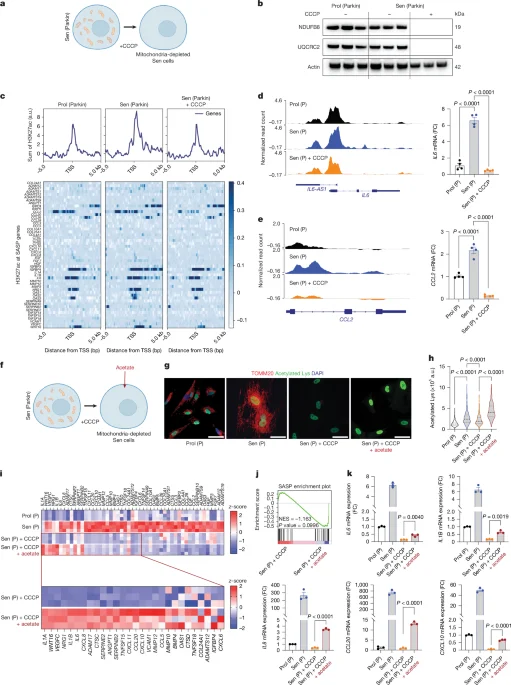
A recent study finds that senescent cells rely on the mitochondrial citrate–acetyl‑CoA axis to maintain histone acetylation at SASP gene loci, supporting inflammatory output. Inhibiting citrate export (SLC25A1) or the mitochondrial pyruvate carrier reduces acetyl‑CoA supply, lowers SASP gene expression, and dampens inflammation without reversing senescence, which in aged mice translates to improved healthspan. The mtDNA–cGAS–STING inflammatory pathway and mitochondrial metabolic control function as independent but complementary inputs to SASP, revealing a mitochondrial–epigenetic checkpoint that could be targeted to mitigate aging-related inflammation.