Starlink’s V5 residential dish is now available in select areas; it’s notably smaller, lighter, and more power-efficient than the V4, with peak speeds around 375 Mbps versus 400+ Mbps, though actual speeds depend on plan and network conditions, and it’s not designed for in-motion use (a future Starlink Mini will address that).
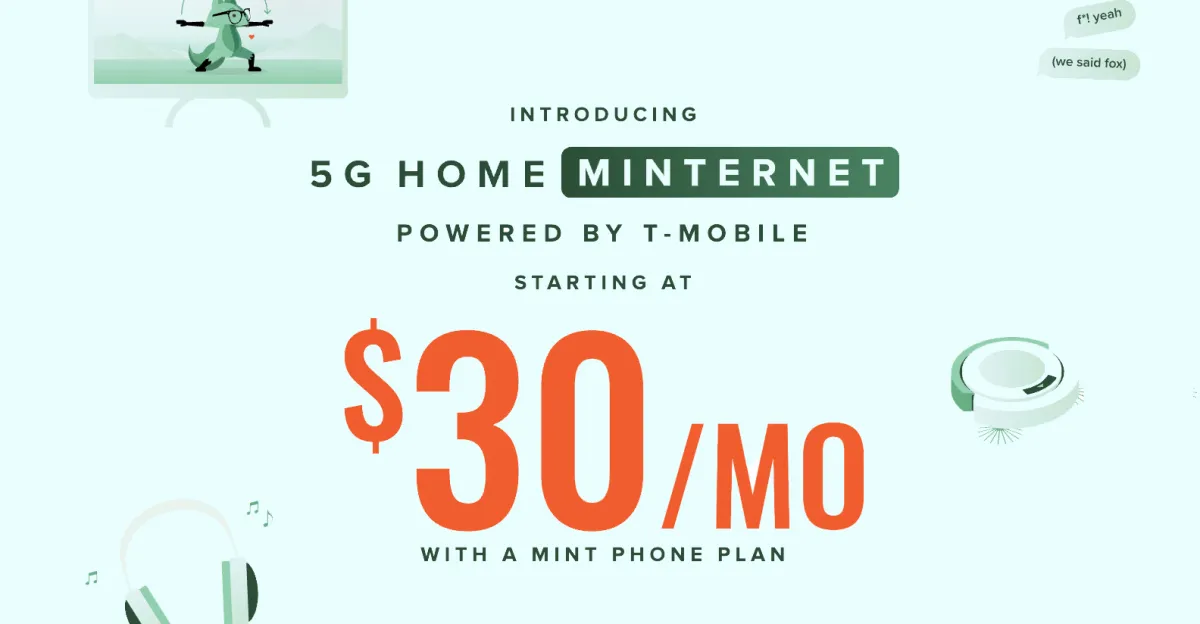
Mint Mobile offers a very affordable 5G home internet plan starting at $30 per month for new customers who also have a Mint phone plan and pay upfront for at least three months, but the actual cost can vary up to $50 depending on the plan details. The service provides comparable speeds to T-Mobile's 5G home internet, with some limitations like data throttling after 1-1.2 TB and fewer perks. The pricing structure is complex, requiring upfront payments and specific plan combinations, making it a potentially good option depending on location and user needs.
A person tested using a mobile hotspot as their primary home internet for three days, discovering that it provides slow speeds (less than 10 Mbps download and 10 Mbps upload), is less reliable, and can drain phone battery, making it unsuitable as a primary home internet source but useful as a backup during outages.
According to Speedtest Intelligence's Q3 2023 report, 5G home internet services have seen an increase in speeds, averaging 213.75 Mbps down and 23.71 Mbps up. T-Mobile and Verizon experienced strong growth in the second quarter, with a combined 890,000 net new subscribers, outpacing the rest of the broadband industry. AT&T has also joined the 5G home internet race. The top wireline phone companies lost 510,000 DSL customers but gained 450,000 net new fiber customers, resulting in a net loss of 60,000 customers in Q2.
AT&T is expanding its 5G home internet service, called "Internet Air," to 16 new markets, offering home broadband over 5G for $55 per month. The new markets include areas in Los Angeles, Philadelphia, Chicago, Detroit, Portland, and Tampa. Customers with AT&T wireless service and automatic payments can lower the bill to $35 per month. The service does not have overage fees, equipment charges, or annual contracts. AT&T expects download speeds between 40Mbps and 140Mbps and upload speeds between 5Mbps and 25Mbps. The setup is similar to other providers, with a modem/Wi-Fi router combo device shipped to users. Larger homes can get Wi-Fi extenders for an additional cost. AT&T's expansion into home internet comes after an earlier-than-expected speed boost to its 5G network.
Verizon has completed the acquisition of more broadband from the C-band, allowing for faster speeds and expanded availability of its 5G Home Internet and business internet services. This new spectrum will also improve Verizon's network in several areas across the US. The accelerated access to spectrum will enhance capacity and speed in major metro areas, while also extending 5G Ultra Wideband service to more rural and suburban areas.
Placing your WiFi router at a low height is a common mistake that can lead to poor signal strength. Experts recommend placing the router high up in the room, around five to seven feet off the ground, with a clear line of sight. Placing the router on a high shelf or using a mount can help achieve this. It's also important to keep the router away from other objects, especially those made of metal, to maximize signal strength.