A 2022 eruption of Hunga Tonga-Hunga Ha'apai produced a volcanic plume whose ash and seawater chemistry, energized by sunlight, generated reactive chlorine that destroyed methane in the atmosphere, a finding that could alter global methane budgets and spur climate-tech ideas.
Scientists have discovered a seismic precursor signal that occurred 15 minutes before the massive eruption of the Hunga Tonga-Hunga Ha'apai volcano in January 2022. This signal, a Rayleigh wave, was detected by monitoring stations 750 kilometers away and may provide crucial early warnings for future volcanic eruptions, potentially aiding in disaster mitigation efforts. The eruption, one of the most powerful recorded, caused significant tsunamis and released vast amounts of volcanic material and water vapor into the atmosphere.
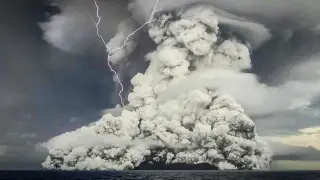
The eruption of the Hunga Tonga-Hunga Ha'apai volcano in January 2022 produced a record-breaking lightning storm, with 2,600 flashes of lightning every minute and nearly 200,000 flashes in total. The lightning, which reached heights of 12-19 miles above the ocean, provided valuable insights into the volcano's behavior and timeline. The eruption also created concentric rings of lightning, expanding and contracting in the volcanic plume, revealing the presence of gravity waves. The lightning storm, along with the eruption's enormous ash cloud, highlights the need for improved monitoring and forecasting of volcanic hazards, as similar eruptions are likely to occur in the future.
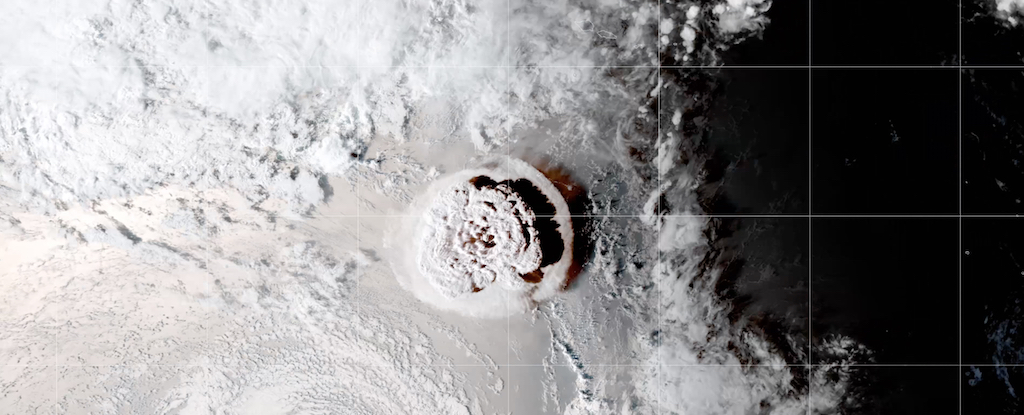
The eruption of the underwater volcano Hunga Tonga-Hunga Ha'apai triggered the most intense lightning storm ever recorded, according to a study published in Geophysical Research Letters. The eruption sent millions of tons of ash, dust, and superheated water into the atmosphere, creating an umbrella cloud. Lightning strikes occurred at an unprecedented rate, with approximately 2,600 strikes per minute during the peak. The lightning also occurred at significantly higher altitudes than usual, suggesting that volcanoes can create their own weather systems.