
US infant mortality hits record low in 2025, CDC finds
CDC data indicate US infant mortality fell to a record low in 2025, but the rate still trails many peer nations and persistent disparities remain across racial and geographic groups.

All articles tagged with #infant mortality
CDC data indicate US infant mortality fell to a record low in 2025, but the rate still trails many peer nations and persistent disparities remain across racial and geographic groups.

Mississippi has declared a public health emergency due to a rise in infant mortality rates, reaching the highest in over a decade, with disparities especially affecting Black infants. The crisis is linked to factors like prematurity, low birth weight, and systemic inequities, compounded by federal funding cuts and Medicaid policy challenges. State officials aim to address these issues through expanded prenatal services and improved care systems, emphasizing that broader social determinants and healthcare access are critical to reducing infant deaths.

A baby in Tanzania was born with sirenomelia, a rare condition where the lower body is fused together, and lived for only five minutes. The infant had multiple critical defects, including missing an arm and ambiguous genitalia. The condition, almost always fatal, has unclear causes and is rarely documented. The mother, a rural farmer, had no significant medical history or harmful habits, though exposure to fertilizers was noted. The case was reported in the Journal of Medical Case Reports.
The National Center for Health Statistics released data showing that in 2022, life expectancy in the U.S. increased to 77.5 years, with a decrease in the age-adjusted death rate and changes in age-specific death rates. The 10 leading causes of death remained the same, with heart disease and cancer at the top. Infant mortality rate increased, and some leading causes of infant death changed ranks. The report provides detailed information on mortality patterns, including demographic and medical characteristics, and highlights the impact of COVID-19 on mortality rates.

A UK woman, Kelly Redhead, is campaigning for routine STI screenings for pregnant women after her baby girl died due to a late diagnosis of chlamydia and gonorrhea, which developed into pelvic inflammatory disease. Redhead's daughter, Harper-Rose, was born prematurely at 18 weeks and three days and died 30 minutes later. Redhead's petition for funding for STI screenings at the start of pregnancy aims to prevent similar tragedies, as current guidelines in the UK and US only recommend testing for certain infections in pregnant women.

The Academy of Medical Sciences in the UK has raised concerns about the deteriorating health of children under five, citing issues such as infant mortality, obesity, and tooth decay. The report highlights the country's ranking of 30th out of 49 rich nations for infant mortality, and calls for urgent action to address the stalled progress in child health. Experts emphasize the need for a comprehensive government strategy and increased investment in the child health workforce to tackle these pressing issues.
A recent study from NYU suggests that brief seizures may be a potential cause of Sudden Infant Death Syndrome (SIDS), shedding light on the phenomenon that usually affects babies under six months old. The study analyzed over 300 cases and video footage, finding muscle convulsions lasting less than 60 seconds occurring within 30 minutes of known sudden unexplained deaths in childhood. While the results are not conclusive and further research is needed, the study provides new insights into potential risk factors for SIDS, offering hope for understanding and preventing this tragic condition.

The infant-mortality rate in the United States has increased by 3% for the first time in two decades, according to the Centers for Disease Control and Prevention. This rise raises concerns about maternal-infant health in the country, as the rate of infant deaths per 1,000 births increased from 5.44 to 5.6 in 2022. The higher rate highlights the need for further attention and improvement in this area.

The United States has experienced an increase in infant mortality rates for the first time in over two decades, with the overall rate rising by 3% in 2022. The mortality rate for neonatal infants increased by 3%, while the post-neonatal mortality rate rose by 4%. Factors such as maternal complications and bacterial sepsis contributed to the rise in infant deaths. Experts suggest that the COVID-19 pandemic and underlying healthcare issues may have played a role. Racial disparities were also observed, with higher mortality rates among American Indian or Alaska Native and Black infants. Accessibility challenges and systemic racism were identified as contributing factors. Further research is needed to understand the reasons behind the increase in infant mortality.

Twelve newborns died in one day at a hospital in Maharashtra, India, leading to accusations of negligence against the regional government and hospital authorities. The infants were among 24 deaths recorded at the Shankarrao Chavan Government Hospital, with overcrowding in the neonatal unit and lack of proper care being cited as potential factors. The Maharashtra government has launched an inquiry into the deaths, while opposition politicians criticize the government for its handling of public healthcare. This incident highlights the ongoing challenges faced by India's ill-equipped public healthcare system.

Texas' strict abortion laws, including a ban on most abortions after six weeks of pregnancy, may be contributing to a spike in infant mortality rates as women are forced to carry nonviable pregnancies to term. Preliminary data shows that in 2022, there was an 11.5% increase in infant deaths compared to the previous year, with a 21.6% rise in deaths caused by severe genetic and birth defects. While the increase in births may partially explain the rise in deaths, obstetrician-gynecologists believe that the restrictive abortion laws are a contributing factor. A lawsuit has been filed by the Center for Reproductive Rights, with women testifying about their difficult pregnancies and infant deaths. The plaintiffs are seeking clarification on medical exceptions to the state's abortion ban.
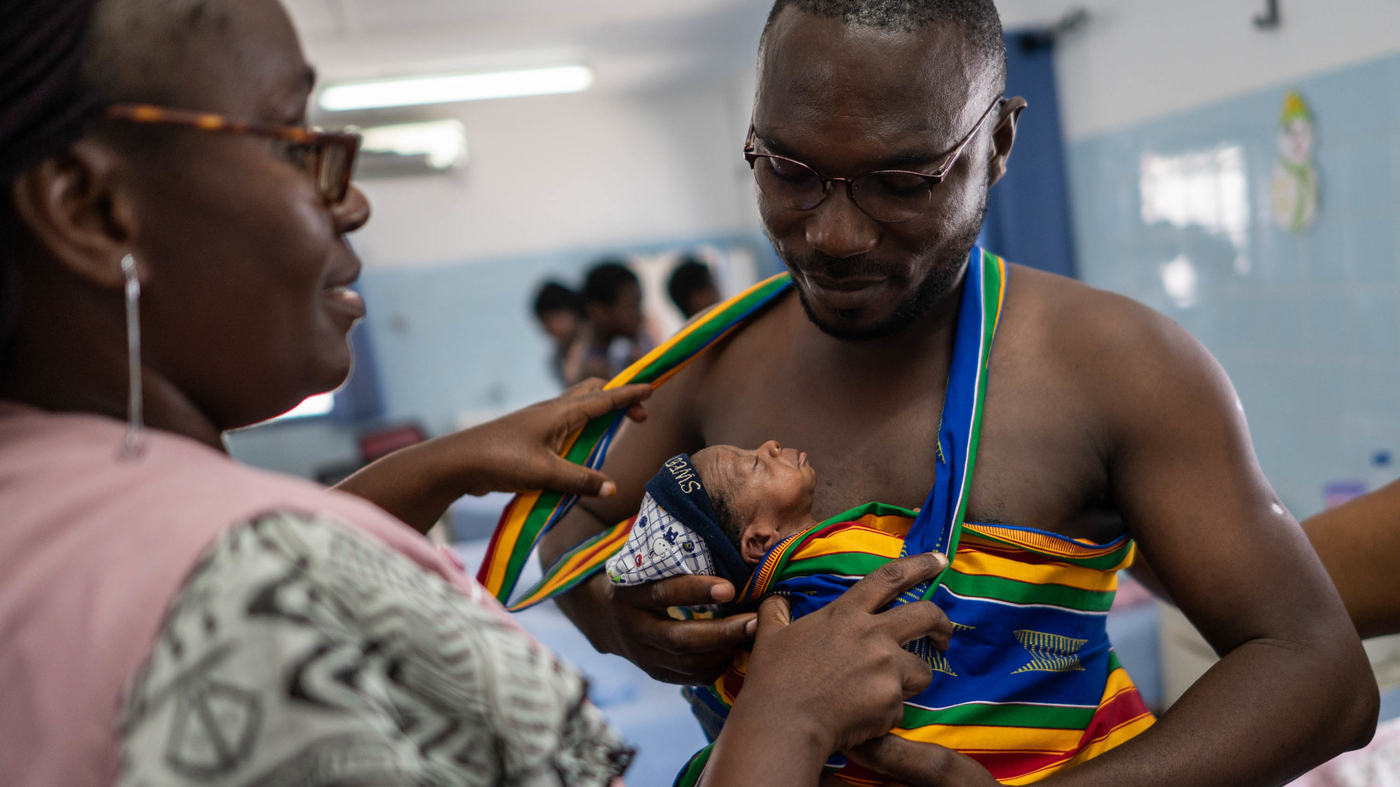
Kangaroo care, a technique where parents hold their premature or low birthweight babies skin-to-skin, has been endorsed by a recent study and the World Health Organization. The technique helps stabilize the baby's heartbeat and breathing, and control their temperature. In Ivory Coast, a new program is teaching mothers and fathers the technique, which has been shown to reduce infant mortality rates. The program is especially valuable in low-resource areas that may be short on medical technology, including incubators.

Researchers have found that the serotonin 2A/C receptor is altered in sudden infant death cases compared to control cases of infant deaths, supporting the idea that a biological abnormality in some infants makes them vulnerable to death under certain circumstances. The study suggests that sudden infant death syndrome occurs when a child is in a critical period of cardiorespiratory development, faces an outside stressor, and has a biological abnormality that makes them vulnerable to respiratory challenges while sleeping. Safe sleep practices remain critical as there is currently no means to identify infants with biological abnormalities in the serotonergic system.

The Philadelphia Department of Public Health has launched a program called Philly Joy Bank, which aims to provide $1,000 monthly cash payments to 250 pregnant residents in the Cobbs Creek, Strawberry Mansion, or Nicetown-Tioga neighborhoods. The program, which is part of a guaranteed income pilot, hopes to improve birth outcomes and reduce racial disparities in infant mortality rates. The payments will extend over a total of 18 months, including a year postpartum, and participants will also receive financial counseling, home visiting, lactation support, and doulas. The department hopes to eventually reach a fundraising goal of $6 million.

New data from the CDC shows a rise in maternal mortality and deaths of Black infants in the US, with Black mothers experiencing more than double the national average of maternal deaths. Factors contributing to these disparities include social determinants of health, chronic conditions, and variations in the quality of care. The deaths of Black infants also spiked during the pandemic, with indirect effects such as exacerbation of housing and food insecurity, unemployment, and changes in healthcare access potentially contributing to the increase.