Preeclampsia, a pregnancy-related hypertension disorder affecting millions annually, is receiving increased attention from the World Health Organization and biopharmaceutical companies after being largely ignored by drugmakers for years.
UN climate chief Simon Stiell warned that extreme heat is increasingly linked to premature births and maternal complications, citing a new survey of 1,000 health professionals. The findings were presented during pre-COP31 meetings in Fiji, where Pacific leaders also highlighted the widening gap between adaptation needs and available funding. While the 1.5-degree warming threshold was breached in 2025, delegates are pushing to keep that target alive to protect vulnerable island nations from rising sea levels.
Ranim Haddad, 36, is celebrating her son Emmanuel's first birthday on October 1, 2025, after enduring 20 miscarriages, one stillbirth, and one infant death over 11 years. Despite exhaustive medical evaluations at Northwestern Memorial Hospital failing to identify a cause for her losses, Haddad persisted in trying to conceive. Her obstetrician, Dr. Susan Gerber, attributed her eventual success to her resilience rather than a specific medical intervention, noting that a cervical stitch used in her final pregnancy likely did not prevent the earlier first-trimester losses. Haddad, who lives in the Chicago suburbs, is now sharing her story to encourage other women facing repeated pregnancy loss to continue their efforts, despite the emotional and physical toll.
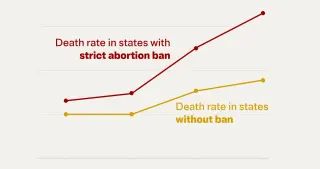
ProPublica’s analysis of CDC data finds about 196 deaths from ectopic pregnancies between 2020 and 2026, roughly double the ~100 deaths in the prior six years, with the rise nationwide but steeper in states that enforce abortion bans after Dobbs. The investigation links delays and hesitancy in treating ectopic pregnancies in ban states to worse outcomes, highlights gaps in data and research, and calls for national reviews and more funding to understand and prevent these preventable deaths.
ProPublica analyzes CDC data and finds a sharp rise in deaths from ectopic pregnancies—about 196 deaths from 2020–2026 versus 106 in the previous six years—with the increase much steeper in states with strict abortion bans. The investigation ties delays and refusals of care to the bans, highlights patient stories in Texas and Arkansas, and notes federal funding and staffing cuts that hamper surveillance and clinician training. While bans aren’t the sole cause, experts say access barriers and policy changes likely contribute to preventable deaths, underscoring the need for better data, guidance, and faster treatment.
The Lindsay Clancy murder trial has prompted a surge of requests from patients and healthcare providers for guidance on maternal mental health, highlighting gaps in postpartum care and prompting calls for more information, more research on maternal mental illness, and expanded training for obstetricians, pediatricians, and emergency staff to better support affected families.
Prime Healthcare will suspend obstetric services at three Illinois hospitals—St. Joseph Medical Center in Joliet, Mercy Medical Center in Aurora, and Resurrection Medical Center in Chicago—effective Oct. 1, centralizing OB care at Saint Mary of Nazareth Hospital in Chicago and Olympia Fields Hospital in Olympia Fields. The move follows years of financial distress, ownership changes, and declining birth volumes, with each hospital averaging fewer than one delivery per day. About 75 full‑time OB nurses will be affected, though they’ll be offered other Prime positions; the system notes 331 open roles overall, including 11 OB positions. Prime also commits $1 million in maternal‑health grants and says suspensions could be reversed if demand rises, while unions and critics warn the consolidation could reduce local access to care.
A Nebraska mother delivered her second child at home without a birth attendant after researching “free” or sovereign birth methods online; the video attention reflects a broader trend of distrust in medicalized birth and reduced prenatal care, but medical experts warn that unmonitored home births carry risks such as hemorrhage, infection, and missed congenital issues. While some applaud birth autonomy and desire more holistic support, doctors emphasize informed decision-making, access to prenatal care, and recognizing that what works for one may not be safe for others.
Public attention to maternal mental health is rising—fueled by high-profile cases and the Lindsay Clancy trial—revealing that up to 1 in 5 women experience mood disorders during pregnancy or after birth. The piece calls for practical screening, accessible treatment, and care coordination, plus policy changes to reduce out-of-pocket costs and barriers, and to educate families and providers to reduce stigma and ensure a supportive village around new mothers.
Gestational hypertension rose from 6% of births in 2016 to 10.4% in 2024, affecting more than 377,000 pregnancies annually with increases across age, race, and states; for babies it can mean growth problems, preterm birth, stillbirth, and placental issues, while mothers face organ damage, higher stroke risk, and possible progression to preeclampsia/eclampsia. Risk is higher with age 40+, pre-pregnancy obesity, and multiple pregnancies, with notable disparities by race/ethnicity. Causes are likely multifactorial and include aging, obesity, and more multiple pregnancies; detection relies on regular BP checks at prenatal visits, with urgent evaluation for severe headaches, vision changes, upper abdominal pain, swelling, shortness of breath. Treatment varies by BP level and signs of preeclampsia, often requiring closer monitoring, medications, and sometimes early delivery. Prevention focuses on optimizing health before pregnancy (weight management, physical activity, healthy diet, not smoking). Postpartum BP issues can persist, and a history of hypertensive disorders raises long-term risk of chronic hypertension and cardiovascular disease, so future clinicians should be aware.
The piece uses Hayden Panettiere's public discussion of postpartum depression and a mother’s story to highlight how common and serious postpartum mental health disorders are, sharing prevalence data, risks if untreated, and the need for supportive workplaces and legal protections (e.g., PWFA, ADA, FMLA) along with calls for culture change to reduce stigma and improve access to care.
Lindsay Clancy’s murder trial has brought postpartum psychosis—an often misunderstood postpartum condition involving mood disturbances, delusions and hallucinations—into sharper focus, with the defense claiming she was suffering from it. Experts note the illness is a medical emergency but remains under-recognized because it lacks formal DSM-5 classification, hindering awareness, research, and care. The case has reignited calls for standardized diagnosis, education for clinicians and families, and proactive treatment options (e.g., lithium, antipsychotics, ECT) to prevent future tragedies and improve support for mothers.
Hospitals across the United States are using silicone “I Gave Birth” wristbands to alert emergency staff to postpartum risk and reinforce education after birth, aiming to reduce maternal deaths and readmissions—a campaign that has gained traction in several states but whose effectiveness remains under study and could be affected by ongoing Medicaid policy changes.
Three mothers who survived postpartum psychosis describe their experiences and urge the public to understand it as a medical emergency, not a moral failing, in the context of the Lindsay Clancy trial, highlighting the need for compassion, early help, and support for families dealing with maternal mental illness.
Postpartum psychosis is rare (about 1–2 per 1,000 after childbirth) and still stigmatized; experts explain three common misconceptions, outline symptoms and treatment, and note how high-profile cases like Lindsay Clancy illustrate the complex intersection of mental health and law.