
Tag

Lab Simulation

All articles tagged with #lab simulation

Lab Fireball Experiments Unravel Fallout Particle Chemistry
science2 months ago

Lab Fireball Experiments Unravel Fallout Particle Chemistry

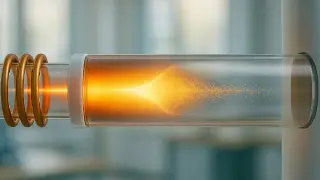
Lawrence Livermore researchers used a one-meter plasma flow reactor to heat uranium, cesium, and cerium (a plutonium stand-in) to about 5,000 K and observe how these elements condense as a simulated nuclear fireball cools under two cooling histories. Uranium and cerium condensed early in both scenarios, while cesium condensed later and formed more complex compounds when cooling was slower. These results could improve models for interpreting nuclear debris and help infer past conditions from fallout, though the setup is simplified and does not reproduce actual nuclear reactions. The work, published by Dhaoui et al. in Analytical Chemistry (2026), suggests moving beyond equilibrium models to capture cooling-rate effects and could extend to other high-temperature environments.

"Simulating Black Holes: Scientists Create First Quantum Tornado in Lab"
science2 years ago

"Simulating Black Holes: Scientists Create First Quantum Tornado in Lab"

Scientists have successfully simulated black holes in the lab using a "quantum tornado" created in superfluid helium, which behaves similarly to a black hole due to its frictionless nature. This breakthrough allows for the study of phenomena that are difficult to observe in astrophysical black holes and could lead to a better understanding of quantum fields in curved spacetimes.

"Lab-Created Alien Haze Unveils Clues to Water Worlds"
science2 years ago

"Lab-Created Alien Haze Unveils Clues to Water Worlds"

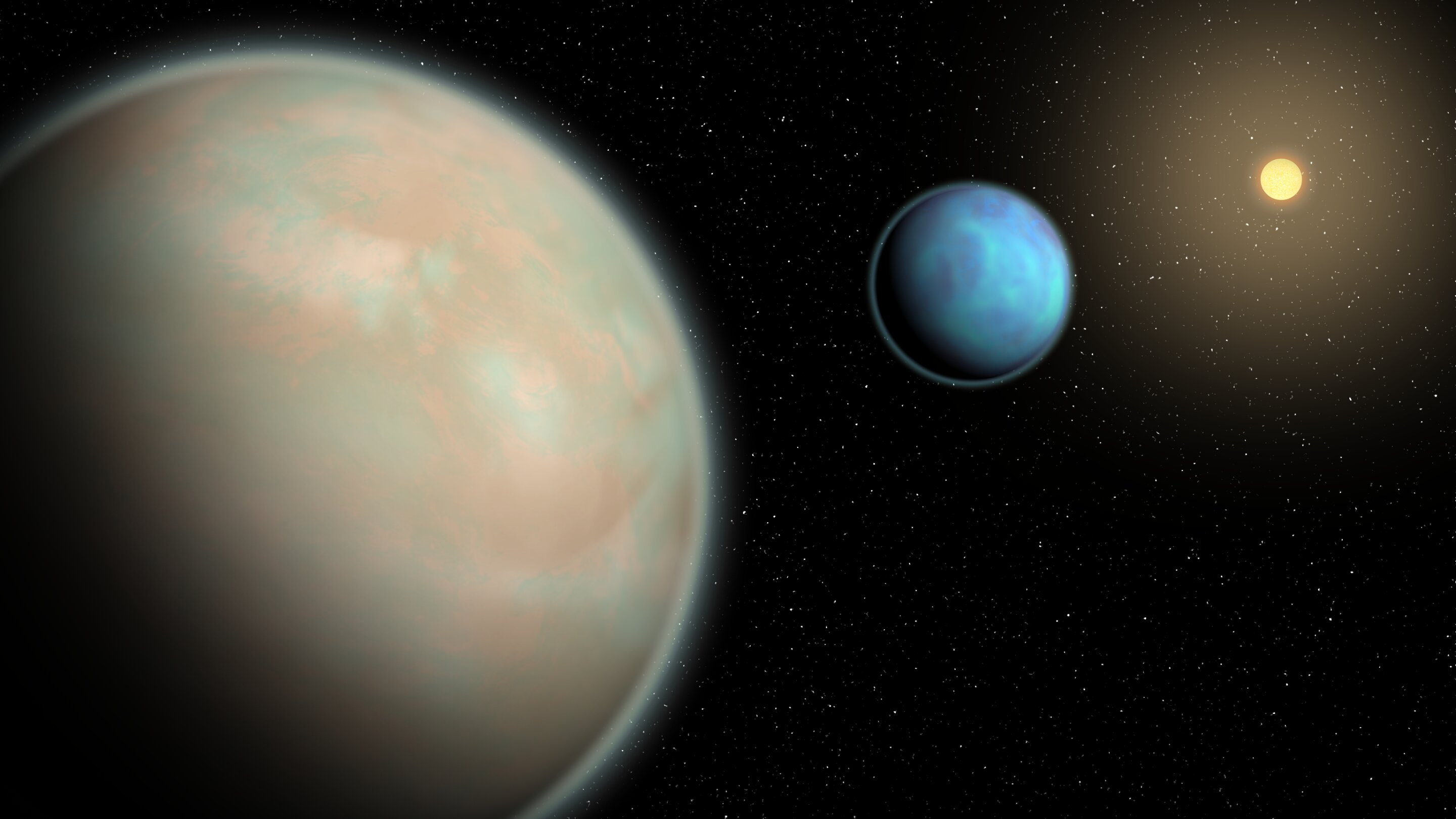
Scientists have conducted lab experiments to simulate hazy atmospheres in water-rich exoplanets, providing insights into how haze affects observations made by telescopes. The research aims to improve the understanding of atmospheric chemistry in exoplanets and aid in the search for extraterrestrial life. The experiments revealed that haze can complicate observations by clouding the view of an exoplanet's atmospheric chemistry and molecular features. By accurately modeling the effects of haze, scientists can better interpret data from telescopes and make more precise conclusions about planetary conditions. The team is now working on creating lab-made haze analogues that closely resemble observations made with telescopes.