
Tag

Lhs 3844b

All articles tagged with #lhs 3844b

JWST Reveals an Airless, 30% Bigger Rocky World Orbiting a Red Dwarf
space5 days ago

JWST Reveals an Airless, 30% Bigger Rocky World Orbiting a Red Dwarf

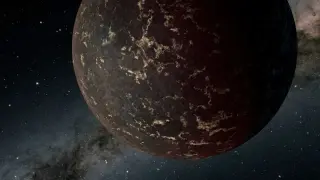
Using JWST's MIRI to measure mid-infrared emissions, scientists studied the rocky, tidally locked exoplanet LHS 3844b, about 50 light-years away. The dayside reaches around 1,000 K, and the spectrum implies a basaltic/mantle-like surface with little to no atmosphere, suggesting a Mercury-like, geologically inactive world rather than an Earth-like tectonically active planet. Researchers plan additional JWST observations to better constrain the crust and surface properties; the findings were published in Nature Astronomy.
"Unveiling the Enigmatic 'Eyeball' Super-Earth: Kua'kua's Peculiar Day-Night Cycle"
astronomy2 years ago

"Unveiling the Enigmatic 'Eyeball' Super-Earth: Kua'kua's Peculiar Day-Night Cycle"

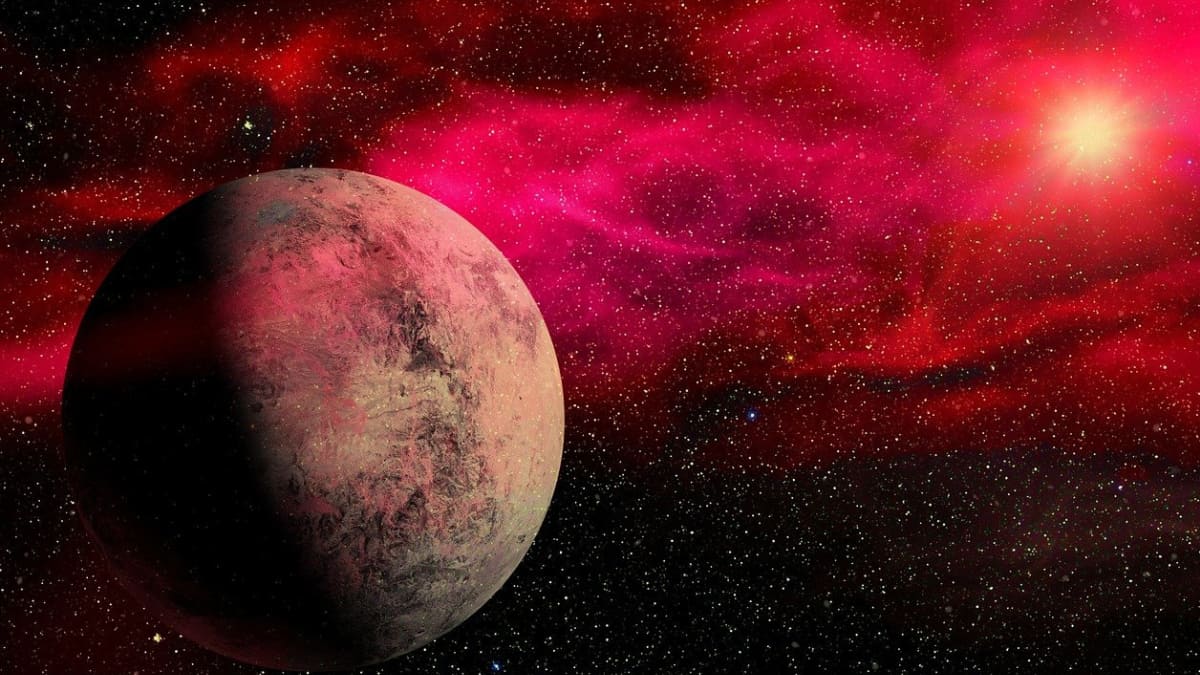
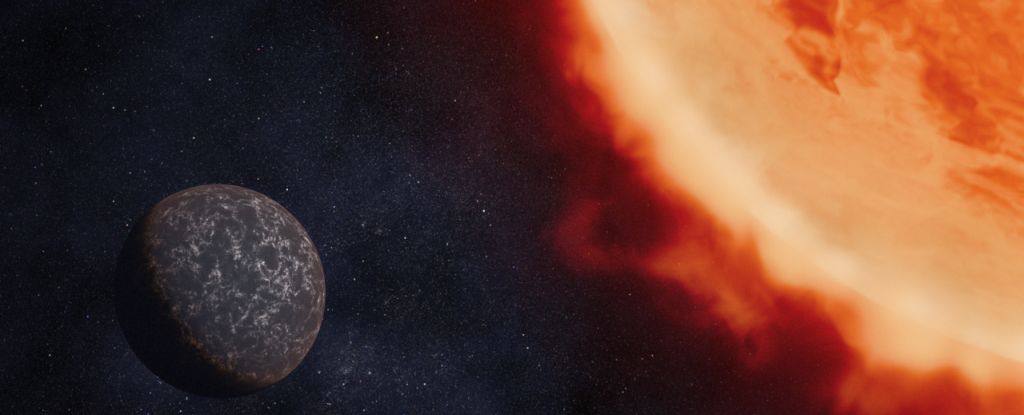
Scientists have discovered an exoplanet, LHS 3844b, with one side in perpetual darkness and the other in constant sunlight, providing evidence of tidally locked exoplanets beyond our solar system. The planet, known as Kua'kua, is close to its host star Batsu and lacks an atmosphere, making temperature readings directly related to its surface. Researchers developed a global thermal model and compared it to observations from the Spitzer telescope, confirming the planet's tidally locked orbit. This discovery sheds light on the prevalence of such exoplanets in the Milky Way.

"Alien 'Eyeball' Super-Earth: Unraveling Its Bizarre Day-Night Cycle"
astronomy2 years ago

"Alien 'Eyeball' Super-Earth: Unraveling Its Bizarre Day-Night Cycle"

Astronomers have confirmed the existence of a "bizarre eyeball planet," LHS 3844b, which is tidally locked to its host star, with one side in perpetual darkness and the other in constant sunlight. This finding provides compelling evidence that tidally locked exoplanets are possible and potentially common in the Milky Way. The planet, located 48 light-years away, is too hot for life as we know it and likely has a rocky composition without an atmosphere. Researchers used infrared observations to determine the planet's rotation and confirmed that it is tidally locked, similar to the Moon's relationship with Earth. This study sheds light on the nature of exoplanets and provides valuable insights into their unique characteristics.