Tag

Lithium Ion

All articles tagged with #lithium ion

Cornell's DEER method revives aging EV battery electrodes without shredding
technology21 days ago

Cornell's DEER method revives aging EV battery electrodes without shredding

Cornell researchers unveiled Direct Electrode-to-Electrode Regeneration (DEER), a method to restore aging lithium‑ion EV battery electrodes by removing thick SEI layers in a DMI bath, enabling regenerated cells to reach up to 95% of original capacity with slower degradation; the process requires disassembly and is best when SEI buildup is the main aging factor, not for cells with lithium loss or structural damage, and could cut refurbishment costs to about $15/kg (vs ~ $26/kg for conventional recycling) if solvent reuse is feasible.
DEER Regeneration Restores End-of-Life Lithium Batteries to 95% Capacity
technology24 days ago

DEER Regeneration Restores End-of-Life Lithium Batteries to 95% Capacity

Cornell researchers introduce Direct Electrode-to-Electrode Regeneration (DEER), a chemical method that restores end-of-life lithium-ion batteries to about 95% of their original capacity by removing the SEI layer with a DMI bath, slowing degradation and enabling electrode reuse in new packs; DEER is not a universal replacement for recycling and is limited to still-operational cells whose capacity loss is SEI-related (70–80% remaining). The process faces scale-up challenges, with lab results showing up to 800 cycles before degradation accelerates and a cost estimate of roughly $15.25 per kg for DEER-regenerated cells versus $26.31 per kg for traditional methods, with further reductions possible when recovering the DMI solvent. Could boost EV battery circularity but large-scale deployment remains uncertain.

OCOOPA Hand Warmers Recalled After Fire Hazards, 1 Death Reported Among 1.5 Million Units
technology2 months ago

OCOOPA Hand Warmers Recalled After Fire Hazards, 1 Death Reported Among 1.5 Million Units

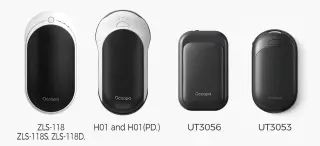
The U.S. CPSC and Shenzhen Street Cat Technology are recalling about 1.5 million OCOOPA Rechargeable Hand Warmers sold online from 2018–2026 due to overheated lithium‑ion batteries that can ignite, posing fire and burn hazards. There have been 1,480 reports of overheating, 15 fires, 350 burn injuries, and the death of an 83-year-old consumer in San Diego in February 2026. Consumers should stop using the devices and contact OCOOPA Direct for a refund (gift card or original payment). Affected models are UT3053, UT3056, ZLS-118, ZLS-118S, ZLS-118D, H01 and H01(PD); disposal should follow local hazardous-waste guidelines. For refunds, consumers must write “RECALLED” on the unit and submit a photo with the model and three-digit batch number at the recall page.

Beyond Lithium: A Multitude of Batteries Set to Power the Future
technology3 months ago

Beyond Lithium: A Multitude of Batteries Set to Power the Future

Global demand for batteries is surging due to EVs and renewable storage, but lithium-ion remains dominant while two near-term paths emerge: affordable sodium-ion batteries for budget EVs and grid storage, and high-end solid-state cells for longer-range luxury EVs; researchers are exploring many chemistries and architectures to speed charging and improve safety, with commercialization of solid-state anticipated by the late 2020s to 2030s and lithium-ion likely to stay the majority through 2035.

Cornell Innovation Promises Safer Battery Technology
technology1 year ago

Cornell Innovation Promises Safer Battery Technology

Cornell researchers have developed a novel porous crystal design that enhances lithium-ion transport in solid-state batteries, potentially preventing battery explosions. This design uses a fusion of macrocycle and molecular cage structures to create one-dimensional nanochannels, significantly improving ion conductivity. The breakthrough promises safer, more efficient batteries and has potential applications in water purification and bioelectronics. The findings are detailed in a paper published in the Journal of the American Chemical Society.