Hubble Reveals One of the Universe’s Darkest Galaxies Hidden in Globular Clusters
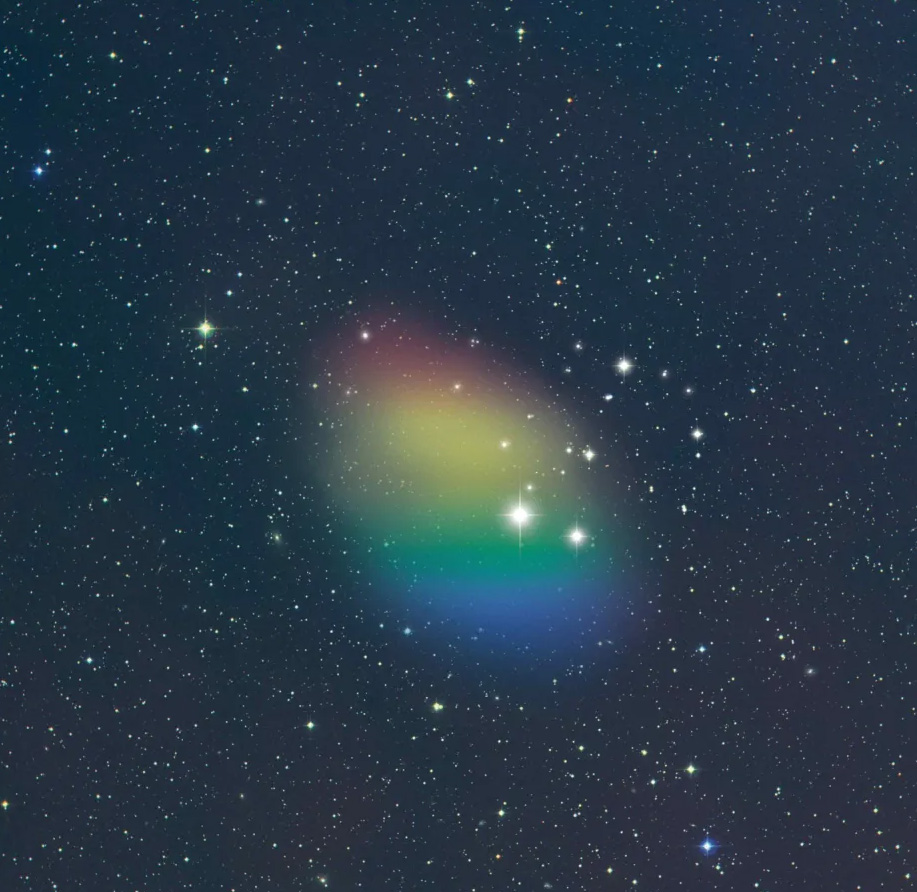
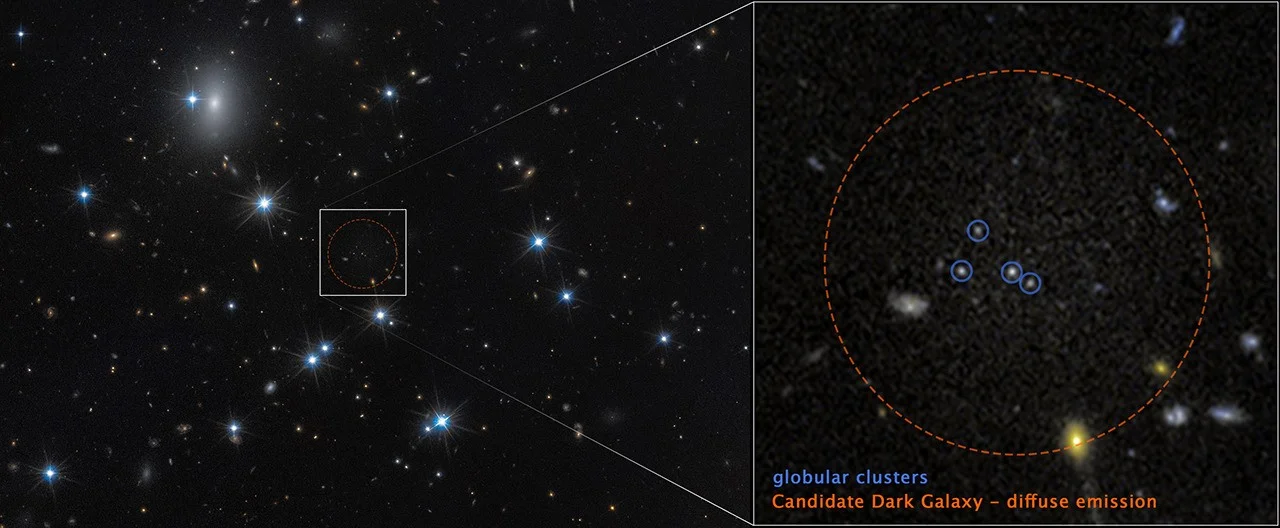
NASA’s Hubble identified CDG-2, a remarkably dark matter–dominated, low-surface-brightness galaxy in the Perseus cluster, by spotting a small group of globular clusters and a faint surrounding glow. Four tightly bound clusters signal an underlying galaxy whose luminosity is about 6 million Sun-like stars, with about 99% of its mass in dark matter and most normal matter stripped away by gravitational interactions. Confirmed through combined data from Hubble, the Euclid mission, and the Subaru Telescope, this is the first galaxy detected primarily via its globular clusters, illustrating how upcoming surveys and machine-learning methods will uncover more such faint systems.