Tag

Globular Clusters

All articles tagged with #globular clusters

JWST Dots May Be Young Globular Clusters, Not Baby Black Holes
space18 days ago

JWST Dots May Be Young Globular Clusters, Not Baby Black Holes

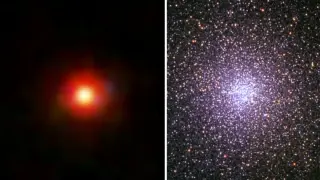
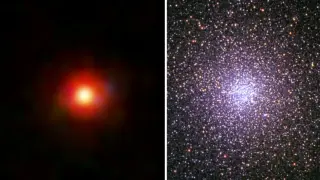
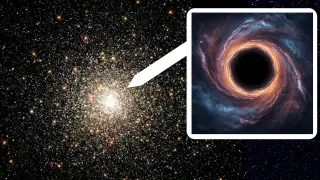
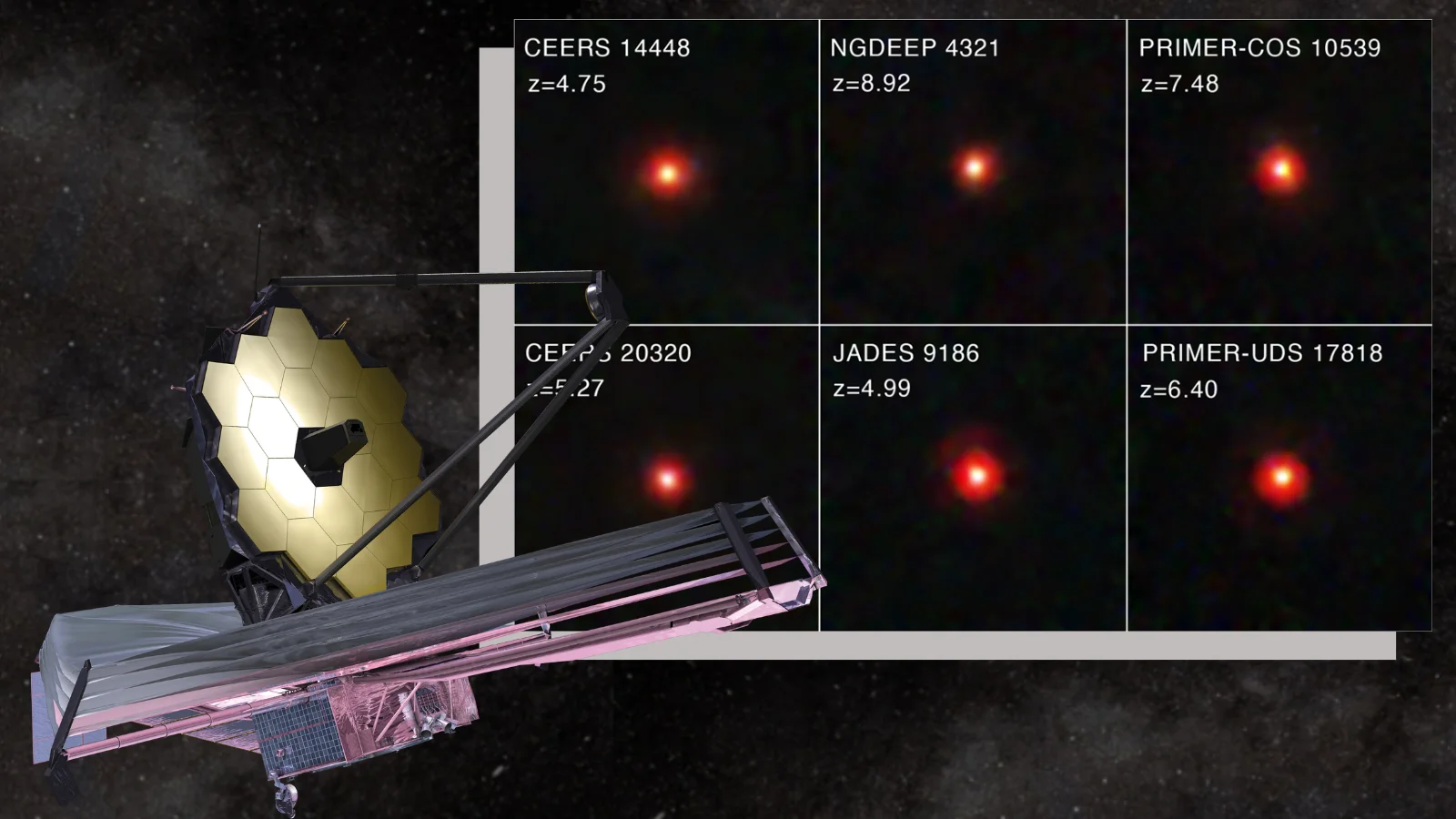
A Space.com analysis of James Webb Space Telescope data suggests the mysterious “Little Red Dots” from the early universe could be newborn globular clusters rather than proto-black holes. A new arXiv study proposes these LRDs host very young stellar populations, potentially powered by an extremely massive, short‑lived star, which could explain their distinctive V‑shaped spectrum. The observed redshift range aligns with metal‑poor globular clusters, and the team estimates a global formation density around 0.3 per cubic megaparsec, similar to the number of globular clusters today. If confirmed, this would provide a direct window into early globular cluster formation, though future spectroscopy tracking chemical signatures (like helium and nitrogen enhancements, and specific element anti-correlations) will be crucial to test the hypothesis.

Hubble Spots a Galaxy 99.9% Dark Matter
space1 month ago

Hubble Spots a Galaxy 99.9% Dark Matter

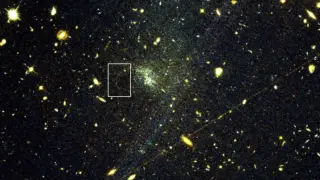
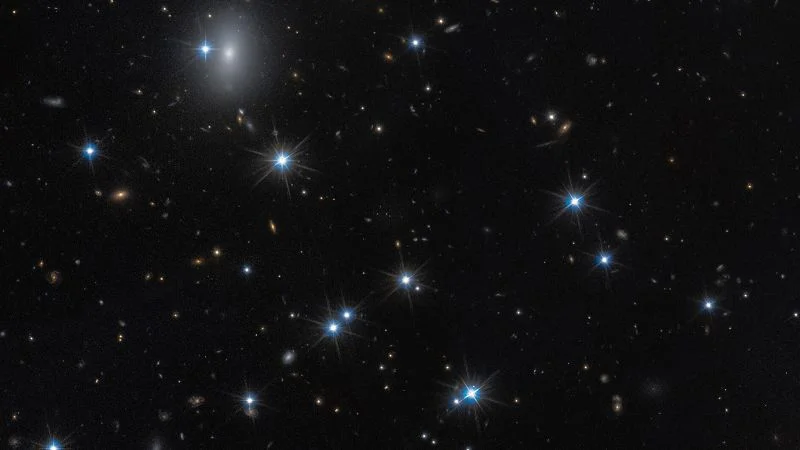
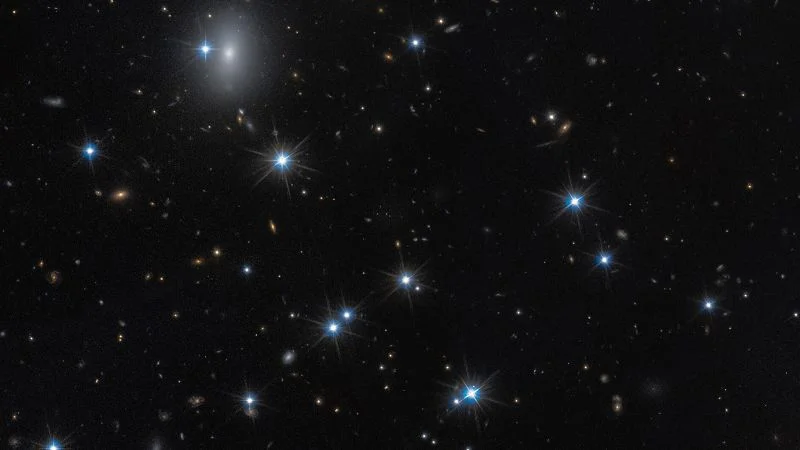
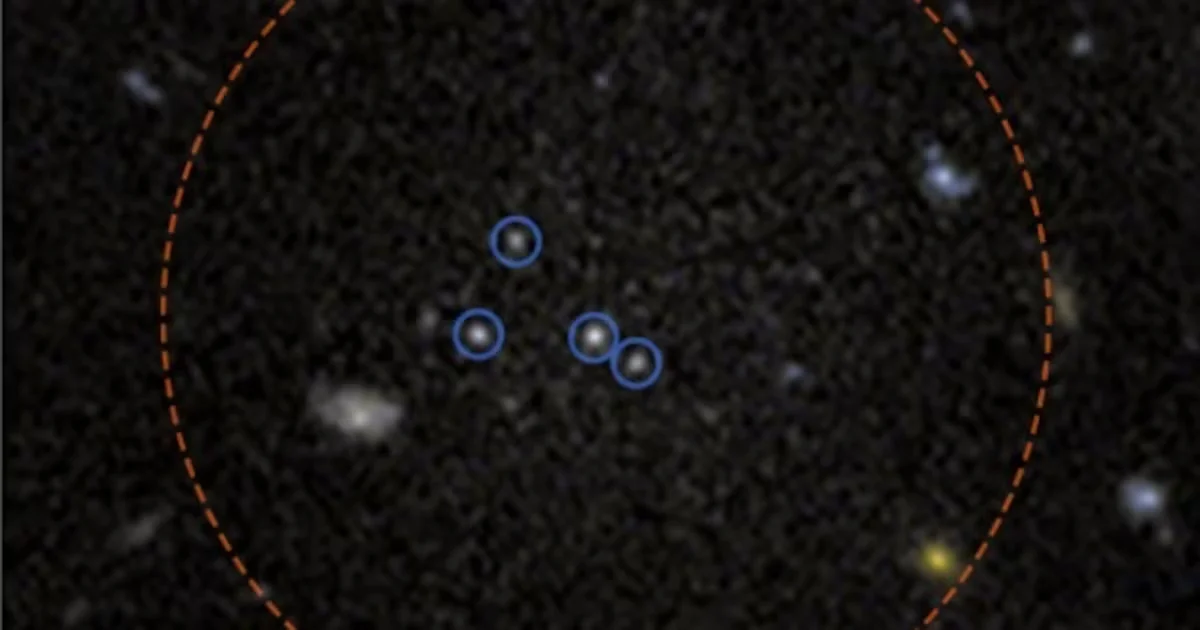
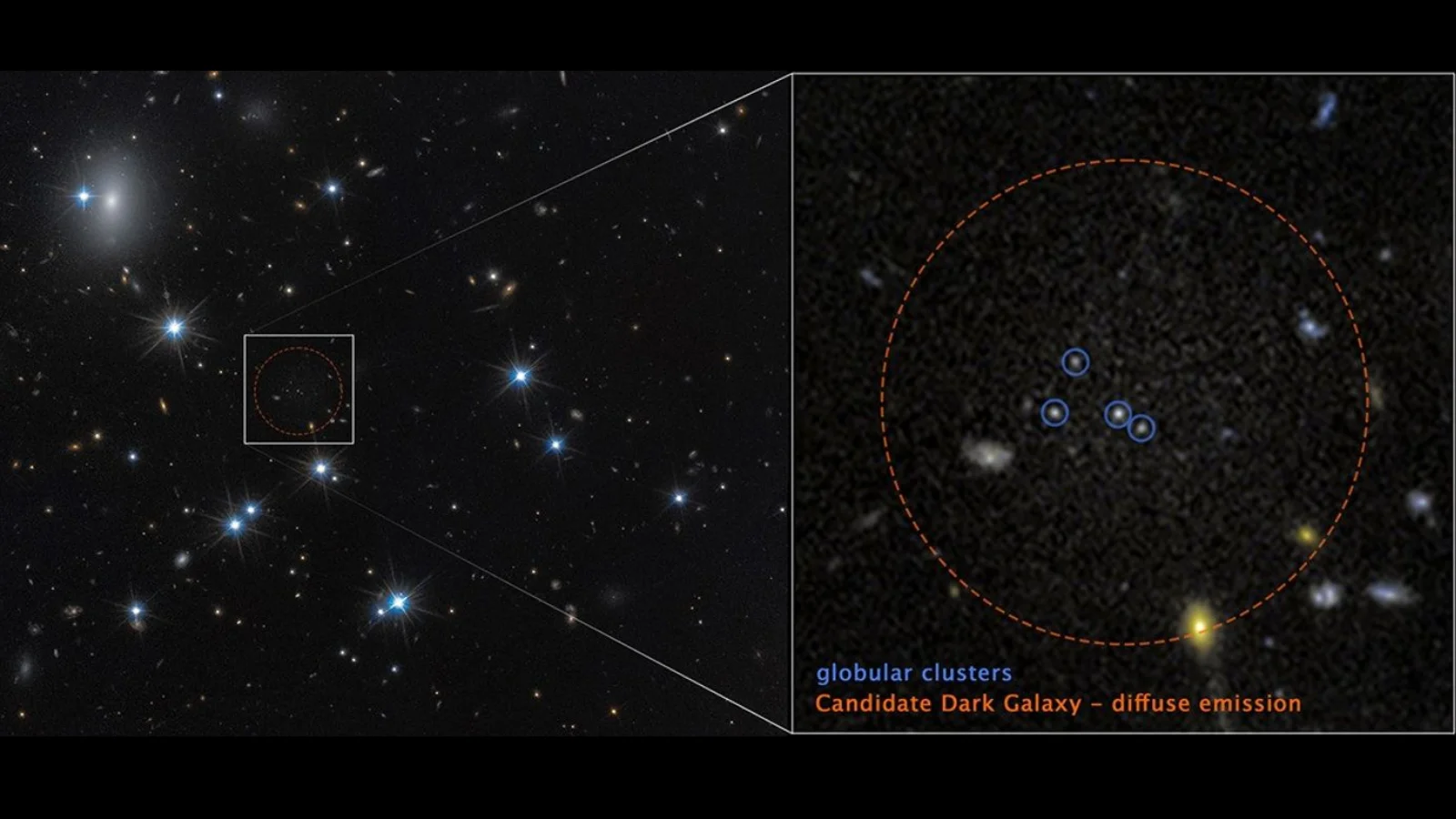
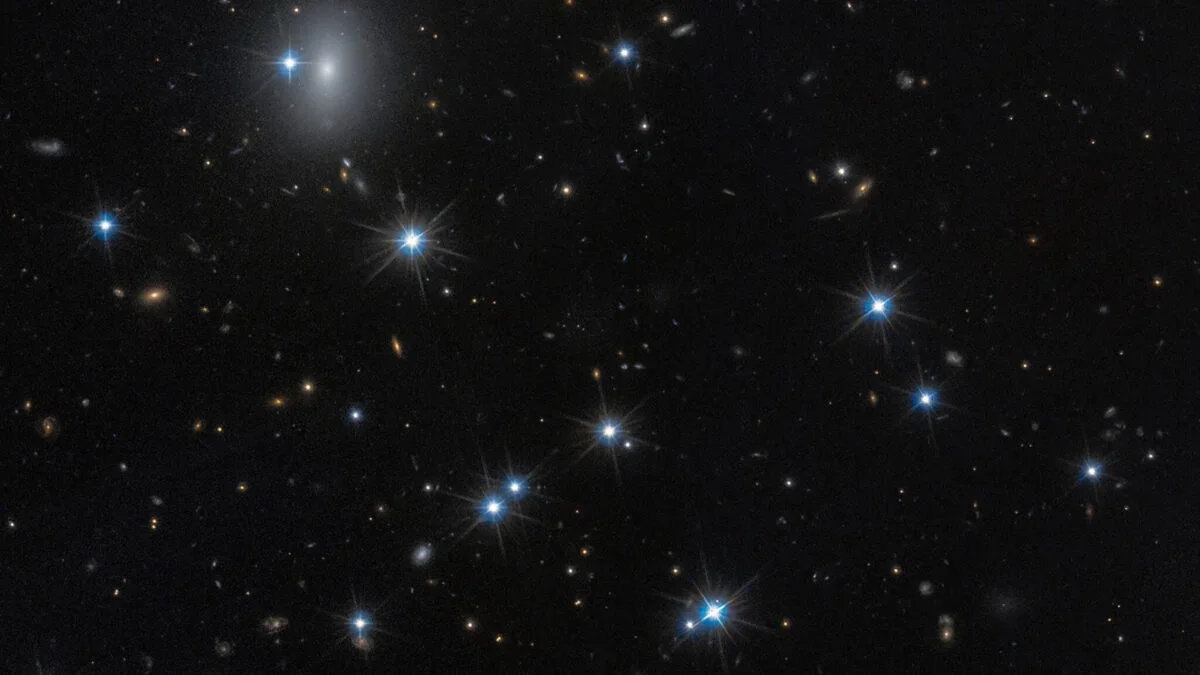
Astronomers using data from the Hubble Space Telescope, Euclid and the Subaru Telescope identified Candidate Dark Galaxy-2 (CDG-2), a distant galaxy that appears to be about 99.9% dark matter and extremely star-poor. The galaxy’s mass is inferred from a halo of four globular clusters, suggesting a rare, almost-dark galaxy that could provide a cleaner probe of dark matter—though further observations, including with the James Webb Space Telescope, are needed to confirm its dark matter content.

Hubble spots galaxy made almost entirely of dark matter
science1 month ago

Hubble spots galaxy made almost entirely of dark matter

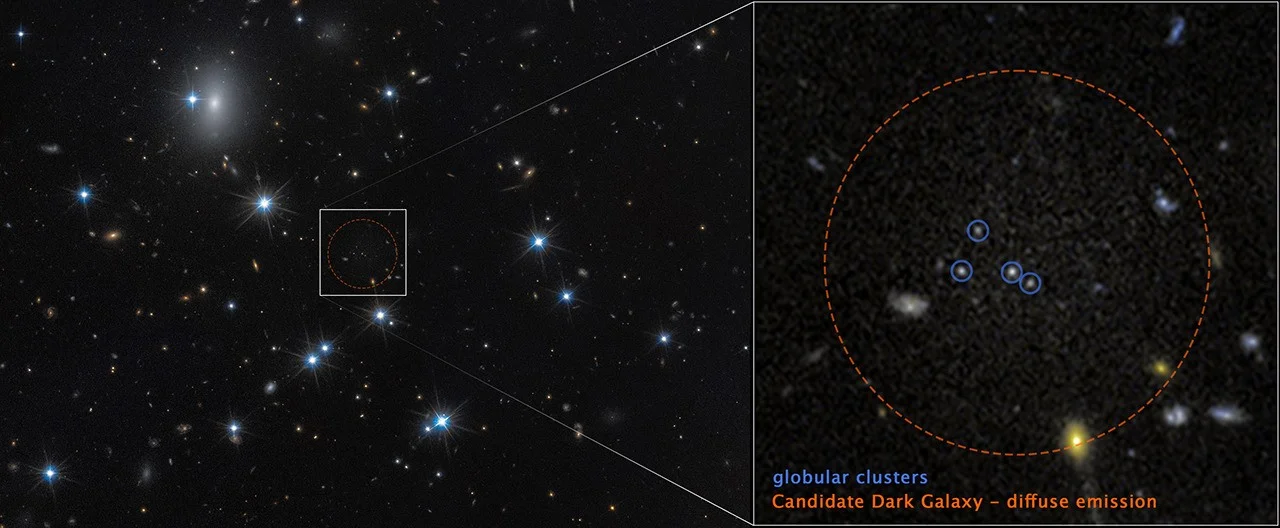
Astronomers using the Hubble Space Telescope, Euclid, and the Subaru Telescope have identified Candidate Dark Galaxy-2 (CDG-2) in the Perseus Cluster, a galaxy so faint it’s dominated by dark matter—at least 99.9%—with four globular clusters indicating a massive dark halo and little to no starlight. The finding, based on globular clusters around a largely starless galaxy, suggests such dark galaxies may be common and could provide clean tests of dark matter physics; further observations with the James Webb Space Telescope could help confirm its dark matter content.

Canadian Team Unveils Ghost Galaxy Almost Entirely Dark
science1 month ago

Canadian Team Unveils Ghost Galaxy Almost Entirely Dark

A Canadian-led team using NASA’s Hubble, ESA’s Euclid and the Subaru Telescope has identified CDG-2, a candidate dark galaxy about 250 million light-years away that appears nearly invisible and is thought to be mostly dark matter, detected via a faint glow around four globular clusters. The galaxy is estimated to shine like only about 5 million stars, far fewer than the Milky Way, and researchers believe past interactions stripped away most of its stars—highlighting how indirect observations can reveal elusive cosmic structures and advance dark matter studies.

Gaia Uncovers a Black-Hole Swarm in Palomar 5, Destined to Dissolve
science1 month ago

Gaia Uncovers a Black-Hole Swarm in Palomar 5, Destined to Dissolve

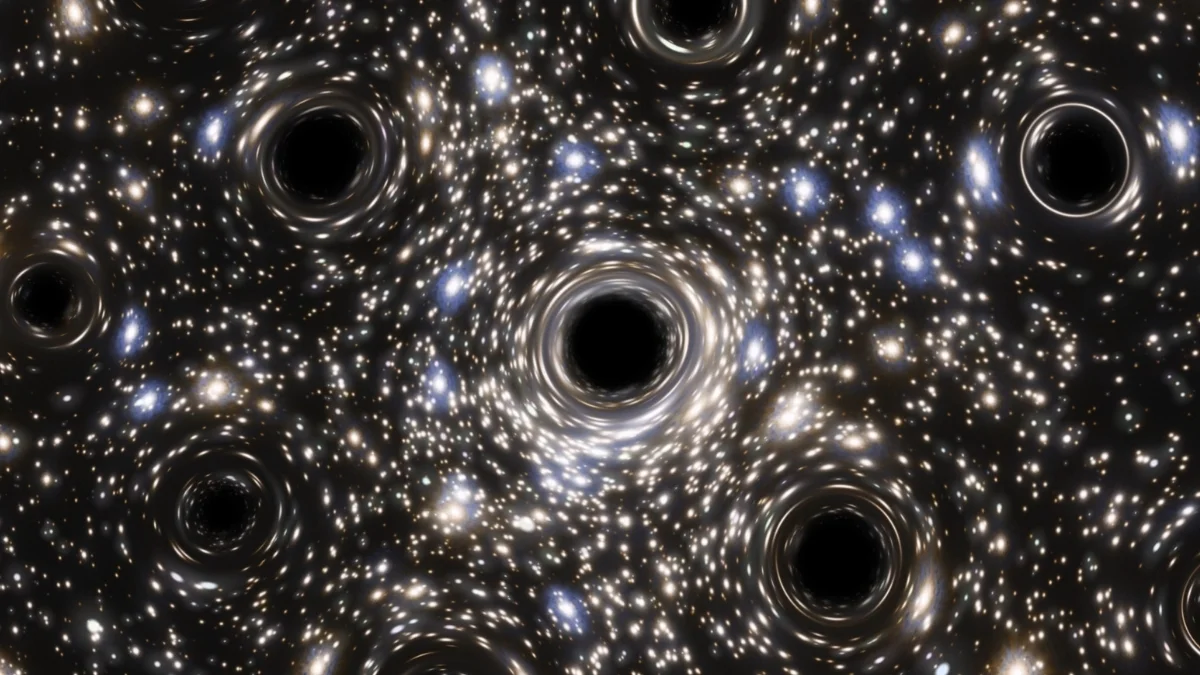
Gaia data reveal Palomar 5, a Milky Way globular cluster with an extensive tidal stream, may host over 100 stellar-mass black holes, making up about 20% of the cluster’s mass. Detailed simulations that include these black holes show they can eject stars into the cluster’s tidal tails, hastening its dissolution into a stream of black holes that will orbit the galactic center in around a billion years. The finding suggests such black-hole-rich clusters may be common and could be important for understanding black-hole mergers.

A Galaxy Nearly All Dark Matter, Revealed by Four Star Clusters
space1 month ago

A Galaxy Nearly All Dark Matter, Revealed by Four Star Clusters

Astronomers have confirmed CDG-2, a faint galaxy in the Perseus cluster detected only through four globular clusters that provide about 16% of its light; by combining data from Hubble, Euclid, and Subaru, they estimate the galaxy’s total luminosity at roughly 6 million suns and a mass composed of 99.94%–99.98% dark matter, making it one of the most dark-matter–dominated galaxies and a valuable natural laboratory for studying dark matter and galaxy formation.

Hubble Reveals CDG-2, a Galaxy 99% Dark Matter
astronomy1 month ago

Hubble Reveals CDG-2, a Galaxy 99% Dark Matter

Astronomers using Hubble, with Euclid and Subaru, identified CDG-2 in the Perseus cluster as an extremely dark-matter–dominated galaxy—about 245 million to 300 million light-years away—where 99% of its mass is dark matter. The galaxy was detected indirectly by tracing four tightly packed globular clusters, which reveal a faint glow around them. Its normal matter is estimated at roughly 6 million sun-like stars, with about 16% accounted for by the globular clusters, suggesting past star formation that has since been stripped away by gravitational interactions. The discovery, highlighting a “dark galaxy” category, was reported in The Astrophysical Journal Letters.

Galaxy Cloaked in Darkness Hints at 99% Dark Matter
space-and-spaceflight1 month ago

Galaxy Cloaked in Darkness Hints at 99% Dark Matter

Astronomers using the Hubble Space Telescope identified CDG-2, a very dim galaxy in the Perseus cluster that appears to be 99% dark matter, with most of its normal matter stripped away by the crowded environment; the galaxy is inferred from a surrounding globular cluster population, marking it as one of the most dark-matter–dominated galaxies and a test bed for theories of dark matter and star formation.

Hubble Reveals One of the Universe’s Darkest Galaxies Hidden in Globular Clusters
science1 month ago

Hubble Reveals One of the Universe’s Darkest Galaxies Hidden in Globular Clusters

NASA’s Hubble identified CDG-2, a remarkably dark matter–dominated, low-surface-brightness galaxy in the Perseus cluster, by spotting a small group of globular clusters and a faint surrounding glow. Four tightly bound clusters signal an underlying galaxy whose luminosity is about 6 million Sun-like stars, with about 99% of its mass in dark matter and most normal matter stripped away by gravitational interactions. Confirmed through combined data from Hubble, the Euclid mission, and the Subaru Telescope, this is the first galaxy detected primarily via its globular clusters, illustrating how upcoming surveys and machine-learning methods will uncover more such faint systems.

Webb Telescope Uncovers New Star System Types and Solves Cosmic Mysteries
science6 months ago

Webb Telescope Uncovers New Star System Types and Solves Cosmic Mysteries

A new study using computer simulations suggests the existence of a new class of star systems called globular cluster-like dwarfs (GCDs), which bridge the gap between traditional globular clusters and dwarf galaxies, forming without dark matter and potentially observable in nearby galaxies like Reticulum II with the James Webb Space Telescope.

Astronomers Investigate VCC 615's Globular Clusters
science1 year ago

Astronomers Investigate VCC 615's Globular Clusters

Astronomers using the Hubble Space Telescope have studied the globular cluster system of the ultra-diffuse galaxy VCC 615, located in the Virgo Cluster. The study identified 22 globular cluster candidates and estimated the total globular cluster population to be 25.1, indicating a high specific frequency compared to similar dwarf galaxies. The findings suggest a large mass-to-light ratio for VCC 615, with a total mass between 90 and 160 billion solar masses. The galaxy's compact nucleus may eventually form a new ultracompact dwarf galaxy.

Study Reveals Dual Stellar Populations in Globular Cluster Gran 5
science1 year ago

Study Reveals Dual Stellar Populations in Globular Cluster Gran 5

Astronomers using the Gemini-South telescope have discovered that the globular cluster Gran 5, located near the Galactic center, contains two distinct stellar populations with different metallicities. This finding, based on high-resolution near-infrared spectroscopy of seven stars, marks the first detection of such diversity in a low-mass globular cluster. The study suggests that Gran 5 is not linked to the Gaia–Enceladus–Sausage structure but is part of the Galactic bulge or disk, with its metallicity variation possibly due to different evolutionary processes or mass loss.

3D Insights into Globular Cluster Formation and Evolution
science1 year ago

3D Insights into Globular Cluster Formation and Evolution

A groundbreaking study published in Astronomy & Astrophysics provides the first 3D kinematic analysis of multiple stellar populations in 16 globular clusters, revealing key insights into their formation and evolution. Conducted by researchers from INAF, the University of Bologna, and Indiana University, the study shows that globular clusters formed through multiple star formation events, with stars exhibiting distinct kinematic properties based on their chemical composition. This research, utilizing data from the ESA Gaia telescope and ESO VLT, offers a new framework for understanding these ancient cosmic structures.

"Intermediate-Mass Black Holes Born in Dense Globular Clusters"
science1 year ago

"Intermediate-Mass Black Holes Born in Dense Globular Clusters"

Researchers led by Michiko Fujii from the University of Tokyo have used star-by-star simulations to demonstrate a potential mechanism for the formation of intermediate-mass black holes in globular clusters. These simulations show that dense molecular clouds can lead to the formation of very massive stars through repeated stellar collisions, which then evolve into intermediate-mass black holes. The findings align with observational data and provide new insights into the birth of such black holes in star clusters.