
Tag

Luca Bindi

All articles tagged with #luca bindi

Hiroshima Blast Forges Unprecedented Alloy in Microscopic Fallout
science2 months ago

Hiroshima Blast Forges Unprecedented Alloy in Microscopic Fallout

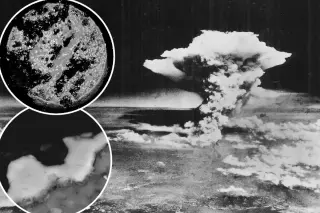
Researchers led by Luca Bindi of the University of Florence identified a previously unknown metallic alloy within microscopic glass particles, known as hiroshimaites, recovered from Hiroshima Bay. The 15-kiloton Little Boy bomb detonated on August 6, 1945, created a fireball exceeding 7,000 °C, vaporizing and mixing diverse materials before rapid cooling froze them into unique structures. Analysis of 34 samples revealed a 10-micrometer grain containing iron, chromium, silicon, nickel, molybdenum, manganese, and aluminum. Unlike standard steel, this grain possesses a complex AlAu₄-type crystal structure derived from beta-manganese, which does not match known industrial alloys. The findings, published in Science Advances, suggest that nuclear explosions create rare metastable materials that are difficult to replicate in laboratories.
Hiroshima Fallout Yields First-Ever Silicon-Rich Alloy
science3 months ago

Hiroshima Fallout Yields First-Ever Silicon-Rich Alloy

A new study in Science Advances reports the discovery of a previously unknown metallic alloy within debris from the 1945 Hiroshima atomic bombing. Led by Luca Bindi of the University of Florence, the research team analyzed 34 'hiroshimaites'—glassy droplets found in Hiroshima Bay sands. One grain, roughly 10 micrometers wide, contained a complex mixture of iron, chromium, nickel, manganese, molybdenum, silicon, and aluminum arranged in a unique cubic lattice. This structure, formed by rapid cooling of vaporized urban materials, has never been observed in conventional alloys or nature. The finding suggests extreme nuclear events can create novel materials and may aid in nuclear forensics and future materials science.

Trinity Glass Yields First-Ever Clathrate Crystal
science6 months ago

Trinity Glass Yields First-Ever Clathrate Crystal

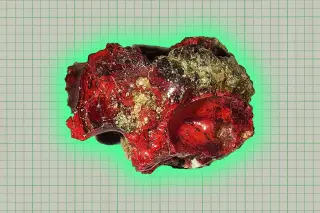
Scientists using CT and X-ray scans on trinitite—the glass formed by the 1945 Trinity nuclear test—have identified a hitherto unseen red clathrate crystal trapped within its lattice. This marks the first observation of such a clathrate in natural or nuclear-explosion materials, highlighting the extreme conditions produced by nuclear detonations; researchers caution that collecting samples from the blast site is illegal.