PCMag’s roundup shows more than 150 Memorial Day discounts still active across laptops, desktops, TVs, streaming devices, audio, wearables, monitors, tablets, and smart-home gear from Apple, Dell, Samsung and others, with deals remaining while supplies last and varying by retailer.
Amazon lists the 13-inch MacBook Air M5 with 16GB RAM and 512GB SSD at $899.99, an 18% discount and its first drop below $900 during Memorial Day, hailed for strong performance and storage; for new buyers it's a compelling value, while existing M4/M3 users may see only a modest upgrade.
HP’s firmware updates pushed via Windows Update have caused boot failures on certain premium HP laptops (e.g., ZBook Ultra G1a, EliteBook X G1a) with specific BIOS versions. The updates are marked critical and install automatically, making rollback difficult; some users have recovered using HP’s network BIOS downgrade with an HP USB-C-to-Ethernet adapter. HP has acknowledged the issue but offered no detailed guidance, while Microsoft reviews the reliability of third-party firmware updates in Windows Update. This echoes earlier firmware update problems in 2024 and highlights challenges in firmware testing and rollout.
PCMag curates 11 standout laptop and desktop deals from Apple, Dell, Lenovo, Acer, ASUS and more for Memorial Day, updated May 25, with savings up to $600 on devices ranging from the MacBook Air M5 to gaming laptops and compact desktops, including ultraportables, business machines, gaming rigs, all-in-ones and mini desktops—grab these before the sale ends.
Apple’s new M5 MacBook Air is on Memorial Day sale: the 13-inch with 16GB RAM and 512GB SSD is $899.99 at Amazon ($200 off), and the 15-inch is $1,099.99 at Amazon ($200 off) or $1,149 at Best Buy; Verge calls the M5 Air fast and capable for everyday tasks, doubles base storage, and lasts all day, making it the top pick for most people.
The Verge reviews the Asus ROG Zephyrus G14 (2026, Intel) as a near‑perfect all‑in‑one laptop for work and gaming, delivering strong performance, a vibrant OLED display, long battery life, and handy features like a full‑size SD card slot and Thunderbolt 4. However, it’s pricey at about $3,600 and makes RAM/storage concessions versus the last‑gen model, with MacBook Pro often outperforming in CPU‑heavy tasks.
Asus unveiled two Intel Wildcat Lake laptops in China—the Vivobook 14SE and 16SE. The 16SE offers two 16-inch IPS display options (1920x1200 or 2560x1600) at 144 Hz, with the higher-end panel delivering up to 400 nits brightness and, on the spec sheet, outperforming the MacBook Neo’s Liquid Retina. Both models run an Intel Core i5-320, 16 GB RAM, and 512 GB PCIe 4.0 storage, share a slim 15.9 mm chassis at 1.29 kg, and include a 52.5 Wh battery. Prices start at CNY 4,599 (~$675), with the better display version at CNY 4,999 (~$734). Global availability is to be announced.
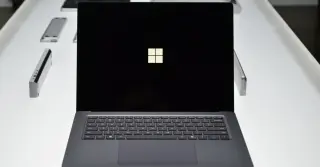
Microsoft has unveiled three Intel-powered Surface devices for business: the Surface Pro 12 and Surface Laptop 8, plus a 13-inch Surface Laptop for Business edition. Base pricing starts around $1,949.99, with higher-end Pro 12 configurations reaching up to $4,399.99 (OLED and 5G options available); the 13.8-inch Laptop 8 starts at $1,949.99 and adds a privacy screen option, while the 15-inch variant gains a higher-resolution 3270x2180 panel at 120Hz. All models keep Surface Connect charging and USB-C/Thunderbolt 4 ports, and the Laptop 8 adds an advanced haptic touchpad, signaling premium enterprise pricing ahead of potential consumer models later this year.
China gets the first laptops powered by Intel's Wildcat Lake Core 300 series. The entry model CHUWI UniBook starts at $449 and uses a five-core Core 3 304 with 8 GB LPDDR5X RAM and 256 GB SSD on a 14-inch 1920×1200 display. Other brands listed in JD—ASUS, HP, and Honor—offer six-core Core 5 320 setups with 16 GB LPDDR5X and 512 GB SSD, priced around $597, $571, and $662 respectively. Intel hardware combines a multi-die 18A node with NPU, Xe graphics, PCIe Gen4 support, Thunderbolt 4, and Wi‑Fi 7, targeting the entry-level PC market and competing with Apple’s MacBook Neo. Sales tax is not included.
Digital Foundry tests the MacBook Neo, a $600 Apple laptop built around an A18 Pro with 8GB of unified memory and limited I/O. It feels premium and has a sharp Retina display, but struggles with modern games: roughly 45–60fps at 1080p on low in some titles, with RT in Control dropping to 20–30fps and Cyberpunk 2077 largely unplayable. Older console-era games run better, and the device sustains performance well thanks to its thermal mass, though memory and CPU/GPU cuts cap its gaming potential. Outside gaming, it handles light multitasking and everyday tasks, but heavy workloads reveal its limitations. Overall, it's a solid, price‑conscious everyday machine with surprisingly decent gaming for legacy or mobile titles, not a true gaming rig compared to M‑series Macs or dedicated PCs.
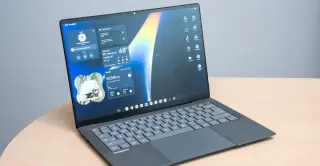
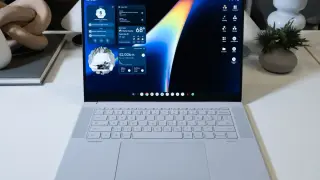
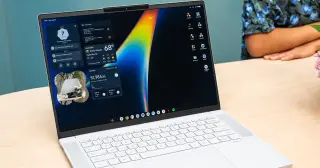
Google announced the Googlebook, an AI-first laptop built around Gemini and tight Android integration, seen as a response to Apple’s MacBook Neo which revived demand for affordable, capable laptops. The piece argues the appeal lies more in software AI features—like a context-aware 'Magic Pointer'—than in hardware, and notes pricing is still undetermined. It suggests Google is pushing AI to the center of computing, while Apple remains cautious about its AI strategy—and whether consumers truly want an AI-first laptop is still up in the air.
Dell’s new five-pound Alienware 15 is marketed as an entry-level gaming laptop, but The Verge argues it’s a branding and value misstep: a plastic chassis, a low-color-saturation 1920x1200 display, limited I/O, and last-gen RTX options priced from $1,299, all set against RAM price hikes nicknamed RAMageddon, raising questions about whether Alienware still signals premium performance or just a Dell badge.
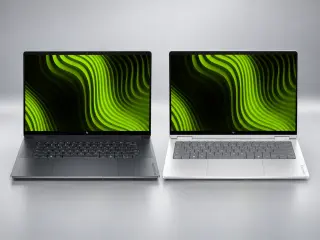
Dell launches the 14S and 16S as mid-range replacements for the Plus lineup, pairing on-device AI with Windows 11 Copilot+ and flexible displays (FHD+ standard, with QHD+ 120Hz or OLED options). The laptops promise long battery life (up to 24–26 hours depending on model and activity) and come in Celestial Blue or Frost Blue, with 14S starting at $1,270 and 16S at $1,320; AMD Ryzen AI 400 variants arrive later this month.
Lenovo’s new ThinkPad L14 Gen 7 and L16 Gen 3—previously considered the brand’s affordable line—now start at $1,440 with entry-level specs, reuse older 2024 designs, lack 5G, and rely on 57 Wh batteries; they’ll be available in May 2026, signaling a shift away from affordability in the L-series lineup.
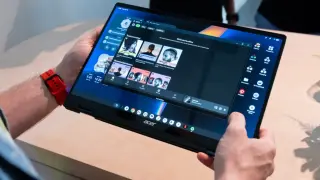
Intel disclosed that Google’s new Googlebook laptops will run on Core Series 300 'Wildcat Lake' CPUs—a six‑core x86 platform (two Cougar Cove P‑cores and four Darkmont efficiency cores) with an NPU 5 at 40 TOPS INT8, Xe graphics, and a Xe3‑level GPU on the 18A process—while Google pursues Arm variants with Qualcomm and MediaTek; Acer, ASUS, Dell, HP, and Lenovo are among OEMs expected to ship the devices this fall.