macOS Tahoe 26.4 adds a Charge Limit for MacBooks, allowing you to cap charging at 80–100% to reduce battery wear; set it via System Settings > Battery > Charging, and note Optimized Battery Charging still runs in the background unless you turn it off—lower caps suit desk-bound laptops, while higher caps preserve portable runtime.
The Verge tests three budget Windows laptops (Asus Vivobook 16, Lenovo IdeaPad Slim 3x, and Acer Aspire 14 AI) against the MacBook Neo at $599. While the Windows machines offer more RAM and ports on paper, they lag in real‑world use due to dim, washed displays, middling keyboards/trackpads, and weak speakers. The Acer leads in battery life and ports, Lenovo has a decent keyboard but poorer audio, and Asus is the least compelling overall. The Neo wins on display brightness/color, trackpad precision, webcam clarity, and general usability, making it hard to beat at this price; among Windows options, Acer Aspire 14 AI is the best of the three, but still trails the Neo. Chromebooks are mentioned as alternatives, but aren’t as feature-complete. The bottom line: Neo dominates budget laptops for now, challenging PC makers to fix core corners without raising prices.
Samsung’s Galaxy S26 Ultra is selling well, but a reader poll shows most users are disappointed by the upgrades: aluminum frame instead of titanium, no Bluetooth for the S Pen, the 5000 mAh battery unchanged, and only minor camera changes. Positive notes include the privacy display, 60W wired charging, and new software features like 24 MP mode and AI tools. Overall, sentiment is mixed: consider upgrading only if you’re on older models, while S25 Ultra owners may want to skip this year’s jump.
An iOS 26.4 guide detailing 12 settings to optimize battery life, privacy, and usability—from Adaptive Power and automatic security patches to auditing app permissions, reducing display effects, enabling audio zoom, disabling lock-screen camera swipes, allowing iCloud search, limiting notifications, downloading podcasts for offline viewing, and completing reminders from alarms.
Razer’s 2026 Blade 16 sticks to its ultra-thin chassis but swaps in Intel’s Panther Lake Core Ultra 9 386H for a 16‑core CPU, touting up to a 60% battery-life boost over the 2025 model with power-saving modes, along with Thunderbolt 5, faster LPDDR5X RAM up to 64GB, a brighter 240Hz OLED display (up to 1100 nits HDR), and an RTX 5080 GPU; priced around $3,500 (32GB RAM, 2TB SSD) with higher-end RTX 5090 options at $4,500, and available now.
Notebookcheck’s test of a Dell XPS 16 with an LG Display 1–120Hz panel and Intel Panther Lake suggests it’s the most power-efficient laptop yet, idling at about 1.5W and delivering nearly 27 hours of Wi‑Fi web browsing on a 70Wh pack, potentially beating MacBooks; LG Display is mass-producing a 1Hz laptop panel (Oxide 1Hz) with an OLED version planned for 2027, and Intel is collaborating with BOE on 1Hz systems.
Notebookcheck’s review of the 2026 Dell XPS 16 highlights Panther Lake-driven efficiency: idle power around 1.5 W and about 4.5 W at max brightness, with WLAN browsing tests delivering roughly 27 hours on a 70 Wh pack (well over a day). It outperforms rivals that pull 3–5 W in similar conditions, but the lack of a discrete GPU trades graphics performance for this exceptional endurance. Full benchmarks are in Notebookcheck’s XPS 16 review.
Samsung’s Galaxy Z Fold 8 and Z Fold 8 Wide are rumored to pack larger batteries (5,000mAh and 4,900mAh), faster charging (45W–60W), and a lighter, thinner design while facing rising competition from Apple’s anticipated foldable iPhone; pricing is expected around $2,000, with Samsung still a leading foldable-display supplier.
Nintendo Switch 2’s Handheld Boost Mode lets Switch 1 games run in handheld with docked visuals, improving anti-aliasing and clarity but at a cost: a test of Doom Eternal showed battery life drop from about 5 hours to 3 hours 43 minutes (roughly a 23% hit). For non-travel use, the trade-off is worth it to revitalize older titles with noticeably better performance.
Nintendo Switch 2 adds a handheld boost mode that makes original Switch titles run as if docked, improving resolution and framerate in handheld mode, but it reduces battery life (e.g., Doom (2019) lasts about 3h43m with boost on vs 5h5m with boost off).
The 2026 MacBook Air with the M5 chip remains the go-to balance of price and performance for most buyers, delivering a meaningful CPU/GPU uplift, faster storage, fanless operation, strong battery life, and superb portability, while placing itself between the Neo and Pro in Apple’s lineup. Despite modest updates beyond the M5 and a higher starting price, it remains a well-rounded, do-it-all laptop—hard to beat for daily workloads and creative tasks—though power users who need Pro-level features may still prefer a Pro.
Samsung’s Galaxy S26 keeps its pocketable chassis while adding a bigger 4300 mAh battery and 256GB base storage in a 6.3-inch, lighter body. It hides fingerprints well with a satin back, sticks to a familiar camera setup (50MP main, 12MP ultrawide, 10MP telephoto) and the same 25W charging, but adds no major camera upgrades or periscope zoom. Priced from about $900 with color options and trade‑in deals, it emphasizes endurance and ergonomics over new imaging tech.
YouTube TV now supports background audio on Android and iOS, letting live TV, sports, and news continue sound even when the screen is off. Born from a 2024 experimental rollout, it’s become a standard feature bundled with the subscription and accessible via iOS Control Center and Android controls. The feature is practical for listening on the go, conserving battery and offering a radio-like experience for real-time events, without the need to keep the video visible.
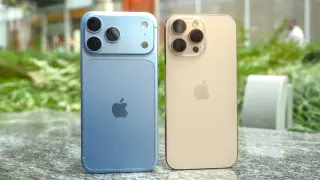
Apple’s iPhone 18 Pro Max leans into practicality with a thicker chassis to fit a larger 5,100–5,200 mAh battery and a new A20 chip on a 2nm process for better performance and efficiency. It retains the 6.9-inch display and does not plan under-display Face ID or a smaller Dynamic Island this cycle, signaling a focus on longer battery life and everyday usability over dramatic design changes.
JBL has introduced two Live-series wireless headphones—the over-ear Live 780NC and on-ear Live 680NC—that wield an AI-trained noise-cancellation algorithm, boosted real-time noise filtering, LE Audio and LDAC, and up to 50 hours of playback with ANC on (about 80 hours with ANC off). They use 40mm drivers, offer Multipoint Bluetooth, come in five finishes, and are priced at $249.95 and $159.95 with UK availability to be announced.