Mitochondria Rethought as Dynamic, Heterogeneous Ecosystems
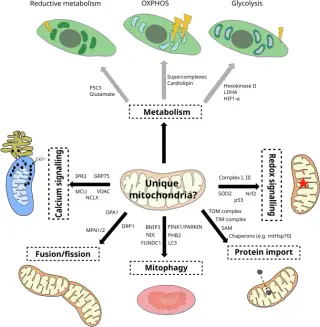
A new review in Nature argues that mitochondria are not a uniform network but a diverse ecosystem of specialized subpopulations. These subpopulations differ in shape, metabolism, and location, adapting to specific cellular needs. This heterogeneity is driven by fusion, fission, and genetic factors, and is crucial for understanding diseases like cancer and neurodegeneration.