Tag

Gulf States

All articles tagged with #gulf states

Gulf Allies Brace for Iran Pact as U.S. Security Commitments Waver
world16 days ago

Gulf Allies Brace for Iran Pact as U.S. Security Commitments Waver

Gulf Arab states view the emerging US-Iran agreement as a turning point that could signal a U.S. security retreat, potentially emboldening Tehran and leaving key concerns like missiles and proxies unresolved. The pact would give Iran a formal role in overseeing Hormuz traffic, prompting fears about Gulf security. While U.S. Secretary of State Marco Rubio is touring the UAE, Bahrain, and Kuwait to reassure partners, many Gulf leaders remain skeptical of Washington’s commitments and are weighing diversifying defense ties, even with Turkey, and considering regional deterrence options. The plan also includes a $300 billion Iran reconstruction fund that Gulf states have yet to commit to financing, highlighting the broader question of how secure the Gulf will be under a waning U.S. footprint.

Gulf States Reassess Ties as US Exit from Iran War Looms
world-news21 days ago

Gulf States Reassess Ties as US Exit from Iran War Looms

With Washington stepping back from the Iran conflict, Gulf countries hosting US bases face pressure to rethink their alignment as Iran’s strikes underscored security risks. Some Gulf states may deepen ties with the US, while others seek to balance with Beijing; Iran’s missiles and drones remain a significant regional threat. Nuclear talks look unlikely to mirror the 2015 deal, and despite strains elsewhere, US-India cooperation endures beyond leadership changes.

Gulf States Embrace Iran Ties, Rewriting the Regional Order
analysis22 days ago

Gulf States Embrace Iran Ties, Rewriting the Regional Order

The US-Iran memorandum signals a new regional order that the Gulf states are quickly adapting to: Iran remains a major neighbor, and Riyadh, Abu Dhabi and Doha are prioritizing economic stability and openness to foreign investment over trying to topple Tehran, effectively sidelining Israel. The war’s outcome shows US limits and Tehran resilience, prompting Gulf states to pursue détente with Iran and cautious normalization with Israel, while blaming Israel for past costs and questioning the viability of military confrontations in the region.

Hormuz governance to be shaped with Oman and Gulf states after war-ending agreement
world23 days ago

Hormuz governance to be shaped with Oman and Gulf states after war-ending agreement

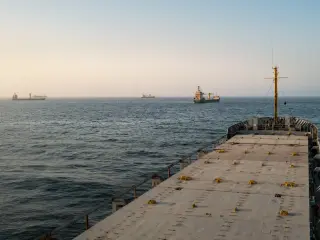
U.S. officials say Iran will allow toll-free passage for commercial ships through the Strait of Hormuz for 60 days after signing a war-ending memorandum of understanding, after which Tehran, Oman and other Gulf states will discuss the future administration and maritime services in Hormuz. The United States will lift its naval blockade within 30 days of signing. The MOU outlines a 60-day window to negotiate a final deal, including sanctions relief, potential reconstruction funding for Iran, and nuclear-related terms, with discussions to proceed in line with international law and the sovereignty of coastal states.

Iran’s windfall gamble hinges on 60-day talks and a private-backed reconstruction fund
world24 days ago

Iran’s windfall gamble hinges on 60-day talks and a private-backed reconstruction fund

The US is launching a 60-day window of negotiations with Iran under an MOU to pursue a broader nuclear agreement. While Washington says benefits depend on Tehran’s compliance, there are notes of possible early concessions—such as temporary sanctions waivers to allow oil sales and potential access to frozen funds—though officials deny automatic transfers. If a final deal is reached, sanctions would be lifted on a set schedule and Iran would be required to retrieve enriched uranium, curb further enrichment, and accept inspections. A controversial proposed “prosperity fund”—a roughly $300 billion reconstruction plan backed by private Gulf and East Asian investors and not funded by US taxpayers—could support Iran’s development only if Tehran ends its nuclear program. Details remain unclear, with the White House stressing progress hinges on Iran’s seriousness.

Temporary Pause in US-Iran Talks Leaves Regional Roots Unresolved
world25 days ago

Temporary Pause in US-Iran Talks Leaves Regional Roots Unresolved

The interim US-Iran deal envisions a 60-day ceasefire and talks on key issues (enriched uranium, sanctions, and assets) with hopes for a final settlement, but analysts see it mainly as a Band-Aid unlikely to resolve deep regional tensions or prevent future conflicts. The agreement also affects shipping through the Strait of Hormuz and could reshape Gulf states’ security calculations, while ongoing issues in Gaza, Israel’s concerns about Iran’s missile program and the Axis of Resistance, and the broader durability of US commitment all signal that root causes remain unaddressed and a lasting breakthrough is far from guaranteed.

Gulf leaders intervene as Trump weighs Iran strike
politics28 days ago

Gulf leaders intervene as Trump weighs Iran strike

After Donald Trump threatened to attack Iran, Gulf and South Asian leaders pressed him to back down, signaling a possible diplomatic opening. Calls from Qatar’s emir, the UAE’s president, and Pakistan’s defense chief suggested a preliminary deal to reopen the Strait of Hormuz and pave the way for broader talks, potentially easing tensions through limited sanctions relief in exchange for nuclear concessions. Tehran’s final assent remains uncertain, and Netanyahu signaled cautious support as negotiations continue.

Gulf states resist Trump's Abraham Accords demand, citing prematurity and regional balance
middle-east1 month ago

Gulf states resist Trump's Abraham Accords demand, citing prematurity and regional balance

Gulf powers say Trump’s push to have them join the Abraham Accords is premature and disconnected from postwar realities, with Saudi Arabia tying normalization to Palestinian statehood while Doha and Muscat focus on building a regional balance to deter both Iran and Israel; the UAE is already a party to the accords, but regional dynamics and waning faith in Washington are pushing Gulf states to diversify security ties and consider relationships with other powers as the Iran war reshapes the regional order.

Gulf Allies Steer the US Toward a Negotiated Iran Endgame
world1 month ago

Gulf Allies Steer the US Toward a Negotiated Iran Endgame

An Arab News op-ed argues the US should rely on Gulf partners—Qatar, Saudi Arabia, and the UAE—to shape a negotiated Iran endgame rather than pursuing another broader war. Gulf states share Washington’s aim to contain Tehran while avoiding a regional or global crisis, with Saudi Arabia resisting war, backing Pakistan-led talks, and calling for the Strait of Hormuz to reopen. Despite Iran’s attacks, Gulf leaders question the proportionality of further strikes and favor diplomacy and new regional security architectures that could yield a deal to end the conflict without further bloodshed.

Gulf-led diplomacy pauses Iran strike as US warns of large-scale retaliation if talks fail
world1 month ago

Gulf-led diplomacy pauses Iran strike as US warns of large-scale retaliation if talks fail

Trump says he delayed a planned attack on Iran at the request of Gulf leaders amid ongoing negotiations and a potential deal, while the US says it is prepared for a full-scale assault if talks fail; the live coverage also tracks Gaza flotilla interceptions, the Barakah nuclear plant incident, sanctions waivers, and broader fighting in Lebanon and Kurdistan as tensions in the region escalate.

Saudi covert strikes on Iran widen regional confrontation
world1 month ago

Saudi covert strikes on Iran widen regional confrontation

Reuters reports that Saudi Arabia carried out several unpublicized strikes on Iran in late March in retaliation for attacks on Saudi soil—the kingdom’s first publicly known direct action on Iranian territory—before diplomatic talks helped push toward de-escalation; the broader conflict has drawn in Gulf states with UAE involvement reported, and officials emphasize restraint as regional diplomacy continues amid ongoing Iran-U.S. tensions and a China-brokered détente backdrop.

Ukraine Converts Iran War Turmoil into Long-Term Strategic Leverage
world2 months ago

Ukraine Converts Iran War Turmoil into Long-Term Strategic Leverage

An opinion piece argues that Russia will see only a temporary windfall from the Iran conflict, while Ukraine is turning the crisis into durable strategic gains via defense deals with Gulf states, energy arrangements, and a growing tech and air-defense ecosystem. Kyiv’s outreach to the UAE, Saudi Arabia, Qatar and others could reshape regional security dynamics and reduce Europe’s reliance on Western aid, whereas Moscow’s support for Tehran risks souring ties with Gulf monarchies and limiting long-term influence. Western allies are urged to back Kyiv to accelerate these partnerships and help Ukraine rebuild with strong international backing.