Argentine President Javier Milei’s Cabinet chief Manuel Adorni resigns amid a corruption scandal and an illicit-enrichment probe centered on lavish spending and real estate, highlighting graft concerns in Milei’s government; Milei defends him while a replacement has not yet been named.
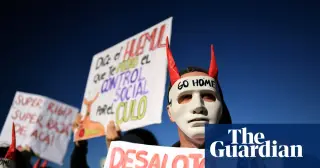
Thousands across Argentina protested President Javier Milei’s cuts to the tuition-free public university system, urging adherence to a funding law that would cover operating costs and teacher salaries. Milei’s government argues the law lacks funding specifics and is being challenged in court, a case that could reach the Supreme Court, as unions report inflation-driven pay losses and faculty departures to private or better-paying jobs.
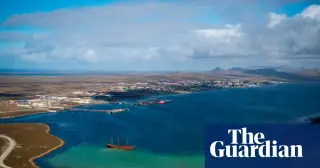
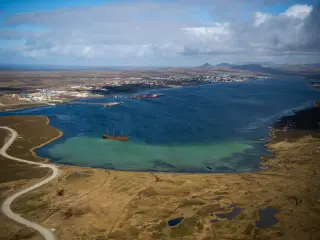
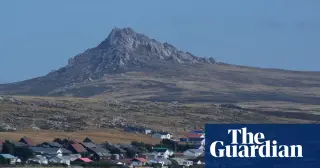
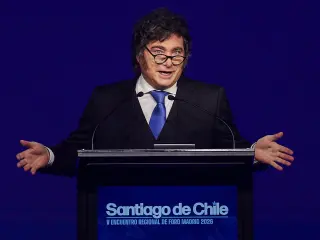
Argentine President Javier Milei has intensified his push on Falklands sovereignty, leveraging his bond with Donald Trump as US-UK tensions rise. Experts say a settlement will require persuading Britain, not Washington, even as reports hint at Pentagon options that could pressure allies over Iran. The US has traditionally remained neutral on the Falklands, and Milei’s domestic popularity remains low as he pushes for momentum on the issue.
Israeli Prime Minister Benjamin Netanyahu welcomed Argentine President Javier Milei on his third visit to Israel and told him he is now part of the “mishpacha” because he is a Lubavitcher. The two leaders announced the Isaac Accords to deepen Israel–Latin America ties, with memorandums on counterterrorism and AI, a $150 million Israeli credit line for Argentina, and direct El Al flights launching in 2026. Milei prayed at the Kosel and the Rebbe’s Ohel, expressing gratitude, while Netanyahu highlighted ongoing efforts to counter Iran’s threats and suggested Milei’s visits precede major regional developments. U.S. Ambassador Mike Huckabee attended the signing and praised the leaders as allies of President Trump.}
Argentina's lower house approved the glacier-law amendment 137-111 (with three abstentions), enabling mining in ecologically sensitive glacier and periglacial areas amid protests; environmentalists warn it threatens water supplies, while backers say it clarifies policy and could boost mining exports by giving provinces more authority to designate protected zones.
A U.S. appeals court overturned a $16 billion judgment against Argentina over the 2012 nationalization of state-controlled energy company YPF, a ruling celebrated by President Javier Milei.
Argentina’s Senate is poised to approve a broad labour reform that would weaken unions, extend the maximum workday to 12 hours, reduce severance costs, and allow direct employer-employee negotiations while phasing out national labour courts in favor of an hour-bank system; supporters say it will boost formal employment and business predictability, while critics call it unconstitutional, harmful to workers, and unlikely to create jobs amid high informal employment and ongoing protests.
Argentina and the United States signed a broad trade and investment agreement that eliminates reciprocal tariffs on hundreds of goods—Argentina removing barriers on more than 200 categories and the U.S. scrapping tariffs on about 1,675 Argentine products—while allowing tariff-free entry under quotas for sensitive items like vehicles, live cattle, and dairy. The deal also aims to boost U.S. imports of Argentine beef to 100,000 tons annually, and the U.S. will review its 50% steel and aluminum tariffs rather than abolish them outright. The accord underscores Milei’s pro‑market pivot and strengthens ties with Washington, though it faces domestic pushback from cattle ranchers and some lawmakers who oppose subsidies or tariff relief.
Argentina has repaid its US financial aid as Javier Milei gains prominence amid a market crisis, signaling a potential shift in the country's economic landscape.
Brazilian President Lula warned against US military action in Venezuela, calling it a potential humanitarian catastrophe, while Argentine President Milei supported US pressure on Caracas; the summit also saw calls for the EU to sign a long-delayed trade deal with Mercosur.
The US is planning a $25bn investment in Argentina's Patagonia, including building an AI data center and military collaborations, amid political and economic developments, with US support possibly influenced by upcoming Argentine elections and concerns over economic stability and Chinese influence.
Argentina is seeking a $20 billion bailout from the US Treasury to address its ongoing economic crises, inflation, and currency instability, with suggestions that dollarization could be a more effective solution. President Milei faces political challenges and has yet to implement key reforms, including replacing the peso with the dollar, which experts believe could stabilize the economy. The country's history of defaults and crises suggests that current measures may only provide temporary relief.
The U.S. government, through Treasury Secretary Scott Bessent, is supporting Argentina's President Javier Milei with financial tools like a swap line to promote economic stability and regional influence, viewing Argentina as a beacon for positive change in South America, despite market skepticism and economic challenges.
Support from Trump for Argentina's economic and political reforms has sparked controversy among Republicans, as some see it as a strategic move to counter China's influence in Latin America, while others remain cautious about the risks and implications of such engagement.
The Trump administration has pledged US support to Argentina's struggling economy under President Javier Milei, whose radical libertarian policies have led to economic decline. This includes a potential bailout amid protests and economic instability, with critics viewing it as a move to protect US financial interests and support Milei's political allies.