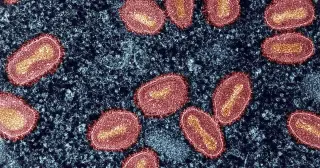
Connecticut health officials confirm the state's first mpox case caused by clade I in a resident who recently traveled to Western Europe; officials say there is no public risk and urge vaccination, emphasizing the two-dose series as clade I spreads in Europe while clade II remains more common in the U.S.
Northern Nevada Public Health confirms two mpox (monkeypox) cases in Washoe County, the first in the area since October 2022, with the overall risk to the public remaining low. Vaccines are available for eligible residents, and NNPH’s Family Planning Sexual Health Program has limited mpox vaccine doses (call 775-328-2470 to schedule). The vaccine is given in two doses four weeks apart, and vaccination is especially encouraged for higher-risk groups such as men who have sex with men, individuals with multiple or anonymous partners, occupational exposure, or known exposure. Residents should monitor for symptoms (rash, fever, swollen lymph nodes, fatigue), avoid close contact if symptomatic, and consult a healthcare provider if exposure or symptoms occur.
San Francisco confirmed a case of mpox caused by the clade I strain—the more dangerous form—prompting health officials to urge vaccination for those at risk; the unvaccinated patient was hospitalized after exposure, and California has recorded multiple clade I cases amid ongoing clade II activity, reinforcing that vaccination is the best protection as summer travel and events approach.
California health officials urge high‑risk residents to get the mpox vaccine after San Francisco detects a possibly more severe Clade I mpox case with no travel history, prompting emphasis on a two‑dose vaccination to reduce infection and severe illness as cases rise. The unvaccinated patient was hospitalized, and officials highlight vaccination for those at higher risk, in high‑contact settings, or traveling to areas with Clade I activity.
Health authorities report 13 mpox cases of the transmissible clade Ib in Austria (6) and Sweden (7) as of March 12, 2026, prompting travel precautions. The virus spreads through direct contact with lesions, with a 5–21 day incubation, allowing infection during travel. Guidance includes vaccination where available, thorough hand hygiene, avoiding contact with sick animals in certain regions, and for sexually active travelers to monitor symptoms, discuss with partners, and avoid new sexual contact if symptoms appear until cleared.
The NYC Health Department reports the city’s first severe mpox case, caused by clade I; the patient recently traveled abroad and there is no evidence of local transmission, with officials urging vaccination for at‑risk individuals and highlighting the two-dose JYNNEOS vaccine as protection.
New York City confirms its first case of a severe mpox strain (clade I), travel-related with no local transmission; health officials say the risk remains low and urge at-risk residents to complete the two-dose JYNNEOS vaccination series.
The New York City Department of Health confirmed the city’s first severe mpox (clade I) case, travel-related with no known local transmission. Clade I can cause more serious symptoms and higher fatality; vaccination with two doses of JYNNEOS is advised for at‑risk groups, including men who have sex with men and travelers to affected areas. Since January 2026, about 45 NYC residents have tested positive for mpox, with 16 cases in the last month, marking a shift from the milder clade II outbreak in 2022.
Research shows mpox is evolving with new strains that spread more easily and may affect male fertility, raising concerns about potential future global outbreaks.
An expert highlights key viruses to watch in 2026, including influenza A with pandemic potential, mpox spreading globally, insect-borne Oropouche virus, and ongoing risks from chikungunya, measles, and HIV, emphasizing the importance of vigilance, vaccines, and treatments.
An infectious-disease expert highlights key viral threats to watch in 2026, including bird flu, mpox, and Oropouche virus, emphasizing the importance of vigilance, vaccine development, and understanding emerging viruses amid global changes and travel.
In 2025, Ghana faced multiple major disease outbreaks including Mpox, cholera, meningitis, and typhoid, prompting urgent public health responses across various regions to control the spread and mitigate impacts.
Health officials in Anchorage confirmed a case of mpox in an unvaccinated adult who recently traveled out of state; no local transmission has been detected, and close contacts are being monitored. The virus spreads through contact with infected individuals or materials, with symptoms including fever, rash, and lesions. Vaccination is available for prevention, and health authorities advise on reporting and monitoring potential cases.
The CDC and NEJM Evidence launched the Public Health Alerts initiative, reporting on potential community transmission of clade 1b mpox in California and influenza virus circulation during the 2024-25 flu season, aiming to provide early warnings and support swift public health responses.
The WHO has issued a warning about the rising cases of the 'clade Ib' strain of Mpox across 42 countries, with new community transmissions and symptoms including fever, rashes, swollen lymph nodes, muscle pain, and sore throat. The virus, once confined to Africa, is now spreading globally, emphasizing the need for early detection and preventive measures.