
Tag

Mussels

All articles tagged with #mussels

Pea Crab Males Risk Life to Mate Inside Mussel Shells
science12 days ago

Pea Crab Males Risk Life to Mate Inside Mussel Shells

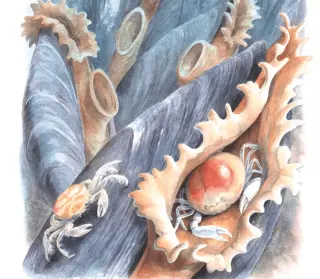
The pea crab, a tiny parasite living inside mussels, exhibits distinct sexual dimorphism where females remain permanently inside the host while males exit to mate. Males possess specialized swimming adaptations and hardened exoskeletons to navigate the open water, despite facing significant risks of injury or death during these excursions. This behavior is driven by the high reproductive payoff, as a single female can produce over 9,000 eggs, with larval stages eventually returning to settle in new mussel hosts.
"Gulf of Mexico Unveils Mysterious New Forest Creature"
science2 years ago

"Gulf of Mexico Unveils Mysterious New Forest Creature"

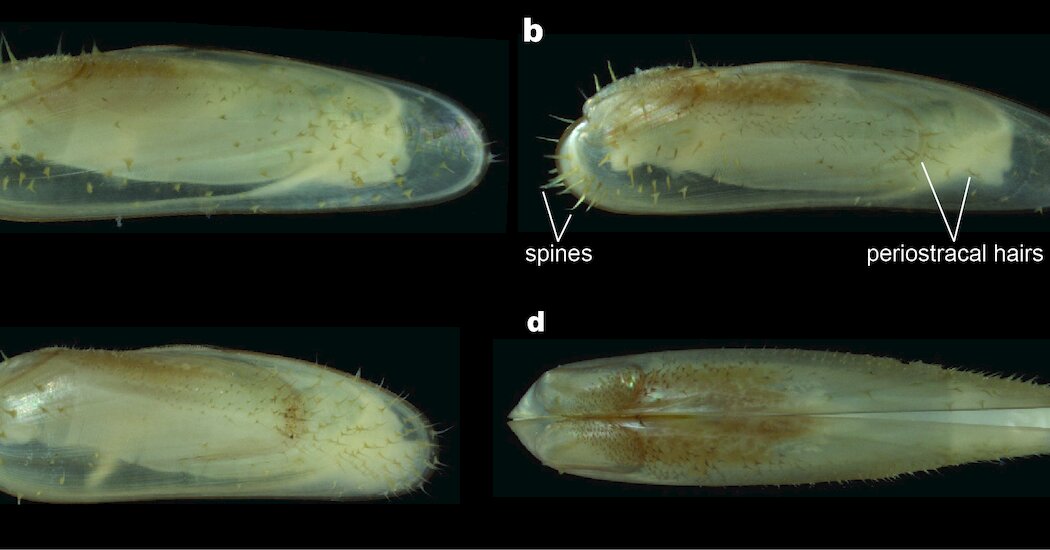
Scientists discovered a new species of mussel, Vadumodiolus teredinicola, in the Gulf of Mexico at a depth of only 60 feet, much shallower than its known relatives. The discovery was made while investigating an ancient underwater forest off the coast of Alabama, where the wood has provided a habitat for various organisms. This finding could provide insights into the evolution and distribution of these mussels, and the unique environment may host other undiscovered organisms with potential benefits for research.

"The Crucial Role of Mussel Tissue and Byssus in Rapid Release"
science-and-technology2 years ago

"The Crucial Role of Mussel Tissue and Byssus in Rapid Release"

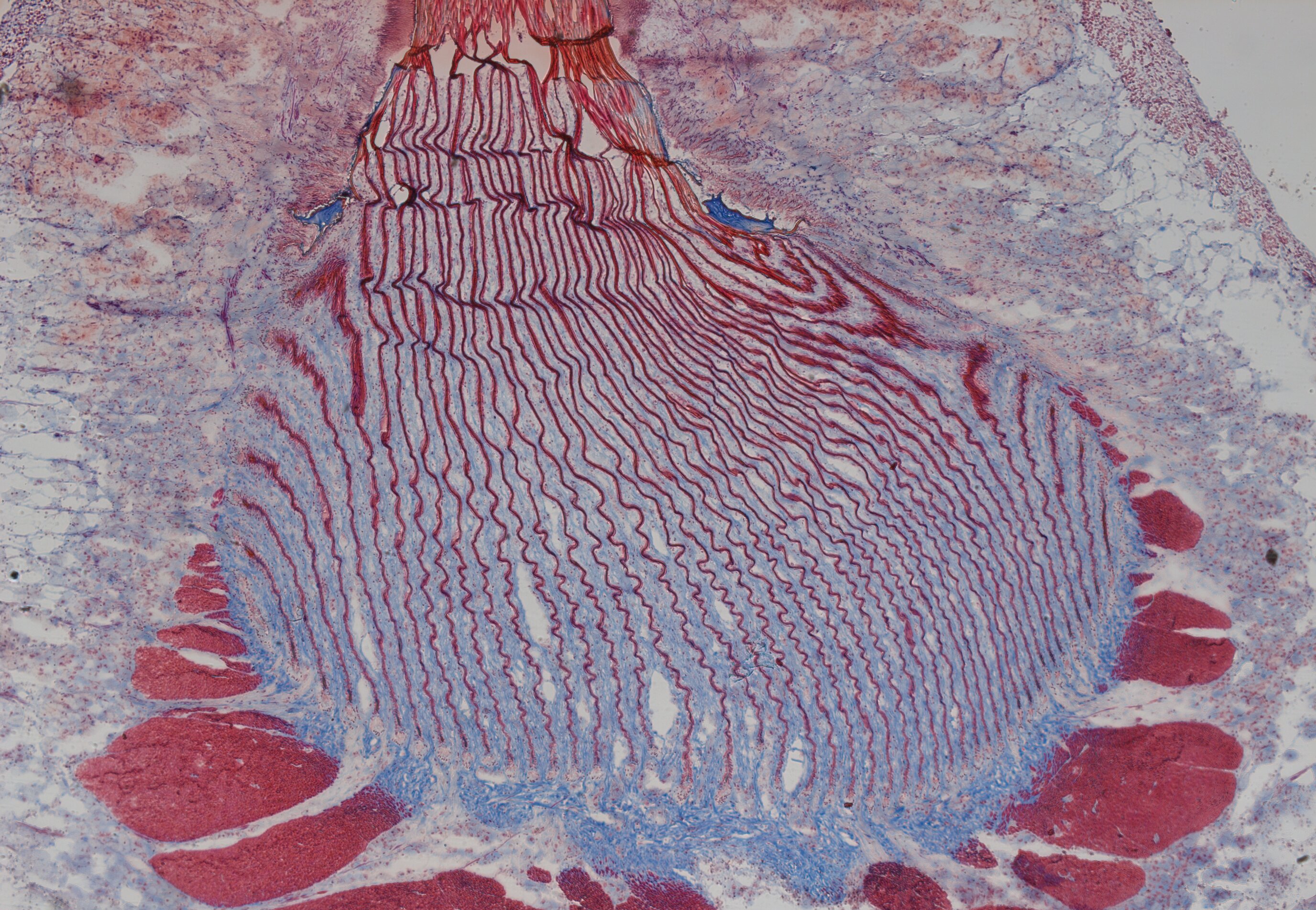
Researchers at McGill University and Charité-Universitätsmedizin have discovered the dynamic bio-interface between mussel tissue and the bundle of filaments that mussels use to anchor themselves to rocks. By studying the interface, they found that the ends of the threads interlock with layers of living tissue covered in motile cilia, which create a high degree of surface contact and allow for the meshing of two materials. The cilia's oscillations strengthen the grip between the materials and enable rapid release when needed. The movement of the cilia is driven by neurotransmitters, suggesting they are controlled by serotonin and dopamine.