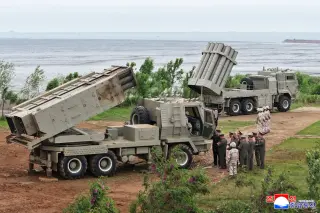
North Korea claimed it tested new warheads and related technology, including navigation systems, with Kim Jong Un overseeing demonstrations at an undisclosed location; the release, provided by KCNA, offers no independent verification of the claims.
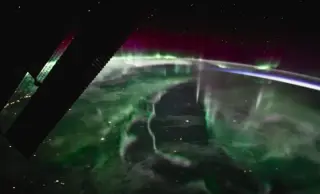
Earth’s magnetic north pole has crossed into unmapped territory and sits closer to northern Russia than Canada, according to the World Magnetic Model 2025 released by NOAA and the British Geological Survey. The pole’s drift, once fast in the 1990s, has slowed to about 35 km/year—the largest deceleration recorded—driven by changes deep in Earth’s outer core. NOAA also released a higher-resolution WMMHR2025, improving accuracy for polar aviation, maritime routes, and consumer devices, and updated magnetic blackout zones. While the field remains in motion without signs of an imminent reversal, outdated models can introduce navigation errors in high-latitude operations, underscoring the need for the new data in global positioning and routing systems.
Commercial flights in the Middle East have been experiencing "unthinkable" GPS spoofing attacks since September, causing navigation systems to fail and planes to go off course. The spoofed GPS signals have fooled the planes' systems into thinking they are flying miles away from their actual location, with fallback navigation systems also being corrupted. OPSGROUP, an international group of pilots and flight technicians, has tracked over 50 incidents in the last five weeks and identified three new types of navigation spoofing incidents. The attacks have exposed a fundamental flaw in avionics design, as the spoofing corrupts the Inertial Reference System, a critical component for navigation. The cause and perpetrators of these attacks remain unclear, and there is currently no solution to the problem, leaving flight crews to rely on air traffic control for assistance.
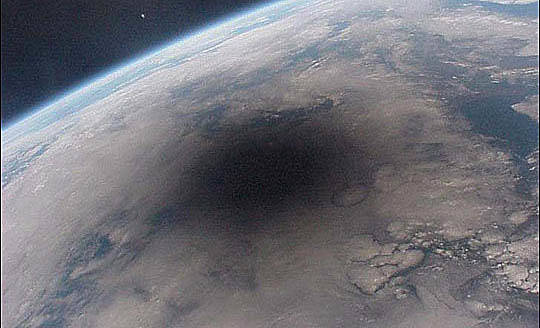
Solar eclipses can have a temporary impact on Earth's upper atmosphere, specifically the ionosphere. The decrease in solar radiation during an eclipse leads to changes in ionization, temperature, electron density, and the formation of ionospheric anomalies. These changes can affect radio communications and navigation systems, causing disruptions in the region where the eclipse is passing. However, these effects are temporary and localized, and the ionosphere returns to its normal state after the eclipse. Solar eclipses provide an opportunity for researchers to study the ionosphere and improve our understanding of its dynamics.