Tag

Nemesis Hypothesis

All articles tagged with #nemesis hypothesis

science2 days ago

Berkeley Physicist Revives 'Nemesis' Star Theory to Explain 26-Million-Year Extinction Cycles

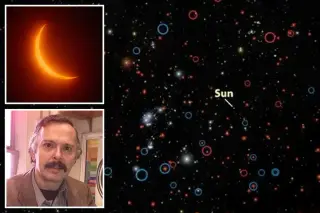
UC Berkeley physicist Richard Muller has renewed support for the controversial 'Nemesis' hypothesis, proposing that a hidden red dwarf star orbits the Sun and triggers comet showers every 26 million years. Muller argues this cycle correlates with major mass extinctions, including the event 66 million years ago that wiped out dinosaurs. While the theory lacks direct observational evidence, Muller contends that Nemesis remains undetected due to its dim brightness and slow relative motion. He notes that the next potential comet shower is not expected for another 12 to 15 million years.
Berkeley Physicist Revives 'Nemesis' Star Theory, Linking Hidden Sun Twin to Dinosaur Extinction
science13 days ago

Berkeley Physicist Revives 'Nemesis' Star Theory, Linking Hidden Sun Twin to Dinosaur Extinction

UC Berkeley physicist Richard Muller has revived the controversial 'Nemesis' hypothesis, proposing that a hidden red dwarf star orbits the Sun and triggers comet showers every 26 million years. Muller suggests this cycle may have caused the mass extinction 66 million years ago, though the theory lacks observational evidence and faces significant scientific skepticism.

Berkeley Physicist Maintains Hypothesis of a Hidden Stellar Companion Triggering Extinction Cycles
science16 days ago

Berkeley Physicist Maintains Hypothesis of a Hidden Stellar Companion Triggering Extinction Cycles

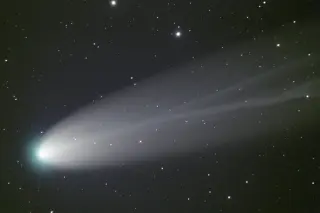
Richard Muller, a physics professor emeritus at UC Berkeley, argues that a hypothetical low-mass red dwarf star, known as Nemesis, continues to orbit the Sun and periodically disturbs the Oort Cloud. This disturbance allegedly triggers comet showers that correlate with a 26-million-year cycle of mass extinctions on Earth, including the event 66 million years ago that wiped out the dinosaurs. Muller contends that Nemesis remains undetected because its motion relative to Earth is too slow to register as a distinct object, and its dim brightness makes it nearly invisible against the background of other stars. While the Oort Cloud itself remains largely unobserved, upcoming data from the Rubin Observatory may help characterize these distant icy bodies. Muller notes that the next potential comet shower is not expected for another 12 to 15 million years.