Tag

Mass Extinctions

All articles tagged with #mass extinctions

Earth’s Chemistry Teetered Before the Five Great Extinctions
science9 days ago

Earth’s Chemistry Teetered Before the Five Great Extinctions

A Nature Communications study finds Earth’s climate oscillated through five distinct regimes over 539 million years, with rapid transitions that heightened life’s vulnerability and align with the planet’s Big Five mass extinctions. By tracking ocean oxygen and carbon isotopes and creating a biosphere vulnerability index, researchers show that higher temperatures and regime boundaries correlate with increased extinction risk, though the index measures overall system fragility rather than predicting specific events. The work offers a historical warning that, while the current era (Cenozoic) appears relatively stable, rapid environmental change can amplify the impact of disasters and push the biosphere toward instability.

Earth’s Big Disasters Might Follow a 27.5-Million-Year Rhythm
science29 days ago

Earth’s Big Disasters Might Follow a 27.5-Million-Year Rhythm

A new analysis revisiting 89 major geological events over the past 260 million years finds a dominant roughly 27.5‑million‑year cycle linking Earth’s mass extinctions, large volcanic events, and ocean/sea‑level shifts, with a secondary ~8.9‑million‑year cycle. The study suggests multiple Earth systems may periodically respond to shared long‑term processes (potentially involving mantle convection, orbital cycles, or even solar system galactic movements), rather than random catastrophes. However, the cycle is controversial and not yet proven, with researchers cautioning against inferring direct causality and noting uncertainties in ancient dating and statistical methods.

A 27.5-Million-Year Rhythm Ties Earth’s Major Crises
science29 days ago

A 27.5-Million-Year Rhythm Ties Earth’s Major Crises

New analysis of 89 major geological events over the last 260 million years strengthens evidence for a ~27.5‑million-year cycle linking Earth’s largest upheavals (extinctions, oceanic events, flood basalts, sea‑level shifts) with a weaker ~8.9‑million-year cycle. The study suggests multiple Earth systems may respond to a shared, long‑term driver, but the exact mechanism remains uncertain and the idea is still debated among scientists.

Could Distant Planetary Flybys Have Triggered Earth's Mass Extinctions?
science2 months ago

Could Distant Planetary Flybys Have Triggered Earth's Mass Extinctions?

A conference-backed hypothesis by Daniele Fargion suggests gravitational tides from flybys of planetary-mass bodies or outer Solar System dwarfs near Earth could have driven major extinctions by triggering huge tides, volcanism, climate shifts, and altered meteoritic delivery. Citing correlations with known extinctions (including the Permian/Triassic) and clues in the Earth–Moon system, the idea is speculative and not yet dated or widely validated, but it frames tidal encounters as a possible common cause alongside impacts and volcanism.

Surviving Earth: How Life Keeps Rebounding Through Catastrophe
science2 months ago

Surviving Earth: How Life Keeps Rebounding Through Catastrophe

NBC's Surviving Earth, from Walking with Dinosaurs creator Tim Haines, uses CGI and expert input to chronicle eight mass extinctions over 450 million years, focusing on how life repeatedly survived and rebounded despite volcanic eruptions, floods, and droughts; the series aims to connect viewers to ancient creatures without anthropomorphizing them, while linking today’s climate crisis to past upheavals and urging action to keep Earth inhabitable.

Earth’s Ten Worst Moments for Life: When Survival Was Perilous
science3 months ago

Earth’s Ten Worst Moments for Life: When Survival Was Perilous

The piece surveys ten historical Earth events where life faced extreme survival challenges, from oceanic anoxia in the Cenomanian-Turonian boundary and Doggerland’s submergence to the Carboniferous era’s giant insects, fungi like Prototaxites, an 18-million-year ERV-Fc pandemic, the Late Jurassic giants, the Carnian Pluvial Episode, the K-Pg asteroid impact that vaporized life within 1,500 km, to the End-Permian Great Dying, illustrating how life has endured repeated planetary crises and how modern resilience has enabled humans to persist despite present extinction fears.

Potential Catastrophic Volcanoes Threaten Humanity's Future
science7 months ago

Potential Catastrophic Volcanoes Threaten Humanity's Future

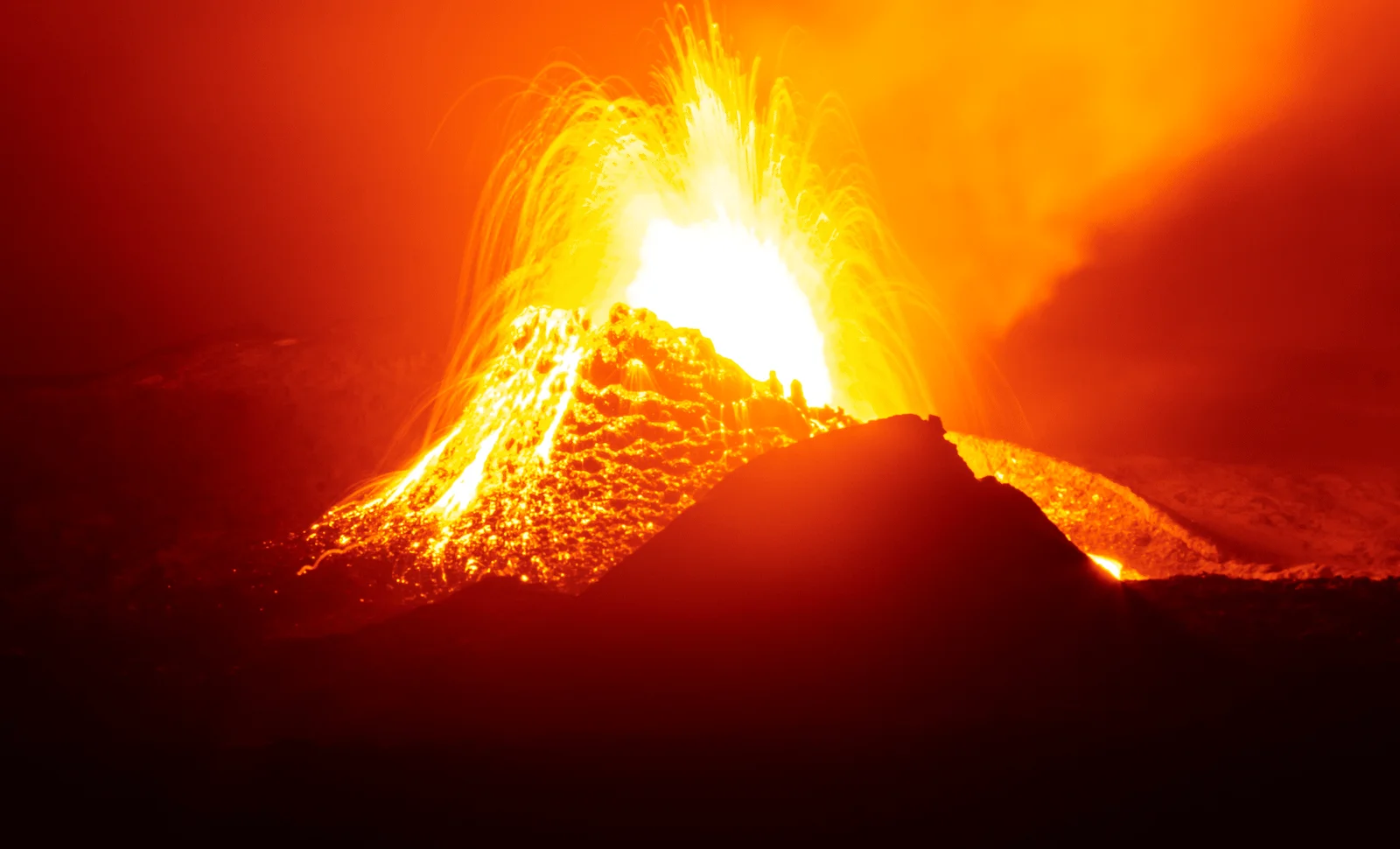
Large Igneous Provinces (LIPs) are massive, long-lasting volcanic events capable of causing global destruction and mass extinctions, with historical examples like the Siberian Traps illustrating their potential to reshape Earth's environment and climate. While rare today, understanding LIPs is crucial for preparedness, as their effects include climate disruption, ecosystem collapse, and potential threats to civilization.

Cosmic Cataclysm: Earth's Encounter with Distant Energy Burst
science-and-exploration2 years ago

Cosmic Cataclysm: Earth's Encounter with Distant Energy Burst

An extremely bright and long-lasting gamma-ray burst (GRB), named GRB 221009A, struck Earth, causing a disturbance in the ionosphere. This burst, originating from an exploding star almost two billion light-years away, was the strongest ever measured and delivered enough energy to activate lightning detectors in India. The effects of the blast on Earth's ionosphere could provide valuable information about mass extinctions in Earth's history.

Unraveling Earth's Enigmatic 27 Million Year 'Heartbeat'
earth-science2 years ago

Unraveling Earth's Enigmatic 27 Million Year 'Heartbeat'

Earth appears to have a slow, steady "heartbeat" of geological activity that occurs approximately every 27 million years, according to research analyzing ancient geological events. This cycle of clustered events includes volcanic activity, mass extinctions, plate reorganizations, and sea level rises. The study provides statistical evidence for a common cycle, suggesting that these geologic events are correlated and not random. The cause of this cycle is still uncertain, with potential factors including geophysical processes related to plate tectonics and mantle plumes, or astronomical cycles associated with Earth's motions in the Solar System and the Galaxy. Fortunately, researchers believe we have another 20 million years before the next pulse of geological activity.

Unveiling the Fascinating Resilience of Surviving Mammals in Mass Extinctions
science2 years ago

Unveiling the Fascinating Resilience of Surviving Mammals in Mass Extinctions

A new study challenges the long-held belief that mammals that survive mass extinctions are generic generalists. Researchers found that the survivors actually possessed new and different traits that helped them adapt and thrive in the aftermath of catastrophes. The study focused on the mammal family tree and revealed that larger synapsids, not just small insect-eaters, were the ones that survived at certain points in evolution. These survivors had novel characteristics, such as specialized teeth, which allowed them to eat a wider variety of food. The findings suggest that the mammals that made it through mass extinctions were not as generic as previously assumed, highlighting the importance of new traits in evolutionary success.

Impending Supercontinent Threatens Mammalian Existence
science2 years ago

Impending Supercontinent Threatens Mammalian Existence

Scientists predict that in 250 million years, Earth's continents will merge to form a supercontinent called "Pangea Ultima," resulting in inhospitable conditions for most mammals. The formation of this supercontinent will lead to increased volcanic activity and a hotter sun, causing land surface temperatures to exceed 40℃ and transforming much of the continent into a vast, hot desert. The average annual land temperature would increase from the pre-industrial average to approximately 24℃, reducing habitable areas on Earth to just 54%. The projected location of Pangea Ultima at the equator, along with other factors, would contribute to this warming. The increased solar intensity and elevated CO₂ levels would further reduce Earth's habitability, leaving only a quarter of the planet's surface habitable. Mammals' adaptability may not be enough to survive these extreme conditions, as their temperature thresholds are surpassed, making it challenging for them to regulate their body temperature.