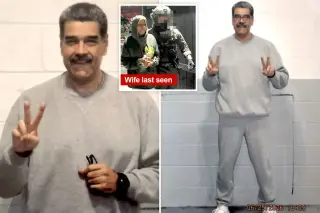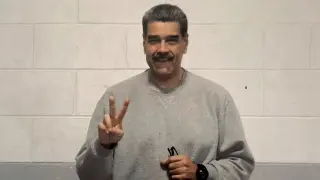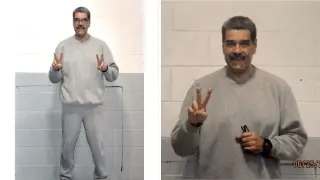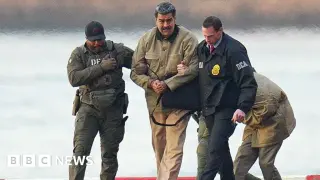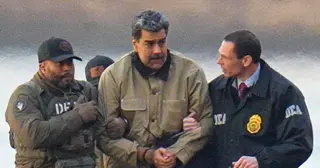
A New York judge has set the trial of Nicolás Maduro and his wife, Cilia Flores, on weapon and drug charges to begin June 1, 2027, after their January capture in Caracas. A pre-trial hearing is scheduled for November 17 as Maduro’s lawyers plan to invoke sovereign immunity to shield the former president.
A Bubblemaps analysis finds nine anonymous Polymarket accounts earned over $2.4 million across more than 80 bets tied to U.S. military actions and Trump-era decisions (including Maduro’s capture and Iran timing), with a 98% win rate—sparking concerns about insider trading on prediction markets and prompting a White House warning that using nonpublic information for financial gain is illegal; Polymarket says it flags suspicious activity and cooperates with investigations, while Trump Jr. is an investor through 1789 Capital, underscoring the politics-tech crossover.
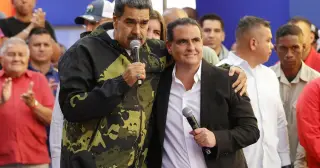
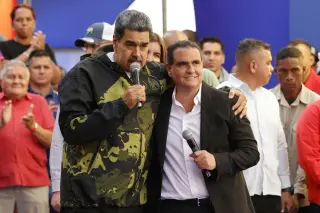
Venezuela says it deported close Maduro ally Alex Saab to the United States to face several U.S. criminal investigations, a reversal less than three years after Biden pardoned Saab as part of a prisoner swap. Saab, long described by U.S. officials as Maduro’s “bag man,” could be called to testify against Maduro in a Manhattan drug case, and U.S. prosecutors are also probing bribery tied to the CLAP food program.
Venezuela says it has deported Alex Saab, a longtime Maduro ally and former conduit for government contracts who was pardoned by Biden in a prisoner swap, to face U.S. judicial proceedings. The move comes as U.S. prosecutors investigate a bribery scheme tied to the CLAP food program and Saab could be called to testify against Maduro, who is awaiting trial on drug charges in Manhattan after a January U.S. raid. The Venezuelan immigration authority did not specify where Saab was sent, noting him as a Colombian citizen, amid conflicting reports about his status since his 2020 arrest.
Venezuela says it deported a close ally of President Nicolás Maduro, Alex Saab, in a move described by authorities as a strategic shift amid sanctions pressure and ongoing domestic politics.
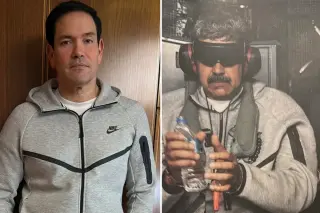
Secretary of State Marco Rubio went viral after wearing the Nike Tech 'Venezuela' tracksuit—famously worn by Nicolas Maduro during his January 2026 capture—aboard Air Force One, a moment celebrated and memed on social media and described by White House aides as a “full circle” gag.
US Army Special Operations sergeant Gannon Van Dyke pleaded not guilty in a Manhattan federal court to felony charges alleging he used confidential military information to win about $409,000 on the Polymarket prediction market related to the Maduro operation. A judge set bail at $250,000 with firearm surrender and travel restrictions to California, New York, and North Carolina. Prosecutors say he placed 13 bets totaling $33,000 between Dec 27, 2025 and Jan 2, 2026, with Polymarket flagging his winnings. He faces counts including unlawful use of confidential government information for personal gain, theft of non-public information, commodities fraud, wire fraud, and money laundering; he remains on leave from the Army and is due back in court on June 8.
A U.S. Army soldier involved in planning the Maduro operation pleaded not guilty in Manhattan federal court to using confidential government information to bet on the Maduro rendition via Polymarket. He allegedly placed about $33,000 in bets that paid out more than $400,000; he was released on a $250,000 bond and has a court date set for June 8.
A Fort Bragg-based U.S. Army master sergeant pleaded not guilty in federal court to charges that he used confidential information from the Maduro raid to place bets on Polymarket, allegedly winning more than $400,000 by predicting Maduro's removal before the raid news went public.
A U.S. Army Special Forces soldier, Gannon Ken Van Dyke, was arrested in New York and charged with insider trading, wire fraud and unlawful monetary transaction after allegedly using classified information from the Maduro raid to place more than a dozen Polymarket bets on Maduro’s capture, profiting about $410,000 before the operation was publicly announced.
Venezuela opposition leader María Corina Machado plans a rally in Madrid to press for democracy after Nicolás Maduro’s capture intensified a split in the country’s leadership. Washington has backed Maduro’s vice president Delcy Rodríguez, enabling her to consolidate power while Machado remains in exile and unable to return. Rodríguez’s position has strengthened amid purges and economic claims of technocratic governance, complicating any democratic transition. Machado has met European leaders but won’t meet Spain’s prime minister during a trip that includes Madrid, highlighting the uncertain path for opposition hopes of elections and a return of exiled figures.
Nicolás Maduro and his wife were captured by US forces in a Caracas raid and are back in a Manhattan federal court to face narco-terrorism charges, with prosecutors alleging he led a corrupt regime that protected drug trafficking; the case includes funding disputes over his defense under OFAC sanctions, as Venezuela reshapes its leadership under acting president Delcy Rodríguez.
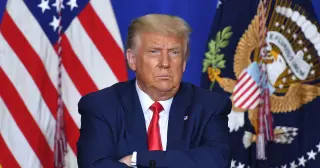
President Trump told Fox News that his Iran plan mirrors the U.S. Venezuela template, a claim that comes amid inconsistent timelines and no clear endgame, with analysts warning the war lacks a coherent strategy and could drag on amid rising casualties and political pressure.
Venezuelan opposition leader Maria Corina Machado told POLITICO that a credible, manually supervised transfer could yield new democratic elections within about 9–10 months, though she has not discussed timing with Trump. She argues U.S. backing could accelerate a transition, noting prior 2024 presidential and 2025 parliamentary votes were criticized as unfair, and contrasting this with long, contested nation-building efforts in other countries. The remarks came after her meeting with Trump at the White House, where no timeline was discussed.
Lockheed Martin publicly confirmed that its secretive RQ-170 Sentinel stealth UAV helped a 2026 U.S. operation in Venezuela that resulted in the capture of Nicolás Maduro, signaling a rare public acknowledgment of the drone’s real-world use. The Sentinel’s passive sensors and high-altitude persistence provided real-time intelligence to support the mission, illustrating a shift from a strategic ISR asset to a tactical enabler in modern warfare.