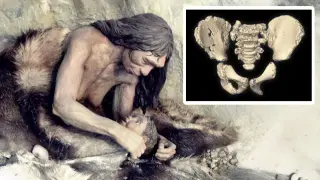
A CT-based study of two exceptionally preserved Neanderthal pelves shows childbirth-related pelvic features closely resemble modern humans, while walking-related traits differ, implying the pelvic evolution was driven more by birth and pelvic floor stability than a simple trade-off with locomotion and challenging the long-standing obstetrical dilemma hypothesis.
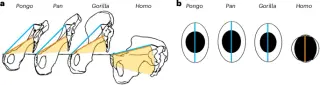
A 3D morphometric study of pelvic inlets from 130 female pelves across 29 primate species shows that humans are not uniquely constrained at birth. By using species-specific inlet geometry and neonatal head dimensions in sinciput and face/occiput presentations, researchers find that many non-human primates exhibit equal or tighter cephalopelvic fit (CPP), with small-bodied species often showing higher CPP due to allometry (smaller inlets paired with relatively larger neonates). In humans, the tight fit results from a combination of a large-headed neonate and a comparatively small inlet, but shifting fetal presentation to face/occiput can alleviate CPP across taxa. The work challenges Schultz’s classic diagram and the idea of a singular human obstetric dilemma, highlighting diverse obstetric constraints and adaptive strategies across primates.
A study of chimpanzee pelvic bones suggests that difficult childbirth is not unique to humans and may not solely be due to the need for large brains and upright walking, challenging the "obstetrical dilemma" hypothesis. Researchers found that chimpanzees also have a tight fit between the fetal skull and maternal pelvis, indicating evolutionary pressures on childbirth existed in the last common ancestor of humans and chimps. This suggests that birth complications may have been present before significant brain expansion in human evolution.