Nvidia announced a $12.9 billion deal to acquire open‑source AI platform Hugging Face, its second‑largest purchase after Groq, to scale the platform and broaden AI access for developers and institutions while keeping Hugging Face’s open ecosystem intact.
Kickstarter’s Hacknect cable hides an ESP32-S3 microcontroller and microSD inside the USB-A plug, turning an ordinary data/charging cable into a programmable device. It can emulate HID inputs, manage payloads via a browser-based interface, and trigger commands over Wi‑Fi from a phone or PC; payloads stay locally, it includes a self-destruct function for security workflows, and it’s open-source, with shipping planned for August if funding stays on track.
The FCC announced a rule banning approval of new consumer-grade routers manufactured outside the United States, effectively blocking imports of foreign-made models unless they obtain Conditional Approval that often requires commitments to establish or expand U.S. manufacturing. Existing foreign routers can still be used and sold, but future options could be limited as major brands may shift production domestically. The move, framed as national security-oriented, is expected to face legal challenges and its practical security benefits are debated.
A sprawling Hacker News “What Are You Working On?” thread from March 2026 features developers sharing a torrent of side projects—from npm-like installers for 10K+ open‑source LLMs and local agent/tooling to indie games, engines, and data/production tools. Threads highlight self‑hosted workflows, OSS collaboration, and AI-driven experimentation across domains, with projects ranging from AI infrastructure and game development to RSS readers, invoicing apps, and hardware prototypes (ESP32, networking, etc.). In short, the community is showcasing a vibrant mix of AI tooling, open-source software, and hands‑on hardware tinkering.
Hackaday reviews the concern that AI-generated pull requests are flooding open-source projects, a trend that has driven prominent figures like Jeff Greerling and Daniel Stenberg to question how open source should function. As GitHub considerations to curb spam and even invite-only collaboration emerge, maintainers weigh balancing openness with code quality and security, recognizing that AI-driven contributions can both accelerate and complicate software development.
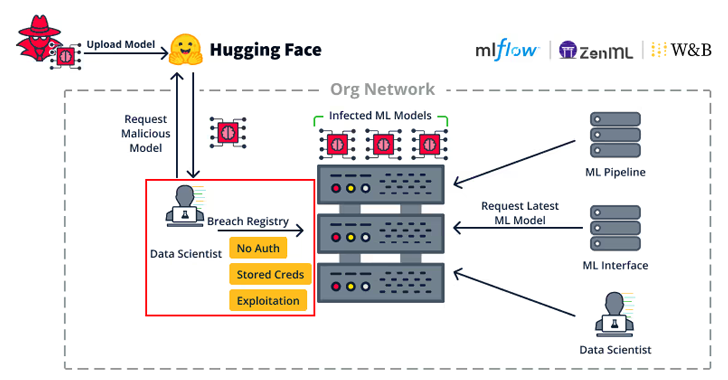
Cybersecurity researchers from JFrog have identified multiple security vulnerabilities in popular open-source machine learning frameworks like MLflow, H2O, PyTorch, and MLeap. These flaws, which include issues like cross-site scripting and unsafe deserialization, could allow attackers to execute code remotely and access sensitive information within organizations. The vulnerabilities highlight the risks associated with loading untrusted ML models, even from seemingly safe sources, and underscore the need for caution in handling ML tools to prevent potential exploitation.
Google DeepMind has open-sourced AlphaFold 3, allowing academic researchers access to its training weights for non-commercial use. This model, released in May 2024, predicts protein structures with 50% better accuracy and is expected to revolutionize drug discovery. Isomorphic Labs, a sister company, aims to leverage AI for drug development, with partnerships with major pharmaceutical companies like Eli Lilly and Novartis. AlphaFold has already predicted over 200 million protein structures, significantly advancing biomedical research.
Programmer Phillip Tennen embarked on a quest to improve font rendering in his hobby operating system, axle, by writing a TrueType font renderer. After nearly a decade of using a basic 8x8 bitmap font system, Tennen tackled the complexities of TrueType fonts, which involve understanding glyphs, character spacing, and a hinting system that adjusts control points to maintain legibility at low resolutions. His journey revealed the intricate details and challenges of font rendering, transforming axle's text appearance significantly. The enhanced renderer's source code is shared on GitHub, demystifying the process and making fonts seem less like "forbidden magic."
Daggerfall Unity 1.0, the complete remake of The Elder Scrolls II: Daggerfall, is now available, offering a modernized version of the classic game with enhancements such as cross-platform support, improved graphics, widescreen resolution, mod support, and quality of life improvements. It requires the original DOS game for assets, which is free on Steam. The project is open source but relies on the proprietary Unity engine. Fans can further modernize the game with mods like DREAM, which remasters all game assets. More information can be found on GitHub and the official site.
MyShell, in collaboration with MIT and Tsinghua University, has released OpenVoice, an open-source AI voice cloning model that allows users to clone voices with high precision and control over emotional tone, accent, and other vocal characteristics using minimal audio samples. OpenVoice, which is available on platforms like HuggingFace, operates with a text-to-speech model and a tone converter, requiring fewer computational resources than similar technologies. MyShell, a Canadian AI startup, aims to democratize AI with the motto "AI for All" and plans to monetize through subscriptions and AI training data sales while contributing to the open-source community.
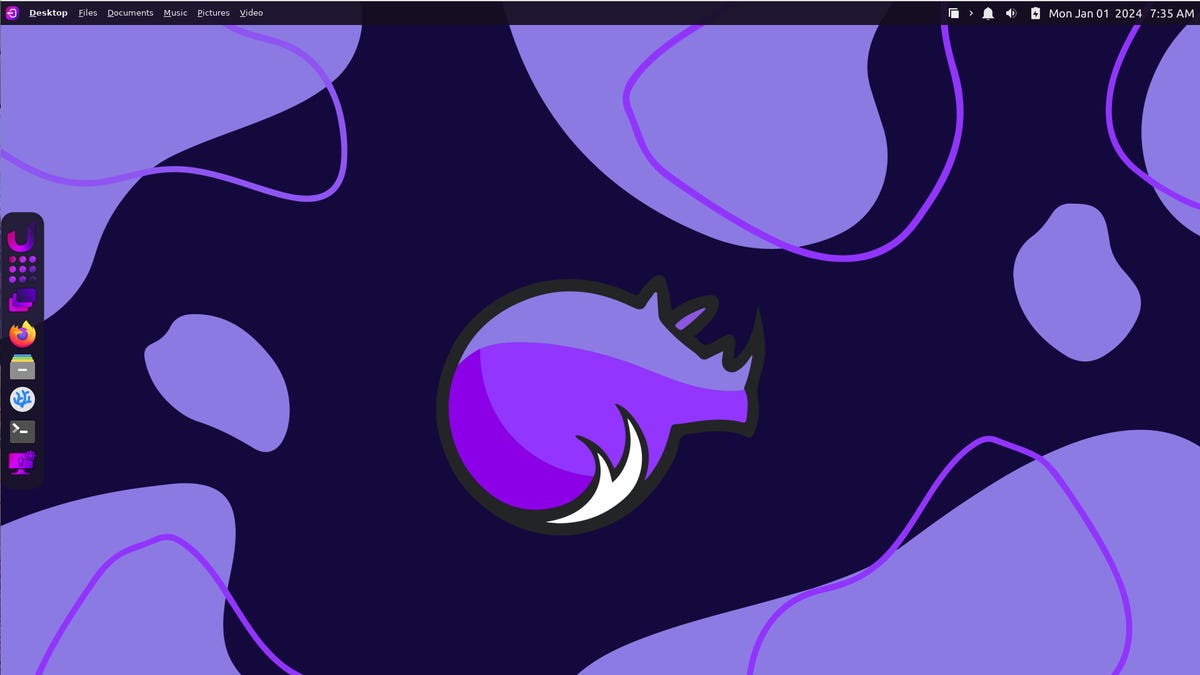
Rhino Linux is a new Ubuntu-based, rolling-release Linux distribution that updates software as soon as new versions are released, avoiding major version upgrades. It features a customized Xfce desktop environment called "Unicorn" and uses the Pacstall package manager, with a command-line tool, rhino-pkg, for software installation instead of a GUI. While it may not be the best choice for complete Linux novices, it's a promising option for those comfortable with command-line operations and could become more accessible if a GUI for software installation is developed.
Following GitHub's end-of-life announcement for Atom, the open-source community has launched 'Pulsar', a new code editor forked from Atom. Pulsar aims to achieve feature parity with Atom while modernizing its architecture and adding new capabilities. It maintains a familiar user interface and is cross-platform, with plans for further development into a community-based, hackable text editor.
ScummVM 2.8 has been released, adding support for 50 new games and five new engines, including titles like "Adibou 1," "The Dark Eye," and various "Nancy Drew" games. The update also brings performance optimizations, networking improvements, and engine enhancements. Notable technical updates include a rewritten RetroArch port, a completely redone Atari port, and the use of advanced SIMD instructions for better performance. The new version is available for download at ScummVM.org.
Snowflake's industry predictions for 2024 highlight the challenges and advancements in the field of generative AI. Concerns include managing negative impacts such as job loss and deep fakes, while ethical AI guardrails are expected to emerge more rapidly than in past tech upheavals. Large language models (LLMs) will become more common, but smaller, specialized models (MLMs) will be favored for efficiency. AI will become an integral work assistant, boosting productivity by up to 30% for developers. Data engineering and science roles will evolve to be more critical and engaging, while BI analysts will need to uplevel their skills. The generative AI revolution will also drive the creation of new apps and experiences, with open source teams gaining more impact through AI assistance. The hallucination problem in AI is predicted to be largely solved, facilitating broader adoption in enterprise settings. Open source contributions to generative AI are expected to parallel corporate efforts, with significant developments in the field.