Tag

Organic Synthesis

All articles tagged with #organic synthesis

New Ligand Design Enables Low-Loading Nickel Catalysis for Broad C-Heteroatom Couplings
science9 days ago

New Ligand Design Enables Low-Loading Nickel Catalysis for Broad C-Heteroatom Couplings

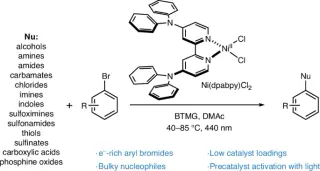
Researchers have developed a new nickel-catalyzed method for forming carbon-heteroatom bonds using visible light and a novel ligand, enabling reactions with electron-rich aryl bromides at catalyst loadings as low as 100 ppm. This approach overcomes previous limitations in oxidative addition reactivity and allows for the coupling of sterically hindered nucleophiles, including tertiary alcohols, without requiring substrate-specific optimization. The method supports gram-scale synthesis and late-stage functionalization of complex pharmaceutical molecules, offering a more efficient alternative to traditional palladium catalysis.
science1 month ago

Stereochemistry-Smart Ketone Editing via Pd(II)/Pd(IV) Decarboxylative Rearrangement

A Nature study reveals a palladium(II)/Pd(IV)–catalyzed decarboxylative semi-pinacol rearrangement that converts β-hydroxy carboxylic acids into ketones through a concerted six-membered Pd(IV) chelate, enabling precise stereochemical control (migrating carbon preserves configuration while the α-carbon inverts) and high migrating-group selectivity for unsymmetrical ketones. The method applies broadly to cyclic and acyclic ketones and aldehydes, avoids hazardous diazo reagents, and is showcased in a concise total synthesis of rupestine D, highlighting its potential as a versatile carbon-skeleton-editing tool.

Dichloromethane unlocks metal-free amide formation
science2 months ago

Dichloromethane unlocks metal-free amide formation

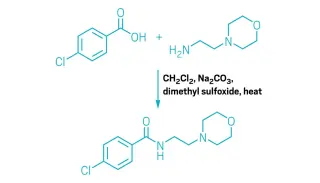
Korean researchers report that dichloromethane (DCM) can act as an amide-coupling reagent, enabling amide bond formation between carboxylic acids and alkyl amines using a basic salt, without metal catalysts, and scalable to more than 20 g per batch. While the method often preserves stereochemistry, it struggles with bulky or aromatic amines, and DCM’s health hazards pose potential industrial hurdles. Nevertheless, the inexpensive, simple protocol could offer a practical alternative to harsher, toxic reagents in suitable cases.

Radical cross-coupling preserves stereochemistry, enabling new chiral building blocks
science4 months ago

Radical cross-coupling preserves stereochemistry, enabling new chiral building blocks

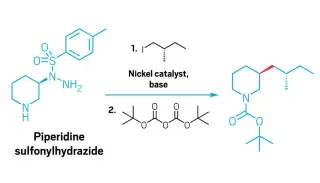
Baran and coworkers report a nickel-catalyzed alkyl-alkyl cross-coupling that forms a C–C bond between a chiral sulfonylhydrazide radical and an alkyl halide without racemizing the stereocenter, achieved via a diazene-cage mechanism. This unusual radical process preserves enantioenrichment in the product, enabling direct access to chiral motifs like piperidines and pyrrolidines without chiral ligands or directing groups, though the method currently works best with cyclic sulfonylhydrazides and requires further scope expansion.

Revolutionizing Cross-Coupling: Geminal-Atom Catalysis Unleashed
chemistry3 years ago

Revolutionizing Cross-Coupling: Geminal-Atom Catalysis Unleashed

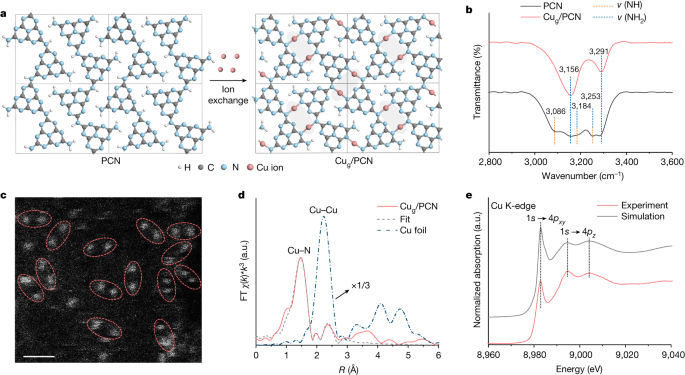
Researchers have developed geminal-atom catalysis, a new approach for cross-coupling reactions in organic synthesis. This method bridges the gap between homogeneous and heterogeneous catalysis by utilizing heterogeneous single-metal-site catalysts. Geminal-atom catalysis offers potential advantages such as improved selectivity, recyclability, and scalability, making it a promising tool for sustainable organic synthesis. The data for this study are available in the manuscript and supplementary information, as well as in the Zenodo repository.

Isomer of Benzene gains prominence in organic synthesis.
chemistry3 years ago

Isomer of Benzene gains prominence in organic synthesis.

Researchers have demonstrated that the high energy compound 1,2,3-cyclohexatriene, an overlooked isomer of benzene, can participate in a diverse range of cycloaddition, nucleophilic addition, and σ-bond insertion reactions, enabling chemists to construct complex molecular architectures in just a few steps. The team hopes that its work inspires others to explore and exploit the synthetic potential of these high-energy reagents going forwards.