chemistry29.12 min read
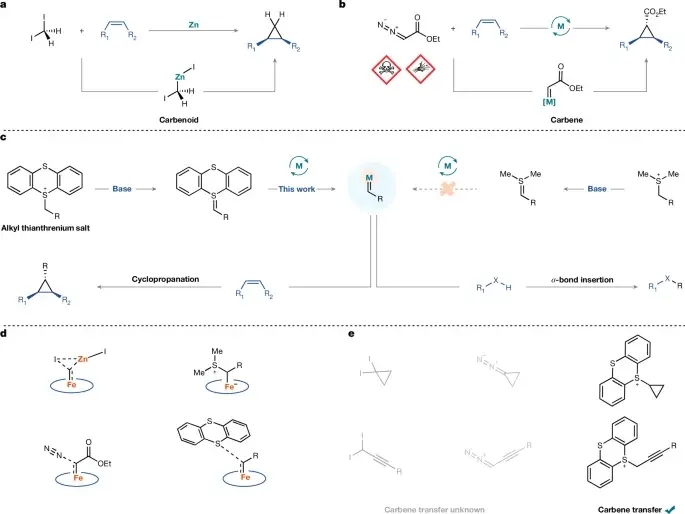
Thianthrenium Salts Enable Safe, Versatile Cyclopropanation via Iron Catalysis
9 days ago•Source: Nature

The latest chemistry stories, each synthesized from multiple sources with added background and context.
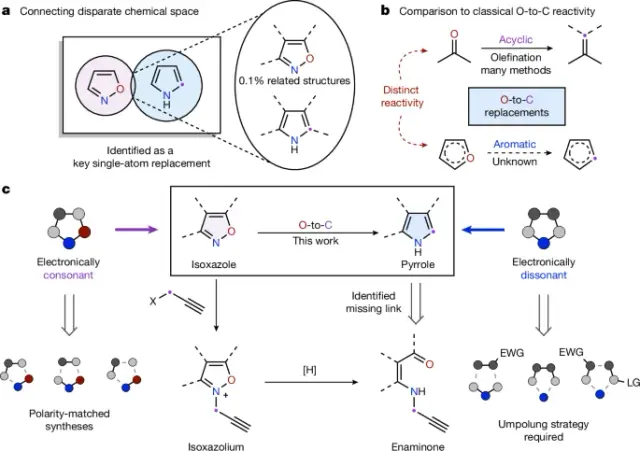
Nature reports a one-pot O-to-C skeletal edit that converts isoxazoles into pyrroles via a key N-propargylic enaminone intermediate. The method provides an orthogonal retrosynthetic disconnection to traditional pyrrole syntheses and enables regioselective pyrroles that were previously hard to access, with a predictive computational model describing conformational features governing outcomes. Full data, including crystallography, are in the Supplementary Information and associated deposits.
Chemistry World•3 months ago
Nature•4 months ago

Researchers built a 13‑carbon ring that hosts two isolated conjugated subsystems; by placing chlorine atoms to separate them, the ring spontaneously twists by 90 degrees and becomes a single, fully delocalized 24‑electron system with a unique electronic/magnetic profile distinct from classic Möbius structures. The molecule exists as two enantiomers, which can be interconverted using a small external voltage, a breakthrough reported in Science by Manchester and IBM Zurich teams and signaling a new topological approach to designing matter.
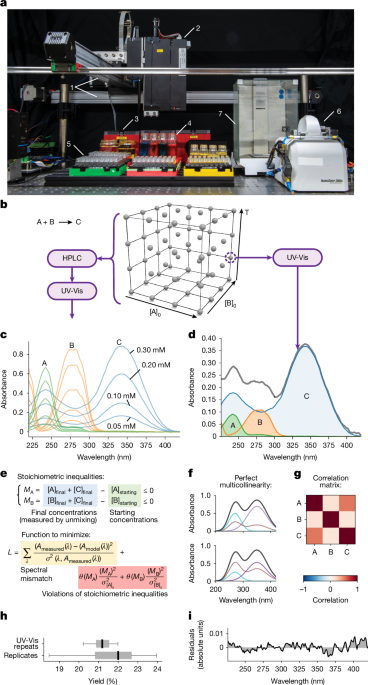
This article presents a robotic platform that rapidly maps complex chemical reaction spaces using UV-Vis spectral unmixing, enabling efficient reconstruction of reaction networks, discovery of new reaction pathways, and control of product outcomes across multidimensional conditions, significantly advancing reaction discovery and optimization.
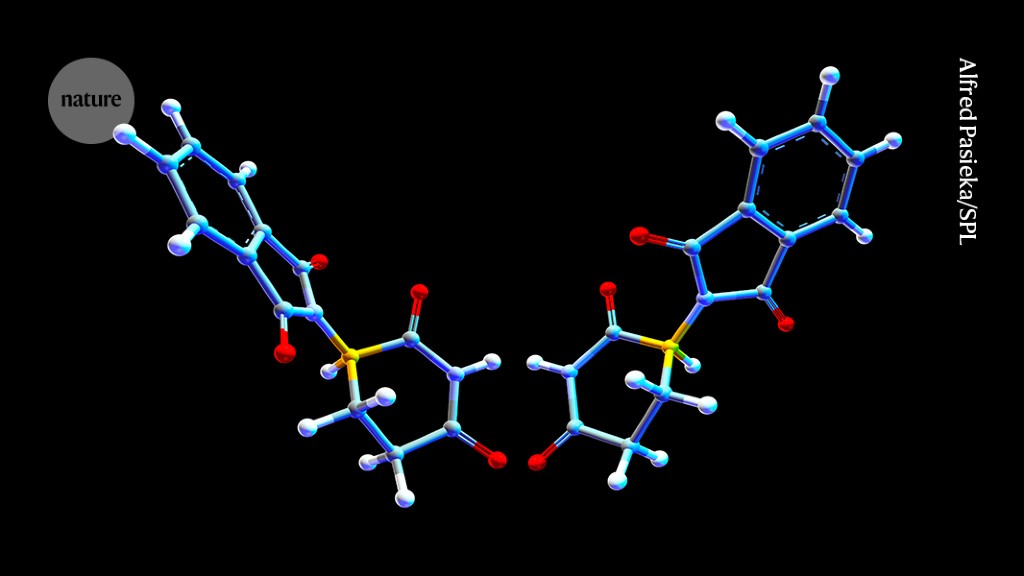
Chemists have demonstrated the use of mass spectrometry to separate chiral molecules, which exist as mirror-image structures with different properties. This breakthrough could streamline the laborious process of separating enantiomers, crucial in drug discovery, by allowing for quick determination of enantiomeric excess and confirmation of molecular structures. The technique, described in Science, has the potential to simplify and expedite the preparation of pure samples of enantiomers in larger quantities, with implications for drug design and discovery.

A team of chemists has repurposed blockchain technology to generate the largest network of chemical reactions, termed NOEL, which may have given rise to prebiotic molecules on early Earth. This work suggests that primitive forms of metabolism might have emerged without the involvement of enzymes and demonstrates the potential of using blockchain to solve complex computational chemistry problems. The resulting network contains 4.9 billion plausible reactions, including parts of well-known metabolic pathways, but only a few hundred reactions could be called "self-replicating," indicating that self-replication may have appeared later in evolution. The use of blockchain technology significantly reduced the time and cost required for this extensive computational chemistry task.
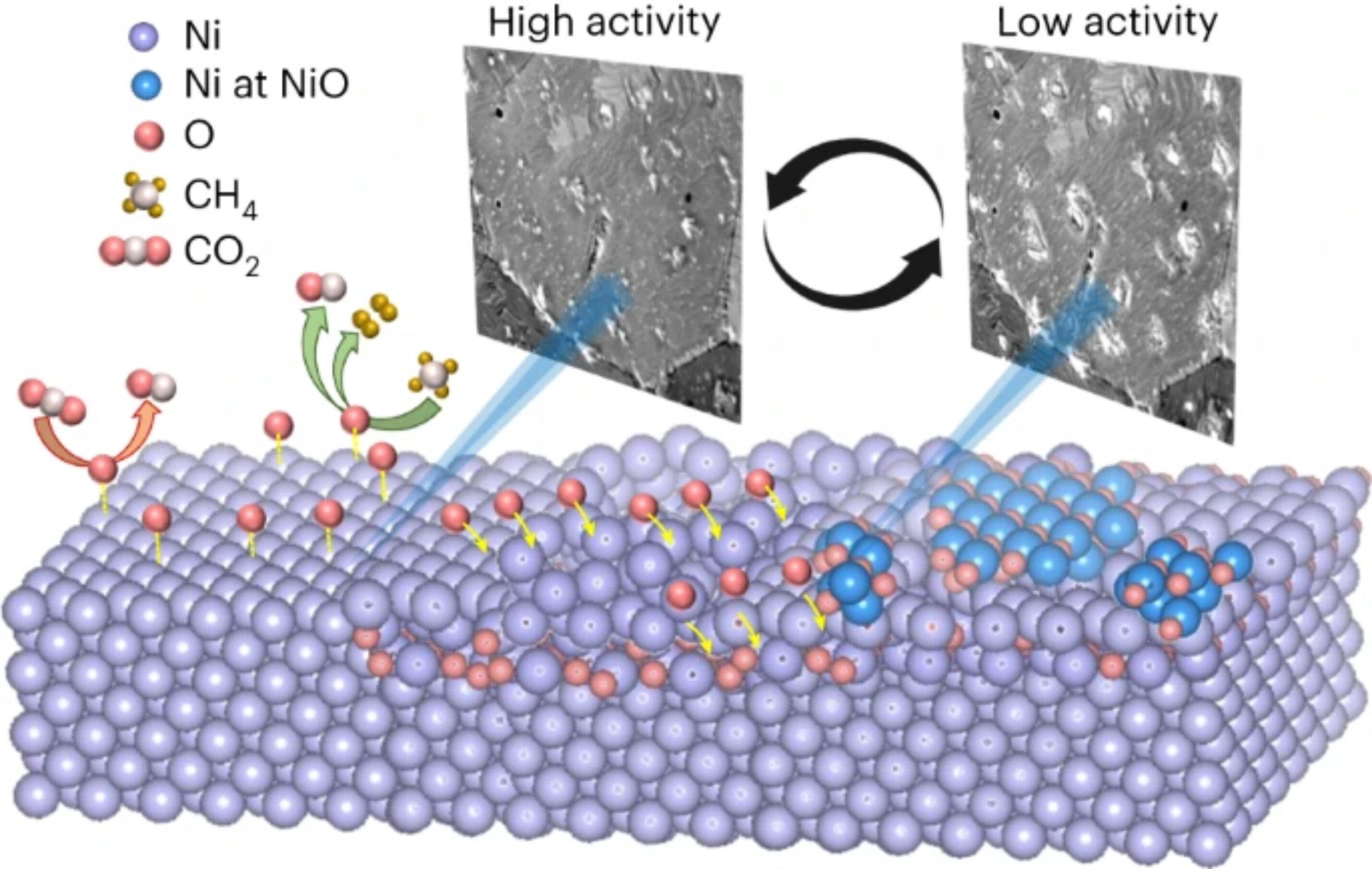
A study on the mechanism of CH4 dry reforming on nickel catalysts reveals the formation of metastable surface nickel-oxygen structures from CO2 dissociation, which exhibit different catalytic properties and induce rate oscillations. Understanding the role of different oxygen species on a nickel catalyst during dry reforming of methane is crucial for designing high-performance catalysts. The study highlights the critical role of dissociative CO2 adsorption in regulating the oxygen content of the catalyst and CH4 activation, providing fundamental insights into the processes occurring at the catalyst surface and how this modulates the catalytic performance during dry reforming of methane.
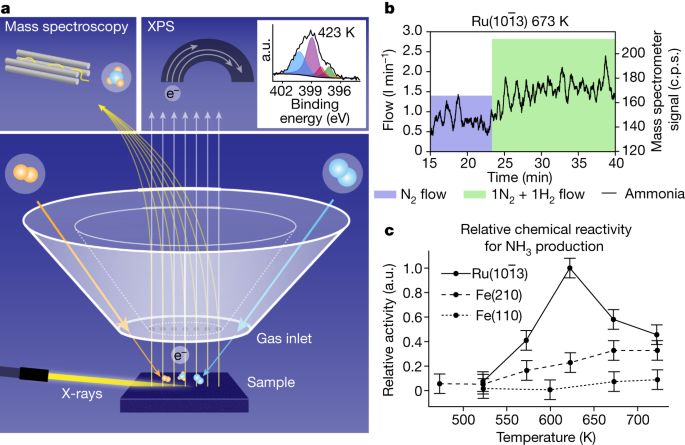
Researchers used operando X-ray photoelectron spectroscopy to study the surface chemistry during the Haber-Bosch process, revealing insights into the reaction mechanisms and rate-limiting steps on Fe and Ru single-crystal surfaces. The study showed that nitride formation is slower than nitride reduction, and the surfaces are predominantly metallic with low coverages of atomic nitrogen. The findings provide valuable information for understanding and optimizing the catalytic process of ammonia synthesis.
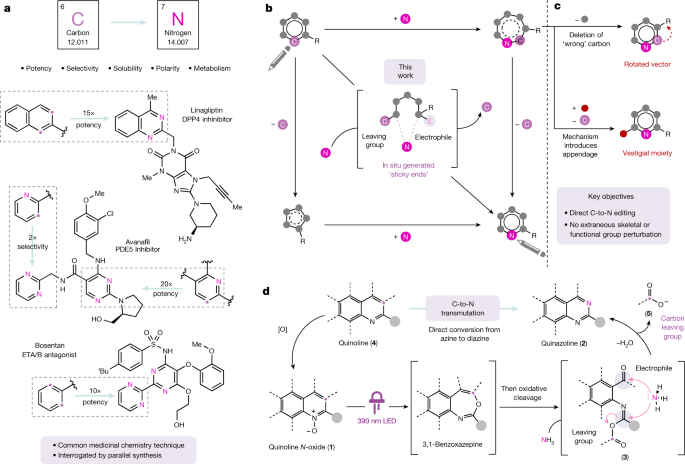
Researchers have developed a method for the carbon-to-nitrogen single-atom transmutation of azaarenes, which are important building blocks in drug discovery and the synthesis of nitrogen heterocycles. This breakthrough in chemical synthesis opens up new possibilities for the creation of diverse nitrogen-containing compounds, which are crucial in the development of pharmaceuticals. The technique involves the use of photochemical carbon deletion and subsequent nitrogen insertion reactions, providing a powerful tool for the modification and functionalization of azaarenes. This advancement has the potential to significantly impact the field of drug discovery and the synthesis of nitrogen-containing compounds.

A team of researchers investigating the use of sulfide solutions to reduce mercury emissions made a surprising discovery: the S2– ion, which was assumed to exist in aqueous form and had been a part of chemistry calculations for decades, does not actually exist. Using a Raman spectrometer, the team found no evidence of S2–(aq). The mistake, which occurred decades ago, has led to incorrect chemistry calculations and the researchers recommend that the ion be "comprehensively banished" from the chemical community.
Researchers have developed a new method for the halodealkylation of fully alkylated silanes using arenium-ion catalysis. This approach offers a more sustainable and efficient route for the synthesis of methylchlorosilanes, which are important precursors in the production of silicones. The study provides insights into the catalysts, mechanisms, reaction conditions, and reactor designs involved in this process, highlighting the potential for further advancements in the field of molecular catalysis and the silicone industry.
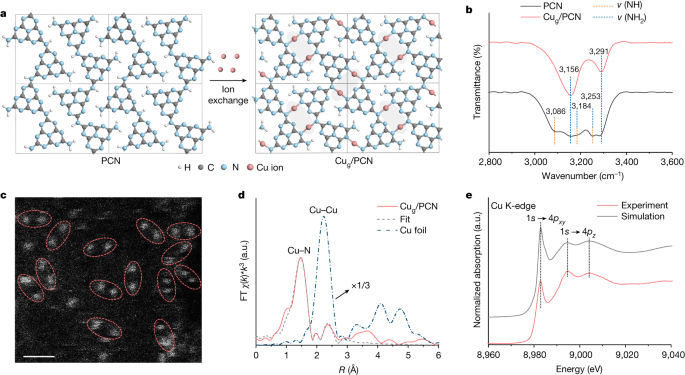
Researchers have developed geminal-atom catalysis, a new approach for cross-coupling reactions in organic synthesis. This method bridges the gap between homogeneous and heterogeneous catalysis by utilizing heterogeneous single-metal-site catalysts. Geminal-atom catalysis offers potential advantages such as improved selectivity, recyclability, and scalability, making it a promising tool for sustainable organic synthesis. The data for this study are available in the manuscript and supplementary information, as well as in the Zenodo repository.