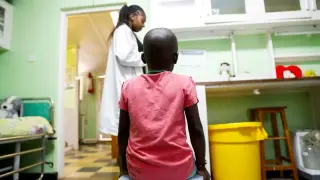
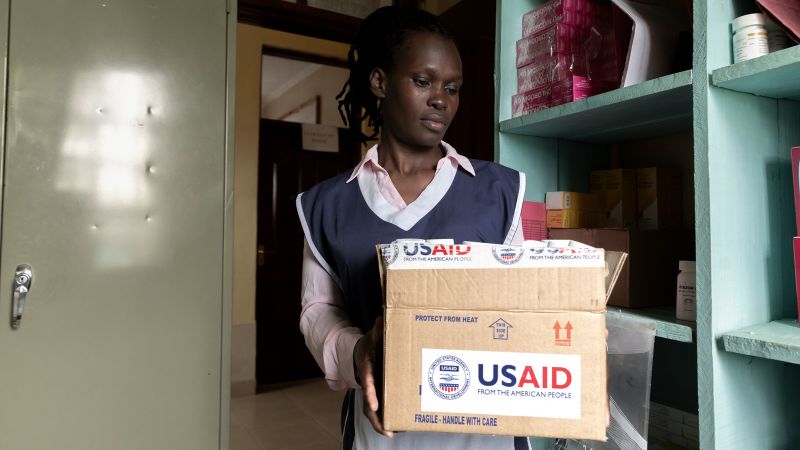
A new study reveals that US funding cuts have severely disrupted HIV services for children and pregnant women globally, contradicting official claims of protection for these programs.
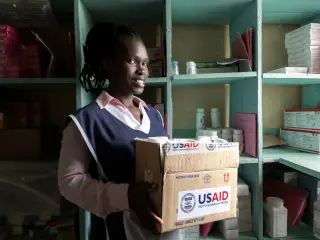
US funding cuts have severely disrupted global HIV prevention efforts, leading to clinic closures, rising infections, and preventable deaths among vulnerable populations in countries like Kenya and Tanzania.
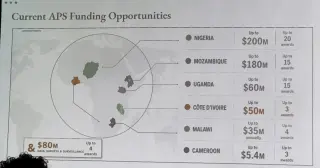
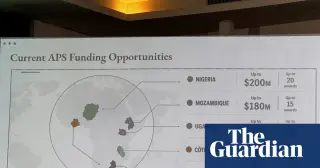
At the AIDS 2026 conference in Rio, a State Department slide mislabelled Africa, putting Nigeria (where the U.S. has troops) in the Sahara, Mozambique in the Horn of Africa, and Ivory Coast on the far side of the continent; Reuters found the image bore an AI watermark suggesting OpenAI tools were used. The department apologized, saying a team member hastily updated the slide, and noted that despite the slip, PEPFAR work continues and discussions remained substantive.
A State Department slide at the AIDS 2026 conference in Rio de Janeiro showed an AI-generated map of Africa with multiple mislabels (Nigeria depicted as landlocked in the Sahara, Mozambique misplaced, Côte d’Ivoire off its proper location), prompting online screenshots and scrutiny. The department apologized, saying a team member hastily updated the deck and that the map carried an OpenAI watermark. Pepfar’s core work has largely resumed after a prior pause, but the US is scaling back some prevention and surveillance funding and plans to fully phase out the program in South Africa.
An amfAR-backed report says US funding cuts to PEPFAR disrupted HIV prevention and treatment worldwide, causing 1,700 clinic closures and 16,000 job losses, with 77,000 fewer children treated in 2025; UNAIDS warns that permanent reductions could lead to millions more HIV infections and AIDS deaths by 2029, while the US State Department disputes the findings.
Sen. John Cornyn says he will block Kari Lake’s and Doug Mastriano’s ambassador nominations unless the White House commits to releasing funds set aside for PEPFAR, tying foreign-policy confirmations to AIDS funding in Africa and signaling GOP leverage over the Trump administration.
New research presented at AIDS 2026 shows that US cuts to PEPFAR disrupted HIV programs in 46 countries, forcing the closure of about 1,700 sites and laying off around 16,000 staff, with prevention and mother-to-child transmission services hit hardest as organizations also reshaped operations to comply with DEI and other US policy restrictions, risking reversing years of progress against HIV.
Millions relying on US-funded HIV/AIDS programs face an uncertain future as a funding cliff nears: 120 CDC-backed PEPFAR awards expire with no clear replacement, potentially disrupting testing, treatment, PrEP and lab services for more than 8.7 million patients worldwide, especially in Mozambique, Tanzania and South Africa; the State Department’s restructuring could shift control away from CDC, prompting concerns among health experts that services and surveillance could suffer even as officials promise continuity and increased funding in other areas.
The United States will begin phasing out the Pepfar funding that supported South Africa’s HIV programs, citing SA’s insufficient progress on U.S. policy requests and a push for self-reliance. Pepfar previously accounted for about a fifth of SA’s HIV spending, though antiretrovirals are government-funded. The move comes amid fraught US-South Africa relations under the Trump administration, including accusations of Afrikaner persecution.
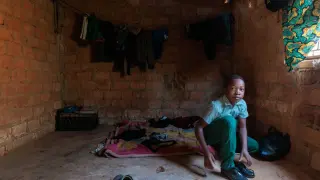
Three brothers in Zambia's Copperbelt, ages 17, 15 and 12, are fending for themselves after their HIV-positive parents died this year as aid cuts shuttered the clinics that kept them on meds; they sell belongings, live in a leaky home, and Joseph works as a part-time security guard to pay rent and cover schooling while trying to keep his brothers on treatment, aided only by a pastor and distant relatives as the broader HIV-care network wanes.
The Ebola outbreak in the Democratic Republic of Congo is worsening and likely undercounted, with spread to Uganda and a Rwanda travel ban for those linked to the DRC, though experts say travel bans don’t stop spread. Momentum for a dedicated U.S. men’s health office remains uncertain ahead of midterms. Acting FDA Commissioner Kyle Diamantas is consolidating leadership amid a reshuffle. A Lancet study puts global mental disorders at 1.17 billion in 2023, underscoring rising need. Eight former CDC directors warn against hasty changes to PEPFAR, arguing the program’s evolution must be careful to preserve its gains.
Official data show PEPFAR kept about 20 million people on HIV treatment in mid-2025, but prevention work deteriorated sharply: roughly 4 million fewer people were tested in Q4 2025, new treatment starts fell, PrEP enrollments dropped about 41%, and prevention programs for key populations collapsed to near zero, all amid workforce cuts and less transparent reporting—raising concerns of a hidden, long-term HIV surge despite seemingly steady treatment numbers.
The United States is moving away from the centralized PEPFAR framework to a patchwork of bilateral country partnerships, prompting concerns about reduced oversight and weaker data collection just as HIV testing, PrEP uptake, and pediatric treatment decline; experts warn the pace could hinder ongoing progress toward ending the epidemic, despite PEPFAR's historic impact.
US funding for South Africa’s HIV response has been cut, risking about $400m a year and threatening testing, treatment and prevention services. SA offered emergency funds and a bridge plan, but experts warn gaps could raise new infections if mobile clinics and data systems shut down. Rollouts like Lenacapavir and CAB-LA depend on sustained funding, and the government is seeking additional support from the Global Fund and other donors as Washington signals a permanent shift to 'America First Global Health Strategy'.
The US has suspended some funding for its key HIV/AIDS relief program, PEPFAR, leading to disruptions in treatment and prevention efforts worldwide, with unclear impacts due to lack of data and ongoing budget disputes.