
future-perfect39.455 min read
Urban wildfires are turning toxic smoke into a national health challenge
21 days ago•Source: vox.com

The latest future perfect stories, each synthesized from multiple sources with added background and context.
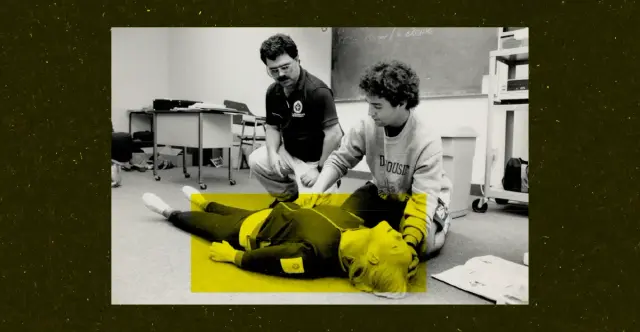
Vox argues that the public-health gap in CPR is worsened by training that uses mostly flat-chested, male-leaning dummies. Bystanders are hesitant to touch or expose women in cardiac-arrest situations, contributing to lower CPR rates for women. Advocates say including female anatomy in CPR manikins could reduce this hesitation and improve outcomes, but widespread adoption is hampered by limited availability and cost. The piece notes ongoing efforts from the American Heart Association and European Resuscitation Council to push for better representation, and highlights broader design gaps in fields like crash testing that are starting to change with new female-focused dummies like THOR-05F.
vox.com•2 months ago
vox.com•2 months ago

Vox explains how the 21st Century ROAD to Housing Act—America’s biggest housing reform in decades—ties federal funds to housing production, streamlines reviews, and loosens rules to permit denser, six-story buildings and manufactured homes. It’s modest and not funded with new money, so rents aren’t expected to drop immediately, but it codifies a bipartisan push to expand supply and builds on state experiments (Auckland, Austin) showing upzoning can lower costs over time.

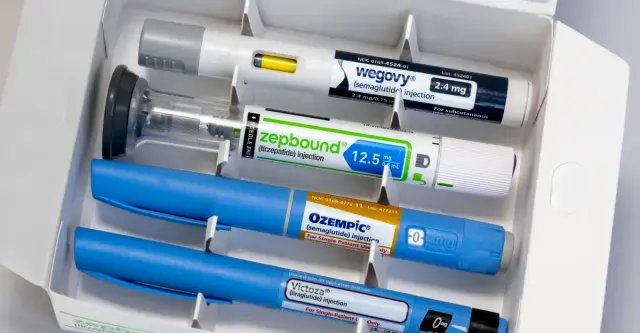
CDC provisional data show the US death rate fell to a record low in 2025 (689.2 per 100,000), with life expectancy likely reaching a new high after hitting 79 years in 2024. The turnaround is driven largely by a sharp decline in overdose deaths (about 70,000 in 2025, down from 114,000 in 2023), plus declines in homicides and Covid deaths, and broad gains in heart disease and cancer mortality. GLP-1 obesity drugs could push life expectancy even higher, but the US still trails peer nations by about 3–4 years and features wide state- and income-related disparities.

America’s housing crisis stems from a century-old suburban model built on single-family zoning; over the next 50 years, reforms like YIMBY policies, ADUs, and smarter urban planning could turn suburbs into denser, walkable, mixed-use places—and even launch new cities—though outcomes depend on immigration, financing, and political will.

At the 2026 ASCO meeting, a line graph showing daraxonrasib nearly doubling median survival for a form of advanced pancreatic cancer sparked a standing ovation, illustrating a broader cancer turn: US cancer deaths have fallen 34% since 1991 and the five-year survival for all cancers reached about 70% for those diagnosed 2015–2021, driven by immunotherapy, vaccines, and CAR‑T therapy; yet high drug costs and, more worryingly, funding cuts to NIH/NSF risk slowing the scientific engine behind these gains.
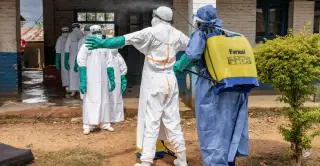
Vox argues that U.S. and international aid cuts degraded Ebola surveillance and health systems in Congo and Uganda, helping drive a rapid outbreak that WHO has declared a public-health emergency and that is already among the largest on record, with undercounted cases and a months-long effort ahead despite new funding.

Closing arguments in Musk v. OpenAI highlight a messy, high-stakes fight over AI governance: Altman’s honesty was questioned by OpenAI’s board; Brockman’s diary revealed internal doubts about OpenAI’s for-profit pivot; Musk’s willingness to push for control and even integrate with his ventures; Microsoft’s heavy involvement helped fuel Altman’s return and expanded its stake; and regulators could revisit OpenAI’s nonprofit-to-for-profit restructuring, with damages potentially reaching $150 billion if Musk prevails.
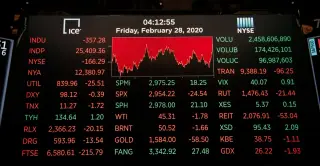
Vox’s Future Perfect argues the Strait of Hormuz disruption from the Iran war is the largest oil-market shock in history, yet markets remain underprice it due to biases (the ostrich paradox). The piece draws a Covid-era parallel, noting how gradual information becomes a sudden shift once reality hits; if Hormuz stays materially restricted through June, the S&P 500 could be at least 10% lower by Labor Day, with IMF and other forecasters warning of recession risk. It urges paying attention to the real economic fallout beyond near-term political fixes.
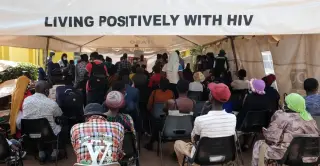
Official data show PEPFAR kept about 20 million people on HIV treatment in mid-2025, but prevention work deteriorated sharply: roughly 4 million fewer people were tested in Q4 2025, new treatment starts fell, PrEP enrollments dropped about 41%, and prevention programs for key populations collapsed to near zero, all amid workforce cuts and less transparent reporting—raising concerns of a hidden, long-term HIV surge despite seemingly steady treatment numbers.

PrEP could end HIV in the United States, but access remains uneven due to insurance gaps, provider knowledge gaps, stigma, and racial/geographic disparities; telemedicine and long-acting injections are expanding reach, but affordability and policy changes—like funding cuts to HIV prevention—could threaten progress.

Vox’s Your Mileage May Vary column argues that AI will reshape many knowledge‑worker roles, but the answer isn’t to panic‑switch into a trade. It recommends identifying your “mattering project” via Rebecca Goldstein’s mattering map, leaning into what makes you uniquely human, and developing a fallback path (even something like becoming a rabbi) while staying in your current career. It suggests using AI to augment rather than replace your work and notes that some fields (caregiving, nursing, performance art) may be safer for longer, but the broader takeaway is to plan ahead with meaning in mind rather than fear.