Tag

Future Perfect

All articles tagged with #future perfect

GLP-1 drugs unlock health benefits beyond weight loss
future-perfect9 days ago

GLP-1 drugs unlock health benefits beyond weight loss

GLP-1 drugs such as Ozempic and Wegovy are proving their value goes far beyond shrinking waists: trials show they can reduce sleep-apnea interruptions, lower the risk of kidney failure in type 2 diabetes with CKD, reverse fatty liver inflammation, ease knee pain in obesity, and lower major cardiovascular events even in people without diabetes. The broader takeaway is that these medicines may offer broad health benefits beyond weight loss, a reminder of medicine’s “happy accidents.” Yet they come with caveats—weight loss often includes lean muscle loss, cost and access barriers persist, and social stigma around weight remains a challenge.

First US mRNA flu vaccine signals a new era for vaccines
future-perfect17 days ago

First US mRNA flu vaccine signals a new era for vaccines

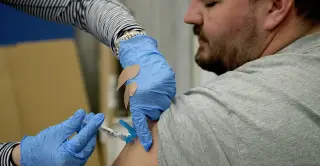
FDA approves mFLUSIVA, the United States’ first mRNA influenza vaccine, marking a milestone for the platform after a year of funding reversals; unlike egg-based vaccines, it can be updated in two to three months and deployed closer to flu season, hinting at future breakthroughs across vaccines and therapies, though real-world uptake will depend on access, cost, and regulatory guidance.

A daily pill that slashes LDL could change how we fight heart disease
future-perfect1 month ago

A daily pill that slashes LDL could change how we fight heart disease

FDA-approved enlicitide is an oral pill that lowers LDL cholesterol by about 60%, offering a needle-free alternative to injections and statins for those who can’t tolerate them; the drug’s development builds on PCSK9 genetics, and while LDL reductions look promising, hard outcomes like deaths will take years to prove, and cost and access—alongside the potential of gene editing and other therapies—will shape how broadly it helps curb heart disease.

A landmark housing law won't instantly cut rents, but signals a shift toward more homes
future-perfect1 month ago

A landmark housing law won't instantly cut rents, but signals a shift toward more homes

Vox explains how the 21st Century ROAD to Housing Act—America’s biggest housing reform in decades—ties federal funds to housing production, streamlines reviews, and loosens rules to permit denser, six-story buildings and manufactured homes. It’s modest and not funded with new money, so rents aren’t expected to drop immediately, but it codifies a bipartisan push to expand supply and builds on state experiments (Auckland, Austin) showing upzoning can lower costs over time.

US life expectancy edges toward an all-time high as overdoses drop
future-perfect1 month ago

US life expectancy edges toward an all-time high as overdoses drop

CDC provisional data show the US death rate fell to a record low in 2025 (689.2 per 100,000), with life expectancy likely reaching a new high after hitting 79 years in 2024. The turnaround is driven largely by a sharp decline in overdose deaths (about 70,000 in 2025, down from 114,000 in 2023), plus declines in homicides and Covid deaths, and broad gains in heart disease and cancer mortality. GLP-1 obesity drugs could push life expectancy even higher, but the US still trails peer nations by about 3–4 years and features wide state- and income-related disparities.

A 50-year housing reboot could reshape America’s suburbs into walkable, mixed-use neighborhoods
future-perfect1 month ago

A 50-year housing reboot could reshape America’s suburbs into walkable, mixed-use neighborhoods

America’s housing crisis stems from a century-old suburban model built on single-family zoning; over the next 50 years, reforms like YIMBY policies, ADUs, and smarter urban planning could turn suburbs into denser, walkable, mixed-use places—and even launch new cities—though outcomes depend on immigration, financing, and political will.

Cancer progress turns the page as survival hits 70%
future-perfect2 months ago

Cancer progress turns the page as survival hits 70%

At the 2026 ASCO meeting, a line graph showing daraxonrasib nearly doubling median survival for a form of advanced pancreatic cancer sparked a standing ovation, illustrating a broader cancer turn: US cancer deaths have fallen 34% since 1991 and the five-year survival for all cancers reached about 70% for those diagnosed 2015–2021, driven by immunotherapy, vaccines, and CAR‑T therapy; yet high drug costs and, more worryingly, funding cuts to NIH/NSF risk slowing the scientific engine behind these gains.

Five jaw-dropping revelations from Musk’s OpenAI lawsuit
future-perfect3 months ago

Five jaw-dropping revelations from Musk’s OpenAI lawsuit

Closing arguments in Musk v. OpenAI highlight a messy, high-stakes fight over AI governance: Altman’s honesty was questioned by OpenAI’s board; Brockman’s diary revealed internal doubts about OpenAI’s for-profit pivot; Musk’s willingness to push for control and even integrate with his ventures; Microsoft’s heavy involvement helped fuel Altman’s return and expanded its stake; and regulators could revisit OpenAI’s nonprofit-to-for-profit restructuring, with damages potentially reaching $150 billion if Musk prevails.

The Iran oil shock is here—and markets still aren’t pricing it in
future-perfect3 months ago

The Iran oil shock is here—and markets still aren’t pricing it in

Vox’s Future Perfect argues the Strait of Hormuz disruption from the Iran war is the largest oil-market shock in history, yet markets remain underprice it due to biases (the ostrich paradox). The piece draws a Covid-era parallel, noting how gradual information becomes a sudden shift once reality hits; if Hormuz stays materially restricted through June, the S&P 500 could be at least 10% lower by Labor Day, with IMF and other forecasters warning of recession risk. It urges paying attention to the real economic fallout beyond near-term political fixes.

Trump's HIV funding cuts leave treatment steady but prevention and data reporting falter
future-perfect3 months ago

Trump's HIV funding cuts leave treatment steady but prevention and data reporting falter

Official data show PEPFAR kept about 20 million people on HIV treatment in mid-2025, but prevention work deteriorated sharply: roughly 4 million fewer people were tested in Q4 2025, new treatment starts fell, PrEP enrollments dropped about 41%, and prevention programs for key populations collapsed to near zero, all amid workforce cuts and less transparent reporting—raising concerns of a hidden, long-term HIV surge despite seemingly steady treatment numbers.

AI’s rapid rise won’t automatically replace your career—find meaning and plan ahead
future-perfect5 months ago

AI’s rapid rise won’t automatically replace your career—find meaning and plan ahead

Vox’s Your Mileage May Vary column argues that AI will reshape many knowledge‑worker roles, but the answer isn’t to panic‑switch into a trade. It recommends identifying your “mattering project” via Rebecca Goldstein’s mattering map, leaning into what makes you uniquely human, and developing a fallback path (even something like becoming a rabbi) while staying in your current career. It suggests using AI to augment rather than replace your work and notes that some fields (caregiving, nursing, performance art) may be safer for longer, but the broader takeaway is to plan ahead with meaning in mind rather than fear.

Moltbook’s AI-only social network hints at the future of agent-driven platforms
future-perfect6 months ago

Moltbook’s AI-only social network hints at the future of agent-driven platforms

Vox explains Moltbook, an AI-only social network where AI agents post and interact, observed by humans who set up and guide them via API keys. Launched Jan 28, it has quickly amassed thousands of agents and posts, sparking debates over emergent consciousness and whether the chatter reflects a shared “Crustafarianism” religion or simply advanced collective roleplaying. Researchers note that human operators likely influence many posts, and warn of security holes that exposed agent keys. Experts call Moltbook a rough but telling early prototype of future agent ecologies, even as the scene raises questions about control and direction of AI social life.

Who Should Sound the Doomsday Alarm?
future-perfect6 months ago

Who Should Sound the Doomsday Alarm?

The 2026 Doomsday Clock sits at 85 seconds to midnight, but this Vox Future Perfect piece argues the warning is losing power: the Bulletin of the Atomic Scientists provides outsider alarms, while AI insiders like Anthropic’s Dario Amodei push to continue development even as they warn of risks. The piece analyzes the tension between credible, independent warnings and the inside-the-system influence of tech leaders, noting that as risks broaden—from AI to climate and autocracy—the Clock’s precise, alarmist messaging may no longer translate into policy. It asks what kind of new institutional mechanism could replace the Doomsday Clock to credibly warn and spur action on existential threats.