
Tag

Photolithography

All articles tagged with #photolithography

Foam-enabled photolithography achieves ultra-high-resolution biomimetic printing
technology1 month ago

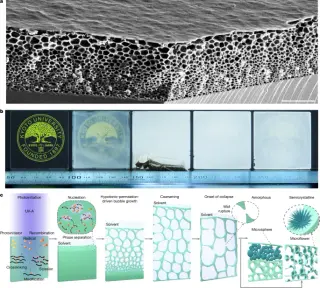
Foam-enabled photolithography achieves ultra-high-resolution biomimetic printing

Deep-foam photolithography (DFP) is a light-driven process in which a photosensitized polymer film exposed to UV-A undergoes concurrent scission and crosslinking, and a weak solvent permeation triggers pore nucleation, expansion and controlled collapse to form foam throughout the film or fiber. This enables inkless printing in white/greyscale with diffractive color at ~20,000 dpi and allows mechanically expanded/collapsed foams with high aspect ratios (up to ~20×). Demonstrated across various polymers and photoinitiators, DFP patterns foamability, wettability, optical properties and local thickness, enabling high-resolution printing, microfluidics and selective capture of liquids/colloids on flexible substrates.

DIY RAM Breakthrough: Micron-Scale Cells Built in a Garden Shed
gadgets5 months ago

DIY RAM Breakthrough: Micron-Scale Cells Built in a Garden Shed

A YouTuber named Dr Semiconductor fabricates and demonstrates functioning micron-scale RAM cells in his garden shed, detailing the fabrication steps (oxide deposition, photolithography, etching, thin-film deposition) and explaining RAM’s volatile, refresh-required nature; it’s a proof-of-concept, not a full memory upgrade, with plans to stitch cells together and connect them to a PC in future work.

Inside the World of Ultra-Clean Chip Manufacturing.
technology3 years ago

Inside the World of Ultra-Clean Chip Manufacturing.

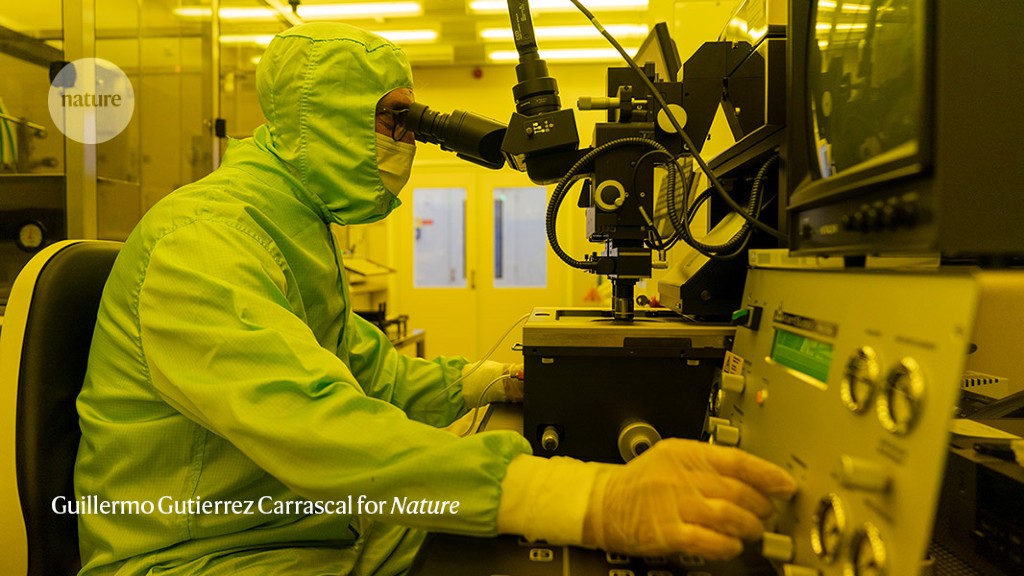
The Institute of Microelectronics of Barcelona hosts the largest clean room in southern Europe, where researchers develop micro- and nanotechnology. The clean room is a controlled environment where pollutants are filtered out. The air in this part of the clean room is 10,000 times cleaner than normal air. Researchers have developed a way to make chips tiny enough to enter living cells, which can be used to identify and track living cells and to find alternatives to chemotherapy and other treatments that are too aggressive for the human body.