Tag

Quantum Measurement

All articles tagged with #quantum measurement

Northwestern Team Traps Single Positron for Months to Test Matter-Antimatter Symmetry
science1 month ago

Northwestern Team Traps Single Positron for Months to Test Matter-Antimatter Symmetry

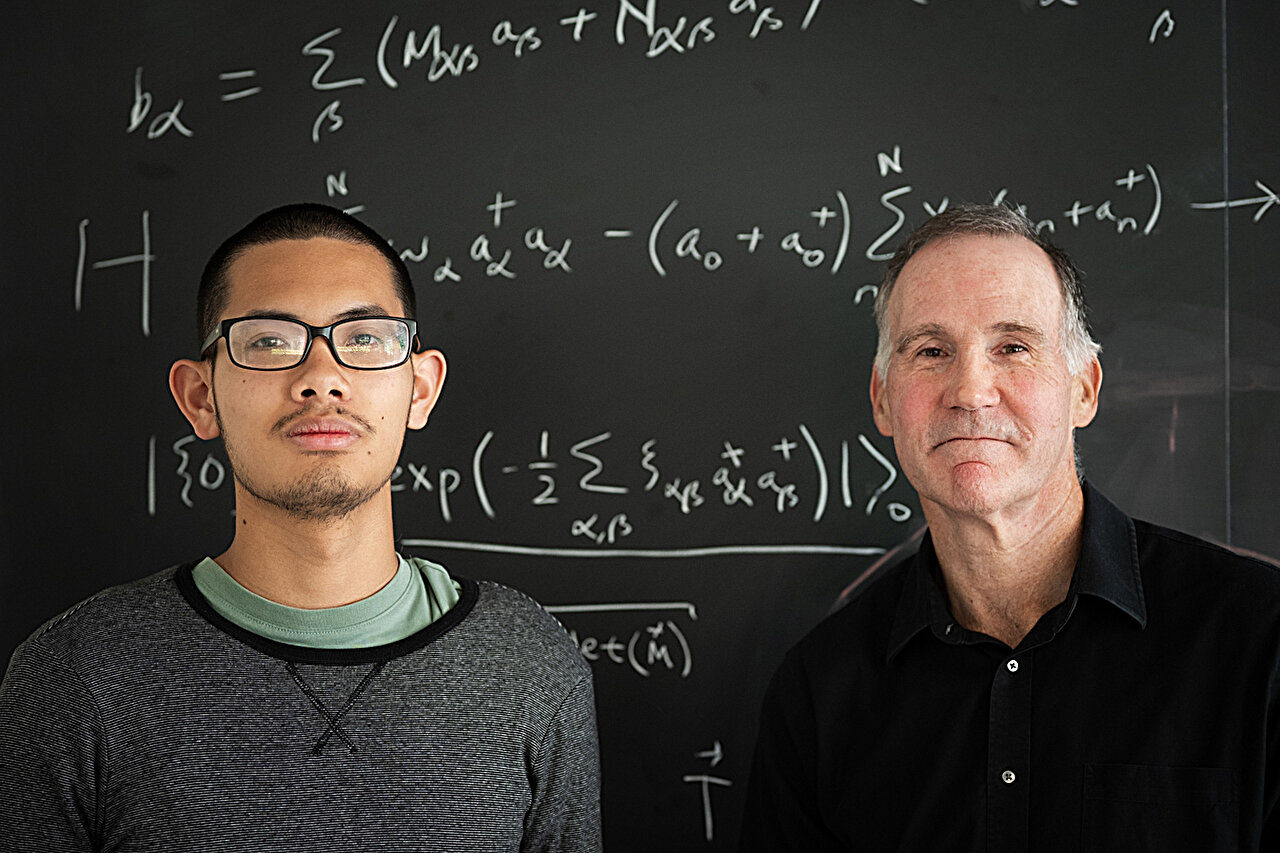
Physicists at Northwestern University have successfully trapped a single positron, the antimatter counterpart of the electron, for several months. By cooling the particle to near absolute zero and confining it in a vacuum using electromagnetic fields, the team aims to measure its magnetic moment with extreme precision. This experiment seeks to detect any discrepancy between matter and antimatter properties, which could explain why the universe is dominated by matter despite the Big Bang likely producing equal amounts of both.


New single-step W-state measurement could accelerate quantum teleportation and networks
science7 months ago

New single-step W-state measurement could accelerate quantum teleportation and networks

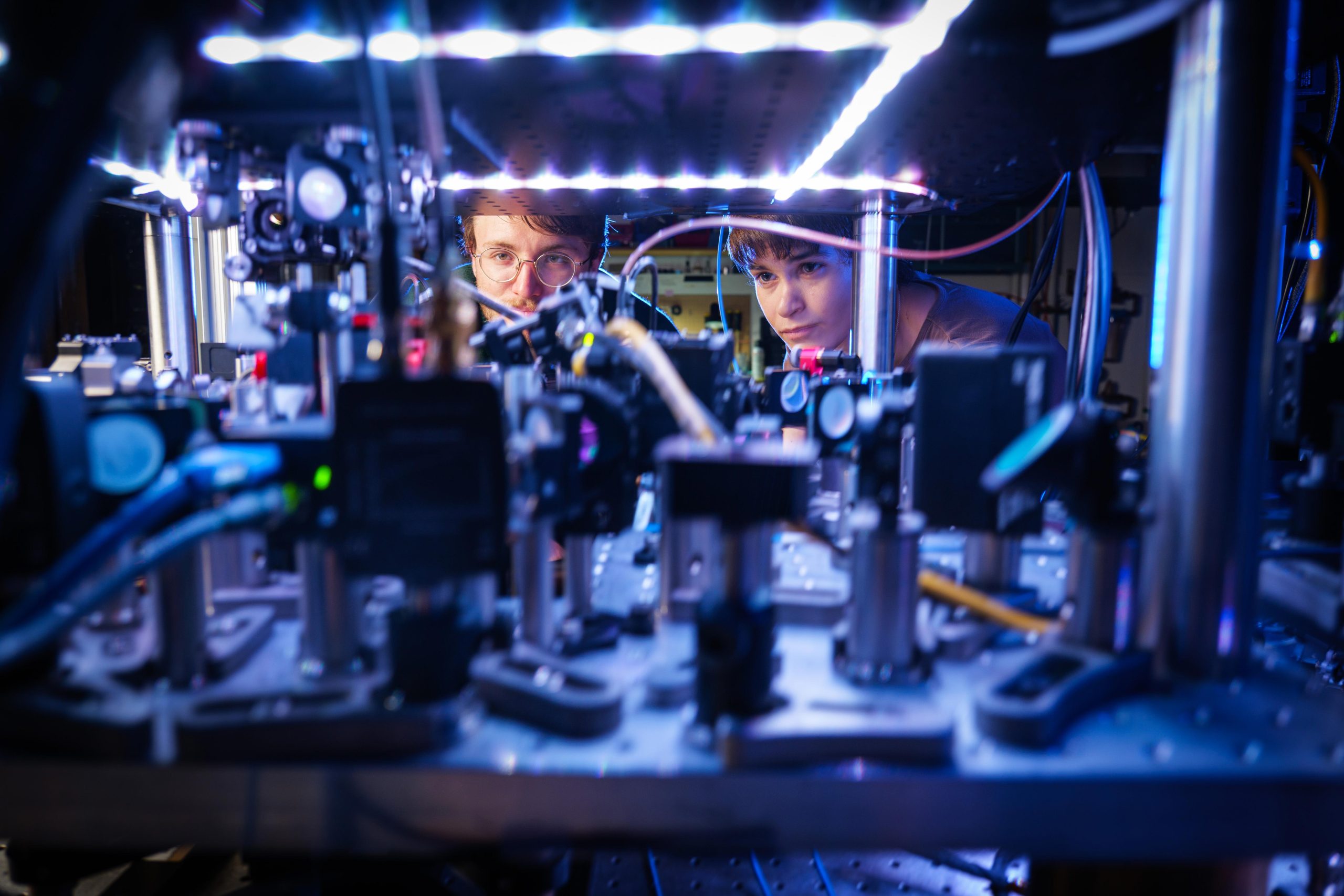
Researchers from Kyoto and Hiroshima universities demonstrated a symmetry-based entangled measurement for three-photon W states, enabling direct state identification in a single operation rather than resource-heavy tomography. By exploiting cyclic shift symmetry and a Fourier-transform photonic network, the method can distinguish different W states with a stable, extended-running setup, potentially boosting quantum teleportation, secure communications, and distributed quantum computing, with plans to scale to larger systems and chip integration.

Attosecond timing clocks the birth of quantum entanglement
science8 months ago

Attosecond timing clocks the birth of quantum entanglement

Researchers from China and TU Wien directly measured the ultrafast onset of quantum entanglement on attosecond timescales by using intense laser pulses to eject and track electrons. They show the birth time of the departing electron is not definite and links to the energy state of the remaining electron, with typical timing differences around 232 attoseconds. A two-laser protocol enables these measurements, potentially enabling lab studies of ultrafast entanglements and informing future quantum technologies such as cryptography and computing. The findings were published in Physical Review Letters.

Breakthrough in Quantum Navigation Using 3D Atomic Acceleration
science1 year ago

Breakthrough in Quantum Navigation Using 3D Atomic Acceleration

CU Boulder scientists developed a novel quantum device using cold atoms and lasers to measure 3D acceleration simultaneously, a breakthrough that could enhance navigation systems for various vehicles. The device employs a Bose-Einstein Condensate and AI-driven laser adjustments, and while still in early stages, it shows promise for future applications in navigation and sensing technology.

"Detecting Quantum Behavior in Macroscopic Objects: A Breakthrough by Physicists"
science-and-technology2 years ago

"Detecting Quantum Behavior in Macroscopic Objects: A Breakthrough by Physicists"

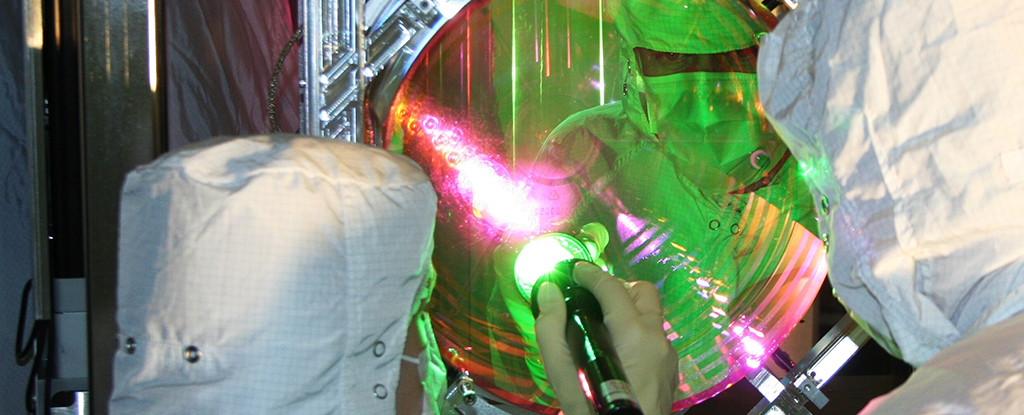
Physicists have proposed a novel experiment to detect quantum behavior in large objects, challenging the traditional view that quantum effects are limited to tiny particles. The experiment involves observing the motion of an object, such as a ball on a pendulum, and flashing light at different times to determine if quantum behavior is occurring. If successful, this could provide evidence of quantum fuzziness on a larger scale and potentially be tested using the mirrors at the Laser Interferometer Gravitational-Wave Observatory (LIGO) in the US.

"Physicists Develop Experiment to Test Quantum Behavior in Macroscopic Objects"
physics2 years ago

"Physicists Develop Experiment to Test Quantum Behavior in Macroscopic Objects"

Physicists from University College London, the University of Southampton, and the Bose Institute have proposed a novel approach to measure quantum behavior in larger objects, challenging the traditional view that quantum physics only applies at small scales. Their experiment involves observing the motion of an object on a pendulum and flashing light at different times to see if quantum behavior is occurring. If successful, this could extend the domain of quantum mechanics and test its validity for larger masses, potentially revolutionizing our understanding of the fundamental theory of nature.