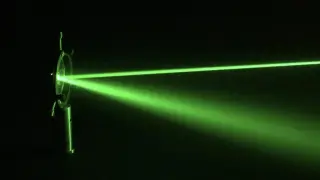
Florence team entangles 100nm glass bead with light at room temperature
Researchers at the University of Florence have successfully entangled a 100-nanometer glass nanosphere with a light field at room temperature. Published in Science, the study demonstrates that quantum correlations can be sustained and transferred to light propagating through space, offering a potential pathway for quantum memory and communication networks.